Speight Paul M, Takata Takashi
Unit of Oral and Maxillofacial Pathology, School of Clinical Dentistry, University of Sheffield, Claremont Cresent, S10 2TA, UK.
Department of Oral & Maxillofacial Pathobiology, Institute of Biomedical & Health Sciences, Hiroshima University, 1-2-3 Kasumi, Minami-ku, Hiroshima, 734-8553, Japan.
Virchows Arch. 2018 Mar;472(3):331-339. doi: 10.1007/s00428-017-2182-3. Epub 2017 Jul 3.
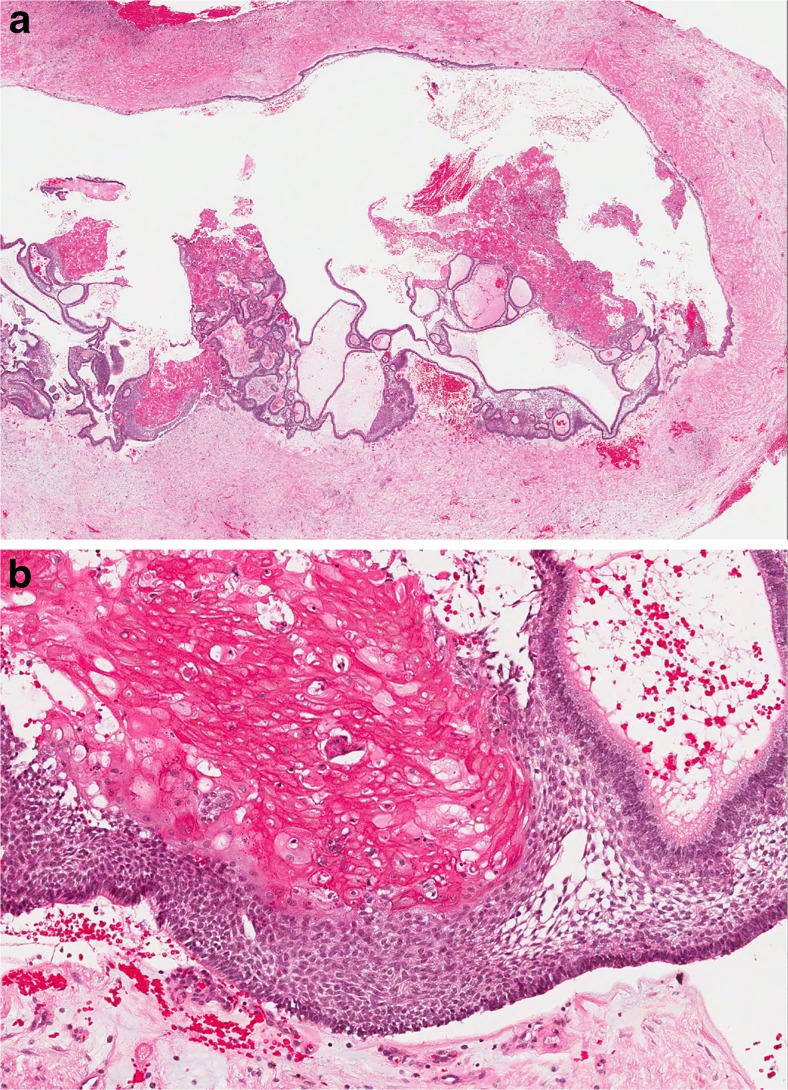
The latest (4th) edition of the World Health Organization Classification of Head and Neck tumours has recently been published with a number of significant changes across all tumour sites. In particular, there has been a major attempt to simplify classifications and to use defining criteria which can be used globally in all situations, avoiding wherever possible the use of complex molecular techniques which may not be affordable or widely available. This review summarises the changes in Chapter 8: Odontogenic and maxillofacial bone lesions. The most significant change is the re-introduction of the classification of the odontogenic cysts, restoring this books status as the only text which classifies and defines the full range of lesions of the odontogenic tissues. The consensus group considered carefully the terminology of lesions and were concerned to ensure that the names used properly reflected the best evidence regarding the true nature of specific entities. For this reason, this new edition restores the odontogenic keratocyst and calcifying odontogenic cyst to the classification of odontogenic cysts and rejects the previous terminology (keratocystic odontogenic tumour and calcifying cystic odontogenic tumour) which were intended to suggest that they are true neoplasms. New entities which have been introduced include the sclerosing odontogenic carcinoma and primordial odontogenic tumour. In addition, some previously poorly defined lesions have been removed, including the ameloblastic fibrodentinoma, ameloblastic fibro-odontoma, which are probably developing odontomas, and the odontoameloblastoma, which is not regarded as an entity. Finally, the terminology "cemento" has been restored to cemento-ossifying fibroma and cemento-osseous dysplasias, to properly reflect that they are of odontogenic origin and are found in the tooth-bearing areas of the jaws.
世界卫生组织头颈部肿瘤分类的最新(第4版)最近已出版,所有肿瘤部位都有一些重大变化。特别是,已作出重大努力来简化分类,并使用可在所有情况下全球通用的定义标准,尽可能避免使用可能无法负担或广泛使用的复杂分子技术。本综述总结了第8章:牙源性和颌面骨病变的变化。最显著的变化是重新引入牙源性囊肿的分类,恢复了本书作为唯一对牙源性组织的所有病变进行分类和定义的文本的地位。共识小组仔细考虑了病变的术语,并关注确保所使用的名称能恰当地反映关于特定实体真实性质的最佳证据。因此,新版恢复了牙源性角化囊肿和钙化牙源性囊肿在牙源性囊肿分类中的地位,并摒弃了之前暗示它们是真正肿瘤的术语(角化囊性牙源性肿瘤和钙化囊性牙源性肿瘤)。新引入的实体包括硬化性牙源性癌和原始牙源性肿瘤。此外,一些之前定义不明确的病变已被删除,包括可能正在发展为牙瘤的成釉细胞纤维牙本质瘤、成釉细胞纤维-牙瘤,以及不被视为一个实体的牙釉质成釉细胞瘤。最后,“牙骨质”一词已恢复用于牙骨质骨化纤维瘤和牙骨质骨发育异常,以恰当地反映它们起源于牙源性,且见于颌骨的牙列区域。