Karn Sumit, Devkota Madhu Dixit, Uddin Shahadat, Thow Anne Marie
Food and Agriculture Organization of the United Nations, Kathmandu, Nepal.
Department of Community Medicine and Public Health, Institute of Medicine, Kathmandu, Nepal.
BMC Public Health. 2017 Jun 13;17(Suppl 2):421. doi: 10.1186/s12889-017-4340-6.
Despite concerted effort from government and partners, Nepal continues to have a high burden of under nutrition among children. Identifying opportunities to strengthen policy support for infant and young child feeding (IYCF) is a key component to improve child survival, growth and development. This study aims to explore policy support for IYCF and to identify the influential stakeholders for IYCF for effective future policy development and programmatic action.
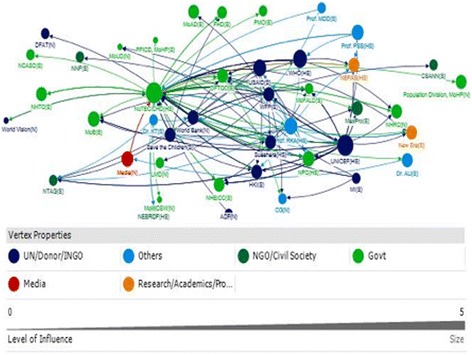
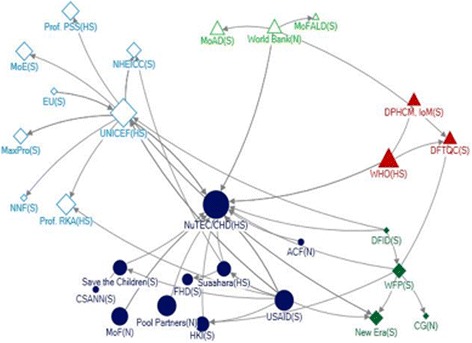
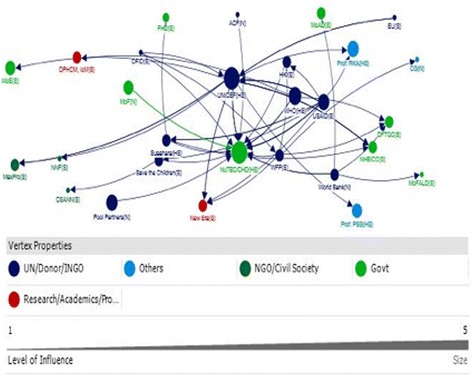
Policies relevant to IYCF were identified through web searches and direct approaches to relevant government ministries. Policy content was analysed based on four key domains focussed on mothers, using a qualitative synthesis approach. Three group interviews were conducted using the participatory tool "Net-Map", to identify the influential stakeholders in IYCF policy and programming processes.
Twenty-six relevant policy documents were analysed for content relating to IYCF. General support for IYCF was found in most of the development plans and high-level health sector policies. Most implementation level documents included support for provision of correct information to mothers. Capacity building of frontline workers for IYCN and system strengthening were well supported through sectoral plans and policies. However, gaps were identified regarding maternity protection, support for monitoring and evaluation, and translation of high-level policy directives into implementation level guidelines, resulting in a lack of clarity over roles and responsibilities. Both government and non-governmental stakeholders, particularly donors, emerged as influential drivers of IYCF policy decisions in Nepal, through technical assistance and funding. The Nutrition Technical Committee under the Ministry of Health, UNICEF, Suaahara, USAID and WHO were identified as key actors providing technical assistance. Key funding agencies were identified as UNICEF and USAID.
This study reveals strong policy support for key dimensions of IYCF, supported by a highly networked stakeholder environment. Opportunities to further strengthen IYCF policy in Nepal include: further support for training of frontline workers and complementary feeding interventions; extending maternity leave provisions; and clarifying roles and responsibilities of actors, particularly non-governmental actors. Engaging technical and funding agencies and developing partnerships with other relevant actors will be crucial for ensuring effective policy translates into effective practice.
尽管政府和合作伙伴共同努力,但尼泊尔儿童营养不良的负担仍然很重。确定加强婴幼儿喂养(IYCF)政策支持的机会是改善儿童生存、生长和发育的关键组成部分。本研究旨在探讨对婴幼儿喂养的政策支持,并确定对婴幼儿喂养有影响力的利益相关者,以促进未来有效的政策制定和项目行动。
通过网络搜索和直接联系相关政府部门,确定了与婴幼儿喂养相关的政策。采用定性综合方法,基于关注母亲的四个关键领域对政策内容进行了分析。使用参与式工具“网络地图”进行了三次小组访谈,以确定婴幼儿喂养政策和规划过程中有影响力的利益相关者。
分析了26份与婴幼儿喂养相关的政策文件的内容。在大多数发展计划和高级卫生部门政策中发现了对婴幼儿喂养的总体支持。大多数实施层面的文件包括支持向母亲提供正确信息。通过部门计划和政策,对婴幼儿喂养护理一线工作人员的能力建设和系统强化给予了有力支持。然而,在产假保护、监测和评估支持以及将高级政策指令转化为实施层面指导方针方面存在差距,导致角色和责任不明确。政府和非政府利益相关者,特别是捐助者,通过技术援助和资金,成为尼泊尔婴幼儿喂养政策决策的有影响力的驱动因素。卫生部下属的营养技术委员会、联合国儿童基金会、Suaahara、美国国际开发署和世界卫生组织被确定为提供技术援助的关键行为体。关键的资助机构被确定为联合国儿童基金会和美国国际开发署。
本研究揭示了对婴幼儿喂养关键层面的有力政策支持,这得到了高度网络化的利益相关者环境的支持。在尼泊尔进一步加强婴幼儿喂养政策的机会包括:进一步支持一线工作人员培训和辅食喂养干预;延长产假规定;明确行为体,特别是非政府行为体的角色和责任。让技术和资助机构参与并与其他相关行为体建立伙伴关系,对于确保有效的政策转化为有效的实践至关重要。