Joint Outpatient-Centre for Oncology, Niemeyerstr. 22, 06110, Halle (Saale), Germany.
Outpatient-Centre for Haematology and Medical Oncology at Bethanien, Im Prüfling 17-19, 60389, Frankfurt am Main, Germany.
Breast Cancer Res Treat. 2017 Oct;165(3):721-731. doi: 10.1007/s10549-017-4365-7. Epub 2017 Jul 5.
Although treatment for early breast cancer improved prognosis greatly, it can have significant long-term consequences, which must be considered during treatment decision.
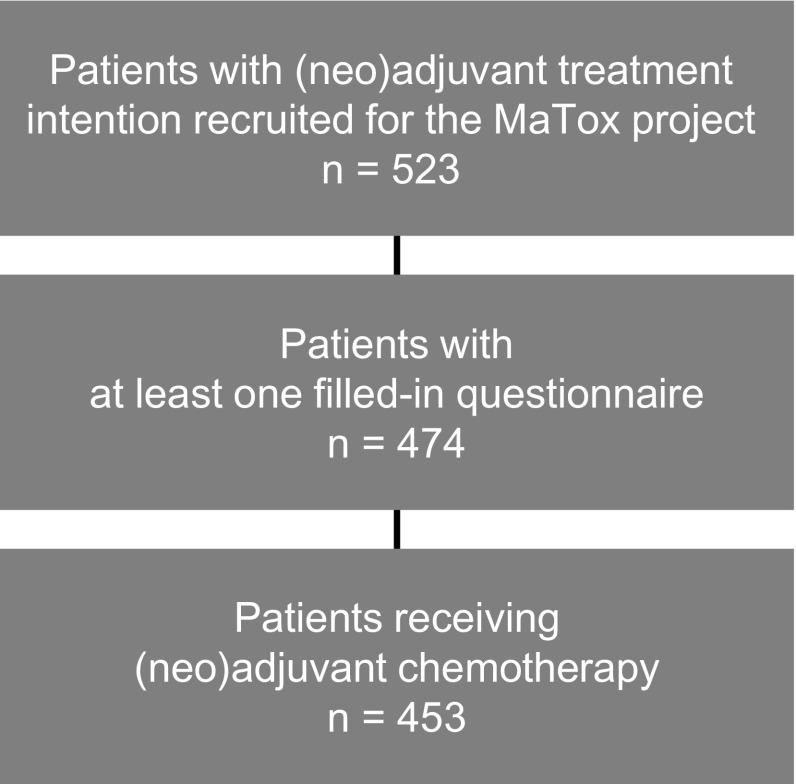
453 patients with neoadjuvant or adjuvant treatment intention were recruited into the MaTox project within the prospective, multicentre, population-based German TMK cohort study (Tumour Registry Breast Cancer) between 2008 and 2009. Patient-reported outcomes (PROs) on 26 treatment-related symptoms were assessed via a specifically designed questionnaire at 4 weeks, 6 months, 18 months and 3 years after start of systemic treatment.
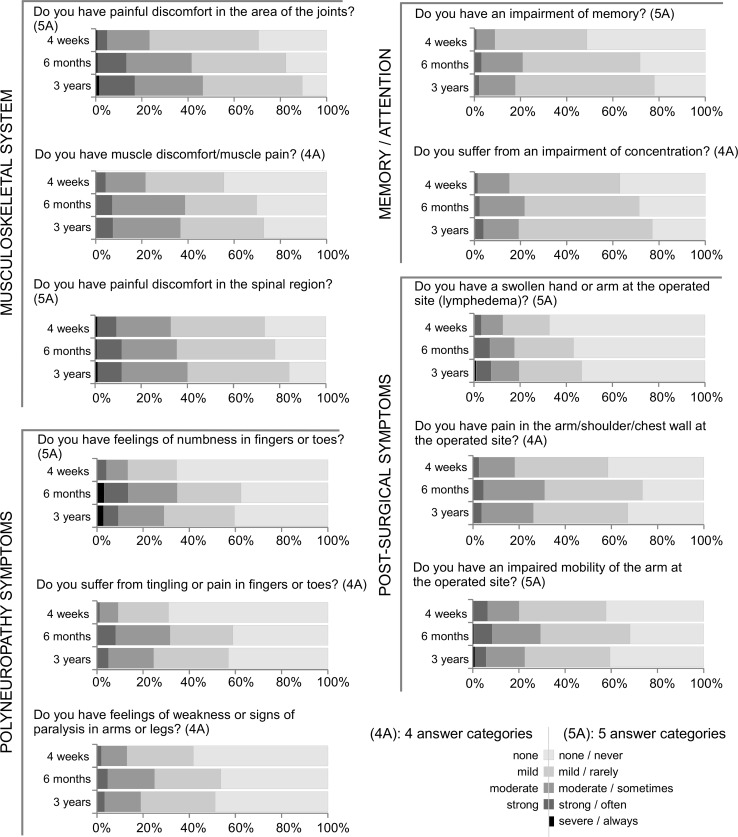
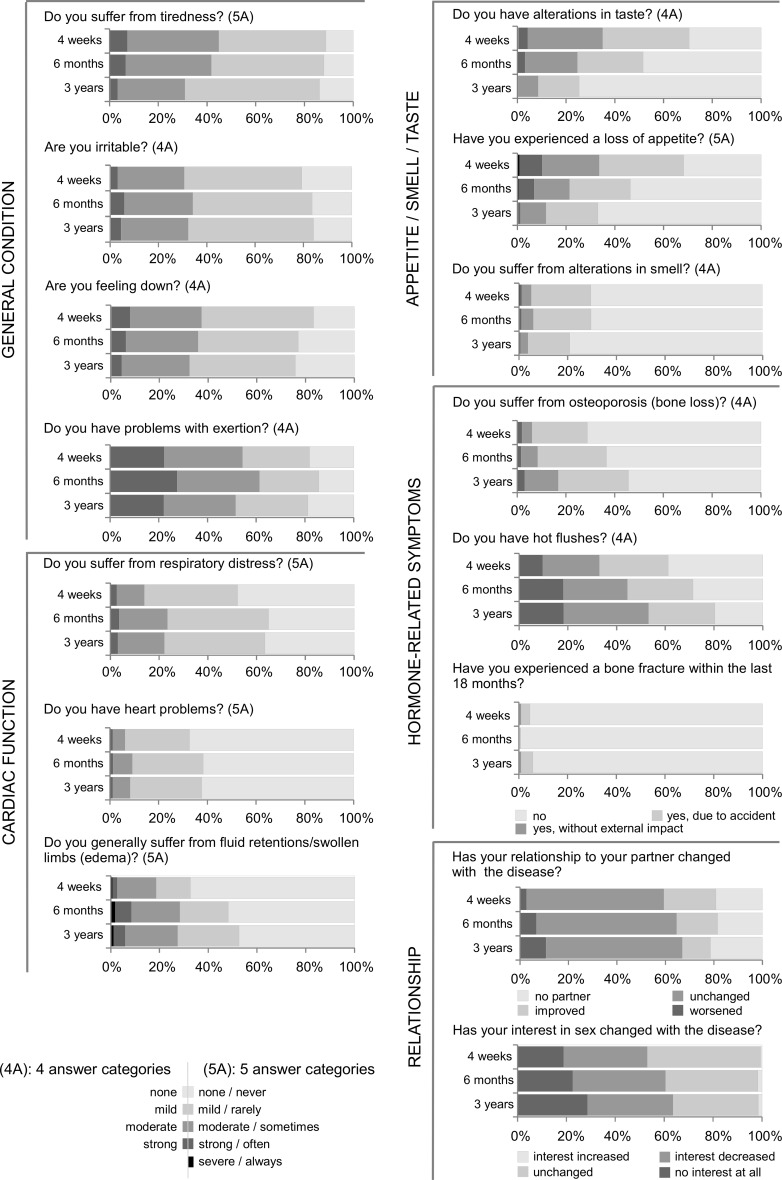
The results show that alterations in smell, taste and appetite were clearly improved 3 years after treatment. In contrast, post-surgical symptoms, restrictions in memory/attention, musculoskeletal system and polyneuropathy worsened substantially over time and were persistent after 3 years: 78% of the patients recorded impairment in memory, 73% muscle pain, 67% pain at the operated site and 57% paraesthesia in fingers or toes. A logistic regression model showed that risk factors for developing persistent paraesthesia symptoms were age, early paraesthesia symptoms and taxane-based therapy.
Our data show that most patients with breast cancer have persistent impairments negatively influencing their daily life even 3 years after treatment. Furthermore, we highlight areas requiring special attention in follow-up care.
尽管早期乳腺癌的治疗极大地改善了预后,但它可能会产生重大的长期后果,在治疗决策时必须加以考虑。
在 2008 年至 2009 年间,前瞻性、多中心、基于人群的德国 TMK 队列研究(肿瘤登记处乳腺癌)在接受新辅助或辅助治疗意向的 453 例患者中招募了 MaTox 项目。通过专门设计的问卷,在系统治疗开始后 4 周、6 个月、18 个月和 3 年时评估与 26 项治疗相关症状相关的患者报告结局(PRO)。
结果表明,治疗 3 年后,嗅觉、味觉和食欲的改变明显改善。相比之下,手术后症状、记忆力/注意力、肌肉骨骼系统和多发性神经病随着时间的推移明显恶化,并且在 3 年后仍然持续存在:78%的患者记录到记忆力受损,73%的患者肌肉疼痛,67%的患者手术部位疼痛,57%的患者手指或脚趾麻木。逻辑回归模型显示,发生持续性感觉异常症状的风险因素是年龄、早期感觉异常症状和紫杉烷类药物治疗。
我们的数据表明,大多数乳腺癌患者即使在治疗 3 年后仍存在持续性的损伤,对其日常生活产生负面影响。此外,我们强调了在随访护理中需要特别关注的领域。