Lai Jeffrey K F, Sam I-Ching, Verlhac Pauline, Baguet Joël, Eskelinen Eeva-Liisa, Faure Mathias, Chan Yoke Fun
Department of Medical Microbiology, Faculty of Medicine, University Malaya, 50603 Kuala Lumpur, Malaysia.
CIRI, International Center for Infectiology Research, Université de Lyon, 69007 Lyon, France.
Viruses. 2017 Jul 4;9(7):169. doi: 10.3390/v9070169.
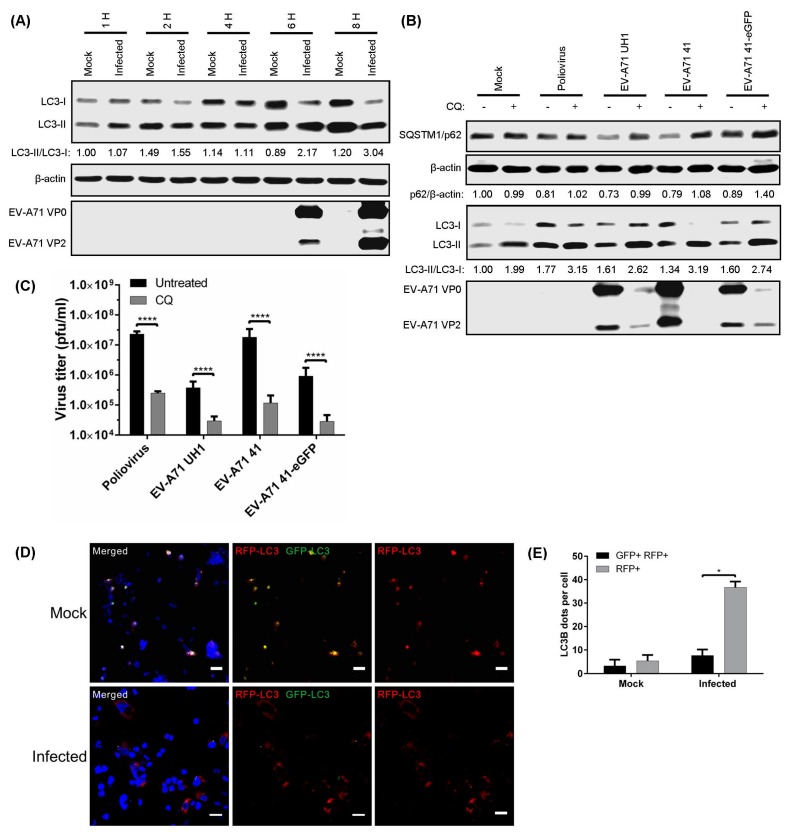
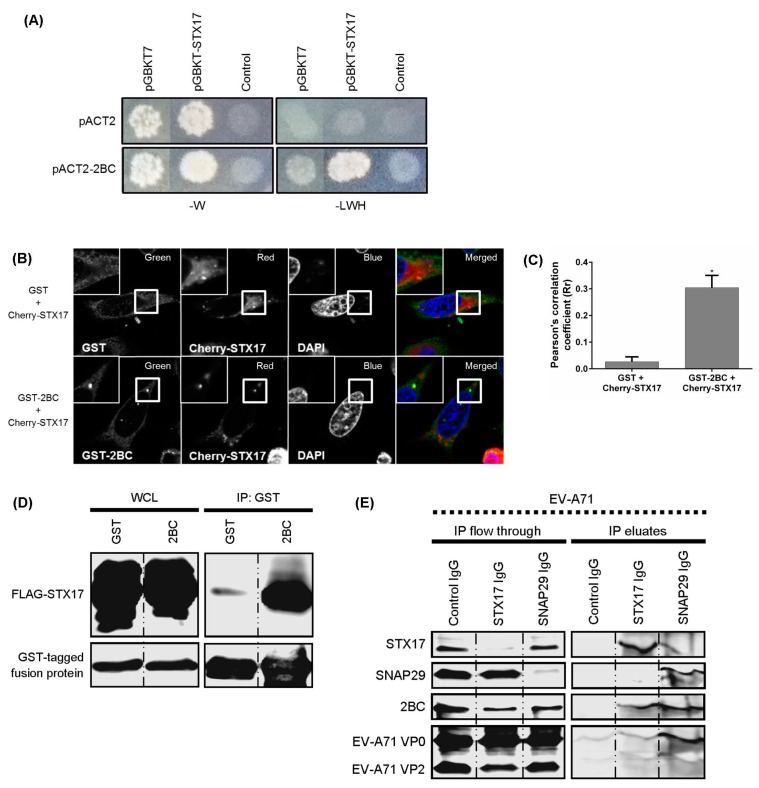
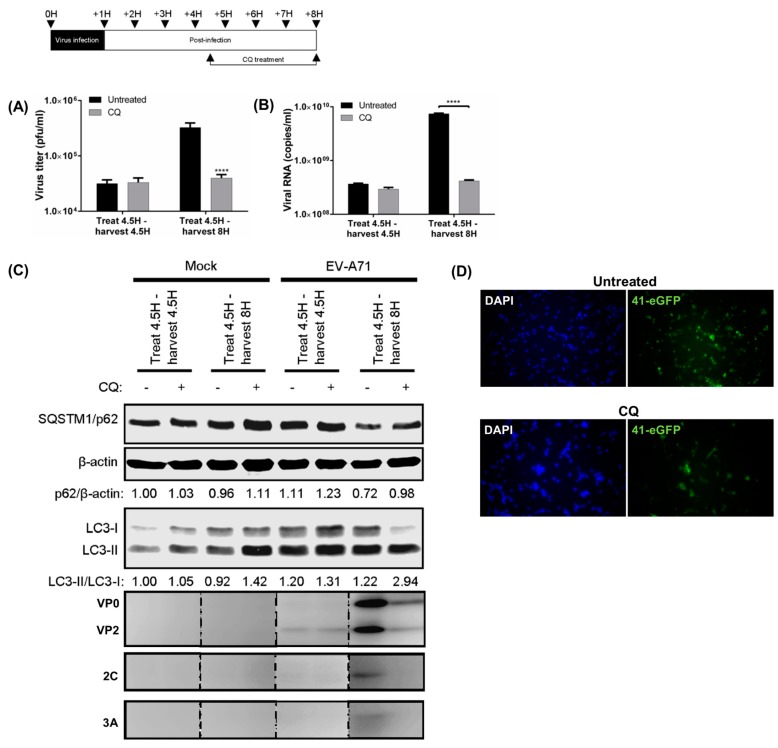
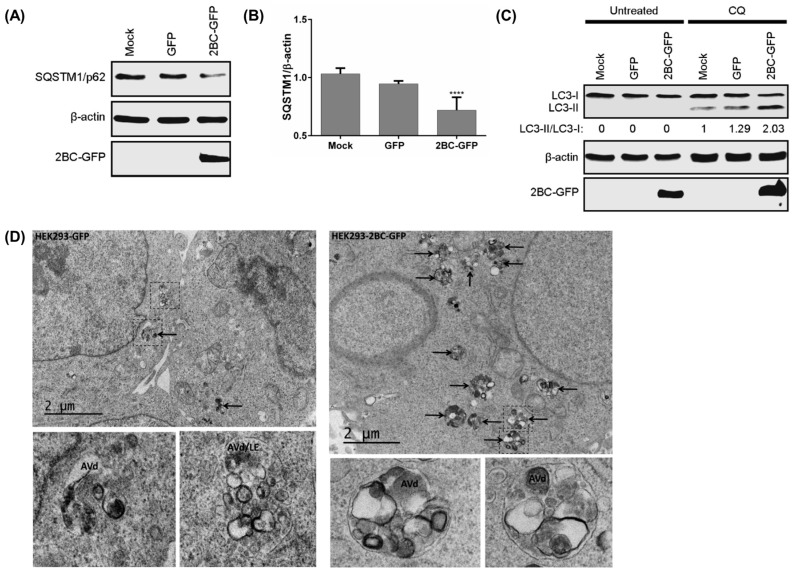
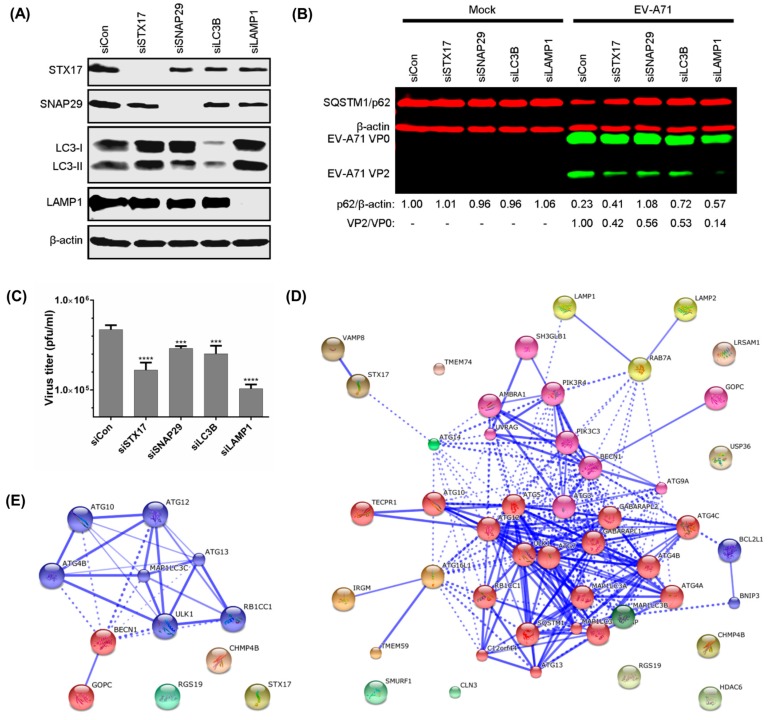
Viruses have evolved unique strategies to evade or subvert autophagy machinery. Enterovirus A71 (EV-A71) induces autophagy during infection in vitro and in vivo. In this study, we report that EV-A71 triggers autolysosome formation during infection in human rhabdomyosarcoma (RD) cells to facilitate its replication. Blocking autophagosome-lysosome fusion with chloroquine inhibited virus RNA replication, resulting in lower viral titres, viral RNA copies and viral proteins. Overexpression of the non-structural protein 2BC of EV-A71 induced autolysosome formation. Yeast 2-hybrid and co-affinity purification assays showed that 2BC physically and specifically interacted with a -ethylmaleimide-sensitive factor attachment receptor (SNARE) protein, syntaxin-17 (STX17). Co-immunoprecipitation assay further showed that 2BC binds to SNARE proteins, STX17 and synaptosome associated protein 29 (SNAP29). Transient knockdown of STX17, SNAP29, and microtubule-associated protein 1 light chain 3B (LC3B), crucial proteins in the fusion between autophagosomes and lysosomes) as well as the lysosomal-associated membrane protein 1 (LAMP1) impaired production of infectious EV-A71 in RD cells. Collectively, these results demonstrate that the generation of autolysosomes triggered by the 2BC non-structural protein is important for EV-A71 replication, revealing a potential molecular pathway targeted by the virus to exploit autophagy. This study opens the possibility for the development of novel antivirals that specifically target 2BC to inhibit formation of autolysosomes during EV-A71 infection.
病毒已经进化出独特的策略来逃避或颠覆自噬机制。肠道病毒A71(EV-A71)在体外和体内感染过程中诱导自噬。在本研究中,我们报告EV-A71在人横纹肌肉瘤(RD)细胞感染期间触发自噬溶酶体形成以促进其复制。用氯喹阻断自噬体-溶酶体融合抑制病毒RNA复制,导致病毒滴度、病毒RNA拷贝数和病毒蛋白降低。EV-A71非结构蛋白2BC的过表达诱导自噬溶酶体形成。酵母双杂交和共亲和纯化试验表明,2BC与一种对α-乙基马来酰亚胺敏感的因子附着受体(SNARE)蛋白 syntaxin-17(STX17)发生物理性和特异性相互作用。免疫共沉淀试验进一步表明,2BC与SNARE蛋白、STX17和突触小体相关蛋白29(SNAP29)结合。瞬时敲低STX17、SNAP29以及自噬体与溶酶体融合中的关键蛋白微管相关蛋白1轻链3B(LC3B)和溶酶体相关膜蛋白1(LAMP1)会损害RD细胞中传染性EV-A71的产生。总体而言,这些结果表明由2BC非结构蛋白触发的自噬溶酶体的产生对EV-A71复制很重要,揭示了病毒利用自噬的潜在分子途径。这项研究为开发新型抗病毒药物开辟了可能性,这些药物可特异性靶向2BC以抑制EV-A71感染期间自噬溶酶体的形成。