Jiang Yike, Patel Chaya D, Manivanh Richard, North Brian, Backes Iara M, Posner David A, Gilli Francesca, Pachner Andrew R, Nguyen Lananh N, Leib David A
Department of Microbiology and Immunology, Geisel School of Medicine at Dartmouth, Lebanon, New Hampshire, USA.
Department of Neurology, Geisel School of Medicine at Dartmouth, Lebanon, New Hampshire, USA.
mBio. 2017 Jul 5;8(4):e00678-17. doi: 10.1128/mBio.00678-17.
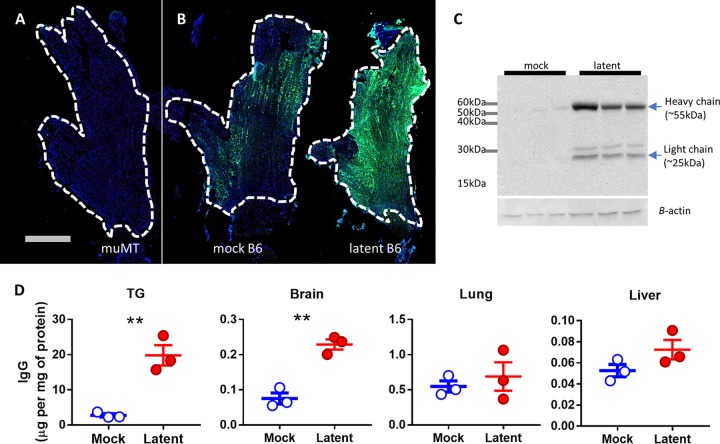
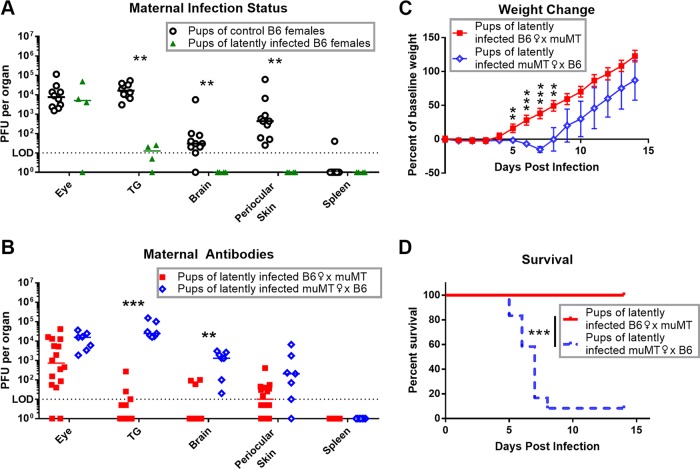
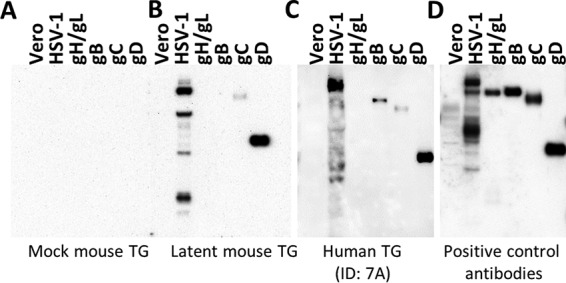
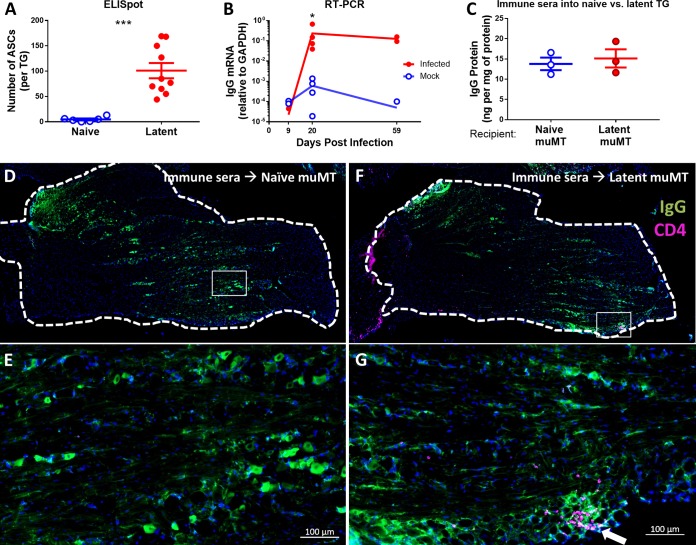
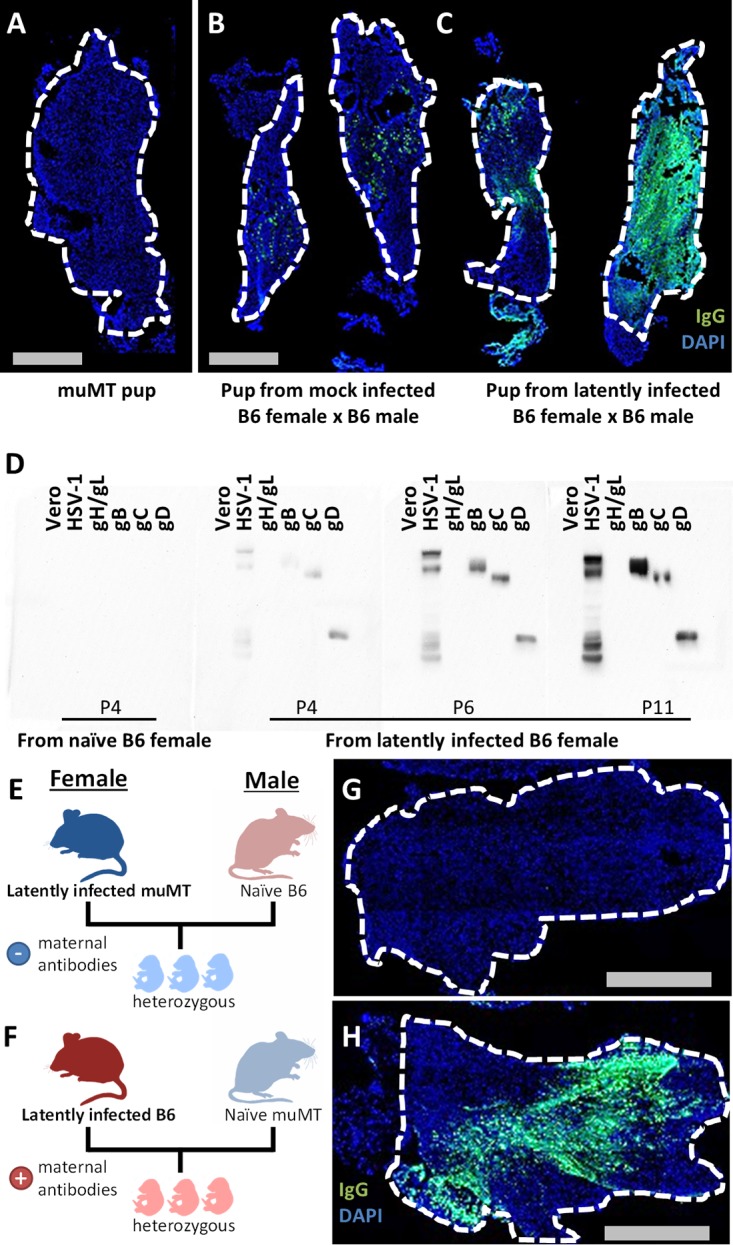
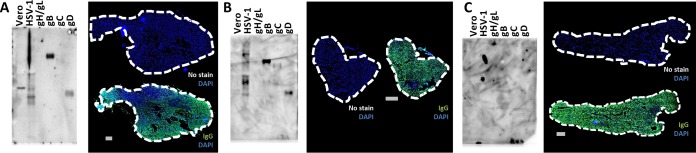
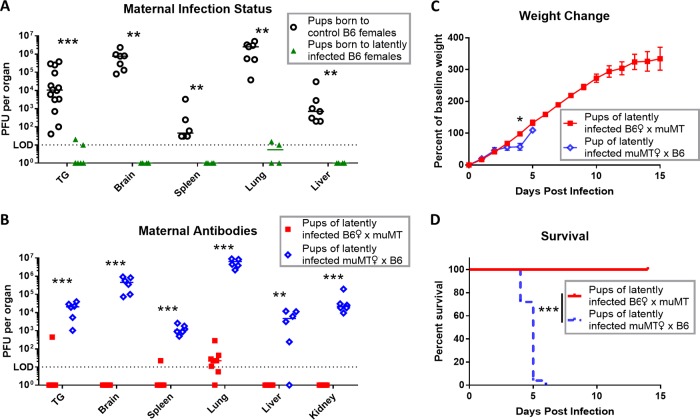
While antibody responses to neurovirulent pathogens are critical for clearance, the extent to which antibodies access the nervous system to ameliorate infection is poorly understood. In this study on herpes simplex virus 1 (HSV-1), we demonstrate that HSV-specific antibodies are present during HSV-1 latency in the nervous systems of both mice and humans. We show that antibody-secreting cells entered the trigeminal ganglion (TG), a key site of HSV infection, and persisted long after the establishment of latent infection. We also demonstrate the ability of passively administered IgG to enter the TG independently of infection, showing that the naive TG is accessible to antibodies. The translational implication of this finding is that human fetal neural tissue could contain HSV-specific maternally derived antibodies. Exploring this possibility, we observed HSV-specific IgG in HSV DNA-negative human fetal TG, suggesting passive transfer of maternal immunity into the prenatal nervous system. To further investigate the role of maternal antibodies in the neonatal nervous system, we established a murine model to demonstrate that maternal IgG can access and persist in neonatal TG. This maternal antibody not only prevented disseminated infection but also completely protected the neonate from neurological disease and death following HSV challenge. Maternal antibodies therefore have a potent protective role in the neonatal nervous system against HSV infection. These findings strongly support the concept that prevention of prenatal and neonatal neurotropic infections can be achieved through maternal immunization. Herpes simplex virus 1 is a common infection of the nervous system that causes devastating neonatal disease. Using mouse and human tissue, we discovered that antiviral antibodies accumulate in neural tissue after HSV-1 infection in adults. Similarly, these antibodies pass to the offspring during pregnancy. We found that antiviral maternal antibodies can readily access neural tissue of the fetus and neonate. These maternal antibodies then protect neonatal mice against HSV-1 neurological infection and death. These results underscore the previously unappreciated role of maternal antibodies in protecting fetal and newborn nervous systems against infection. These data suggest that maternal immunization would be efficacious at preventing fetal/neonatal neurological infections.
虽然针对神经毒性病原体的抗体反应对于病原体清除至关重要,但人们对抗体进入神经系统以减轻感染的程度了解甚少。在这项关于单纯疱疹病毒1(HSV-1)的研究中,我们证明在小鼠和人类的神经系统中,HSV-1潜伏期间存在HSV特异性抗体。我们发现分泌抗体的细胞进入了三叉神经节(TG),这是HSV感染的关键部位,并且在潜伏感染建立后很长时间内持续存在。我们还证明了被动给予的IgG能够独立于感染进入TG,表明幼稚的TG对抗体是可及的。这一发现的转化意义在于,人类胎儿神经组织可能含有源自母体的HSV特异性抗体。为了探究这种可能性,我们在HSV DNA阴性 的人类胎儿TG中观察到了HSV特异性IgG,这表明母体免疫可被动转移至产前神经系统。为了进一步研究母体抗体在新生儿神经系统中的作用,我们建立了一个小鼠模型,以证明母体IgG能够进入并持续存在于新生小鼠的TG中。这种母体抗体不仅预防了播散性感染,还完全保护了新生儿免受HSV攻击后的神经疾病和死亡。因此,母体抗体在新生儿神经系统中对HSV感染具有强大的保护作用。这些发现有力地支持了通过母体免疫可预防产前和新生儿嗜神经感染这一概念。单纯疱疹病毒1是一种常见的神经系统感染病原体,可导致严重的新生儿疾病。利用小鼠和人类组织,我们发现抗病毒抗体在成年人HSV-1感染后在神经组织中积累。同样,这些抗体在怀孕期间传递给后代。我们发现抗病毒母体抗体能够轻易进入胎儿和新生儿的神经组织。然后,这些母体抗体保护新生小鼠免受HSV-1神经感染和死亡。这些结果强调了母体抗体在保护胎儿和新生儿神经系统免受感染方面此前未被认识到的作用。这些数据表明母体免疫在预防胎儿/新生儿神经感染方面将是有效的。