Andersen Tonny Elmose, Lahav Yael, Ellegaard Hanne, Manniche Claus
Department of Psychology, University of Southern Denmark, Odense, Denmark.
Center of Excellence for Mass Trauma, Tel Aviv University, Tel Aviv, Israel.
Eur J Psychotraumatol. 2017 May 30;8(1):1331108. doi: 10.1080/20008198.2017.1331108. eCollection 2017.
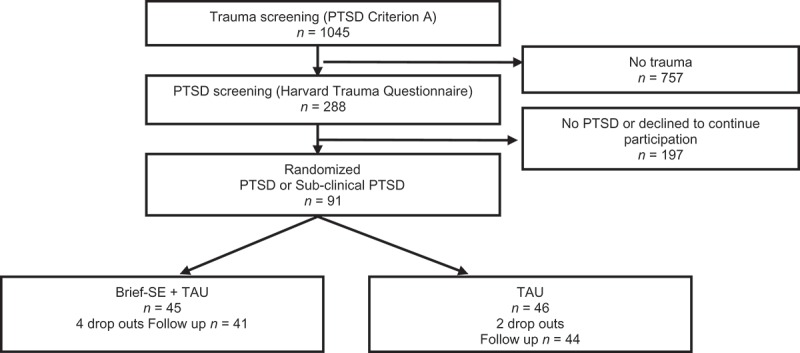
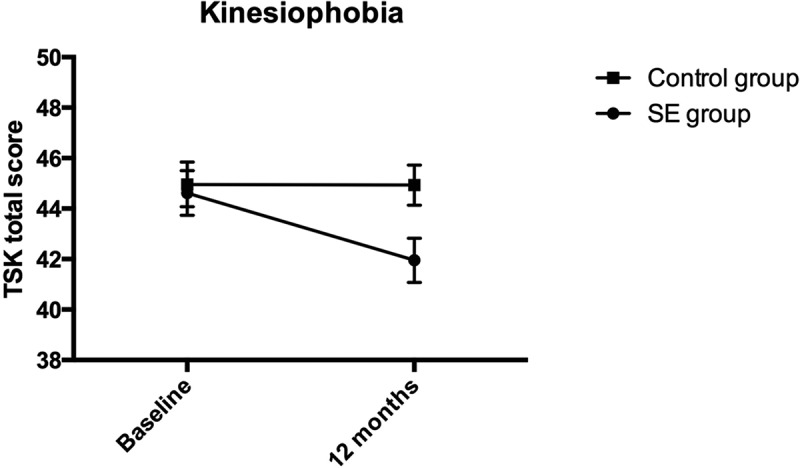
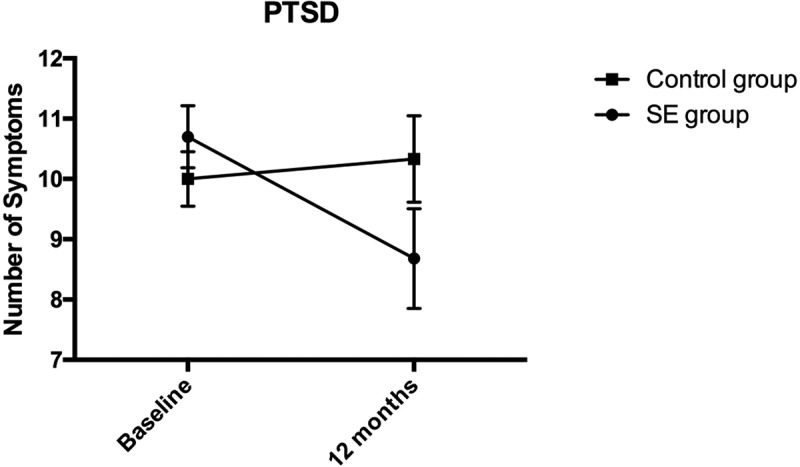
It is well documented that comorbid post-traumatic stress disorder (PTSD) in chronic pain is associated with a more severe symptom profile with respect to pain, disability and psychological distress. However, very few intervention studies exist targeting both PTSD and pain. The current study is the first randomized controlled trial evaluating the effect of the body-oriented trauma approach of Somatic Experiencing (SE) for comorbid PTSD and low back pain. Although the method is well recognized by clinicians and widely used, SE still needs to be tested in a randomized clinical trial in comparison with an active control group. The aim of the current study was to compare the effect of an SE intervention in addition to treatment-as-usual (TAU) for patients with chronic low back pain and comorbid PTSD compared to TAU alone. The study was a two-group randomized controlled clinical trial. A cohort of patients ( = 1045) referred to a large Danish spine centre between February 2013 and October 2014 were screened for PTSD and randomized to either TAU (4-12 sessions of supervised exercises for low back pain) or TAU plus SE (6-12 sessions). In total, 91 patients fulfilled the inclusion criteria and volunteered to participate in the study. Treatment effects were evaluated by self-report questionnaires comparing baseline measures with 12-month follow-up measures. The additional SE intervention significantly reduced the number of PTSD symptoms compared with TAU alone, corresponding to a large effect size. Also, fear of movement was significantly reduced (moderate effect size). Both groups achieved a large reduction in pain-catastrophizing, disability and pain. A brief additional SE intervention was found to have a significant effect on PTSD and fear of movement compared to TAU alone. However, the overall effect of SE was less than expected and the clinical importance of the effects can be questioned.
有充分文献记载,慢性疼痛中共病的创伤后应激障碍(PTSD)与疼痛、残疾和心理困扰方面更严重的症状表现相关。然而,针对PTSD和疼痛的干预研究非常少。本研究是第一项评估体感疗法(SE)这种以身体为导向的创伤治疗方法对共病PTSD和下腰痛疗效的随机对照试验。尽管该方法已得到临床医生的广泛认可并被广泛使用,但仍需与积极对照组进行比较,在随机临床试验中进行检验。本研究的目的是比较在常规治疗(TAU)基础上增加SE干预对慢性下腰痛合并PTSD患者与单纯TAU治疗的效果。该研究是一项两组随机对照临床试验。对2013年2月至2014年10月期间转诊至丹麦一家大型脊柱中心的一组患者(n = 1045)进行PTSD筛查,并随机分为TAU组(针对下腰痛进行4 - 12次有监督的锻炼)或TAU加SE组(6 - 12次)。共有91名患者符合纳入标准并自愿参与研究。通过自我报告问卷比较基线测量值与12个月随访测量值来评估治疗效果。与单纯TAU相比,额外的SE干预显著减少了PTSD症状的数量,效应量较大。此外,运动恐惧也显著降低(中等效应量)。两组在疼痛灾难化、残疾和疼痛方面都有大幅减轻。结果发现,与单纯TAU相比,简短的额外SE干预对PTSD和运动恐惧有显著影响。然而,SE的总体效果低于预期,其效果的临床重要性值得质疑。