Shiroma Helio Francisco, Takaschima Augusto Key Karazawa, Farah Michel Eid, Höfling-Lima Ana Luisa, de Luca Canto Graziela, Benedetti Roberto Henrique, Rodrigues Eduardo Buchele
Department of Ophthalmology and Visual Sciences, Federal University of São Paulo, Rua Pastor William Richard Schisler 900/apto 1011, Florianópolis, SC 88034-100 Brazil.
Florianopolis Hospital, Florianópolis, Brazil.
Int J Retina Vitreous. 2017 Jul 3;3:23. doi: 10.1186/s40942-017-0076-9. eCollection 2017.
Intravitreal injection (IVI) is a very common vitreoretinal procedure, and multiple injections are often required per patient. This systematic review was conducted to evaluate the effectiveness of various local anesthetic techniques in reducing pain during injection.
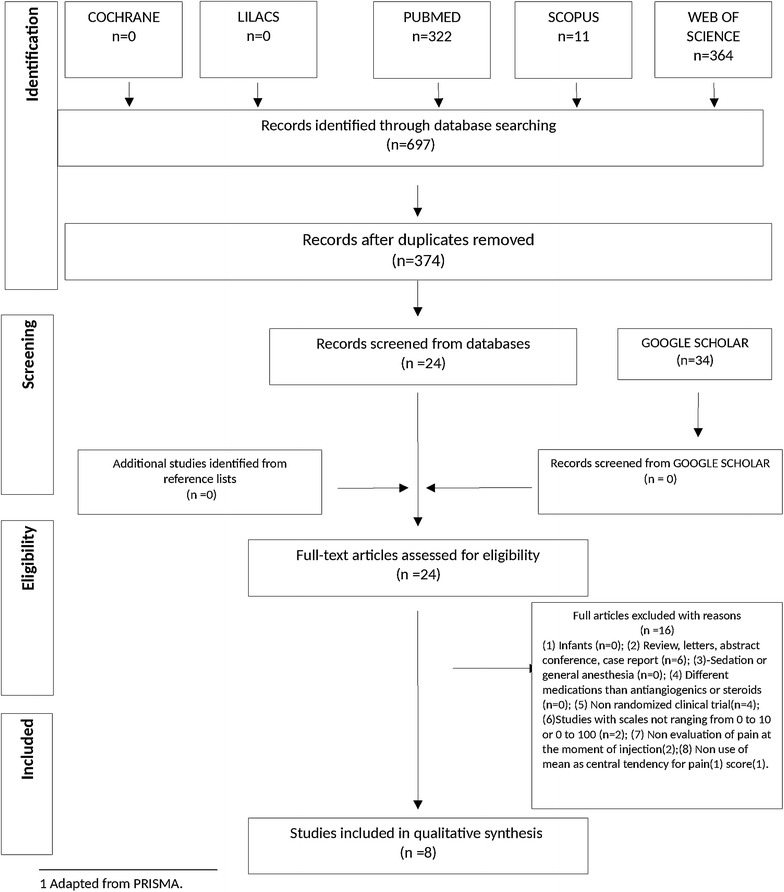
A systematic review was conducted based on searches of Cochrane, LILACS, PubMed, Scopus, Web of Science, and the gray literature (Google Scholar). The end search date was February 19, 2016, across all databases. We classified pain by converting visual analog scale (VAS) scores (0-100 mm) into Jensen's classification levels: 0-4, no pain; 5-44, mild pain; 45-74, moderate pain; and 75-100, severe pain. An intervention was considered clinically significant when pain score change was >12 mm on a 100-mm scale.
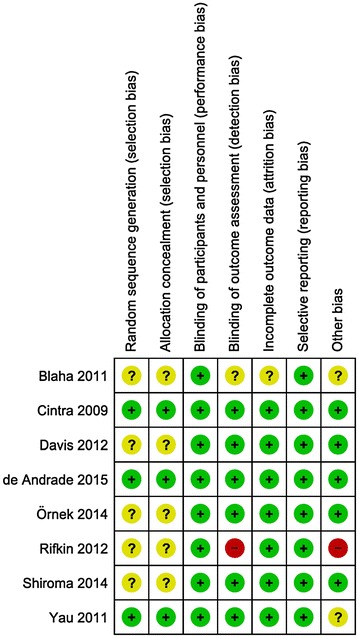
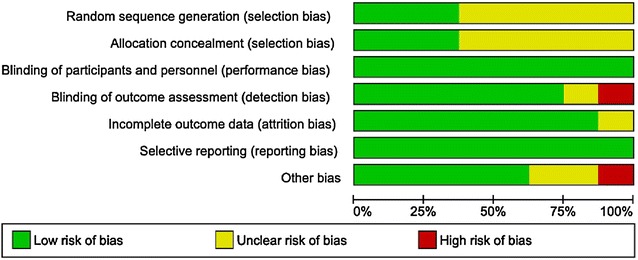
Eight studies out of 23 met the eligibility criteria. The total number of patients was 847. Most studies (5/8 [62.5%]) were at unclear risk of bias because of unclear randomization, thus providing only moderate evidence to this review. The anesthetic techniques included eye drops with proparacaine, tetracaine or cocaine, a lidocaine pledget or gel, and subconjunctival injection of 2% lidocaine or 0.75% levobupivacaine. No study comprised all of the techniques. Pain was mild (VAS scores, 5-44 mm) regardless of anesthetic technique. A clinically significant intervention (pain score change >12 mm) was found for only one study comparing proparacaine drops, lidocaine gel, and subconjunctival lidocaine; in that study, a subconjunctival injection of 2% lidocaine provided the greatest pain reduction. A meta-analysis was not possible due to study heterogeneity.
Patient pain during IVI under topical anesthesia is mild regardless of anesthetic technique. A subconjunctival injection of 2% lidocaine could be an option for highly sensitive patients. However, with moderate level of evidence, no single anesthetic technique could be defined as the best option for IVI.
玻璃体内注射(IVI)是一种非常常见的玻璃体视网膜手术,每位患者通常需要多次注射。本系统评价旨在评估各种局部麻醉技术在减轻注射过程中疼痛方面的有效性。
基于对Cochrane、LILACS、PubMed、Scopus、Web of Science和灰色文献(谷歌学术)的检索进行系统评价。所有数据库的最终检索日期为2016年2月19日。我们通过将视觉模拟量表(VAS)评分(0 - 100mm)转换为詹森分类水平来对疼痛进行分类:0 - 4,无疼痛;5 - 44,轻度疼痛;45 - 74,中度疼痛;75 - 100,重度疼痛。当疼痛评分变化在100mm量表上>12mm时,干预被认为具有临床意义。
23项研究中有8项符合纳入标准。患者总数为847例。由于随机化不明确,大多数研究(5/8 [62.5%])存在偏倚风险不明确的情况,因此为本评价仅提供了中等质量的证据。麻醉技术包括使用丙美卡因、丁卡因或可卡因滴眼,利多卡因棉片或凝胶,以及结膜下注射2%利多卡因或0.75%左旋布比卡因。没有研究涵盖所有技术。无论采用何种麻醉技术,疼痛均为轻度(VAS评分,5 - 44mm)。仅在一项比较丙美卡因滴眼液、利多卡因凝胶和结膜下利多卡因的研究中发现了具有临床意义的干预(疼痛评分变化>12mm);在该研究中,结膜下注射2%利多卡因减轻疼痛的效果最佳。由于研究的异质性,无法进行荟萃分析。
无论采用何种麻醉技术,局部麻醉下IVI期间患者的疼痛均为轻度。结膜下注射2%利多卡因可能是高度敏感患者的一种选择。然而,由于证据水平中等,没有单一的麻醉技术可被定义为IVI的最佳选择。