Micro-Signaling Regulation Technology Unit, RIKEN Center for Life Science Technologies, Wako, Saitama, Japan.
School of Life Science and Technology, Tokyo Institute of Technology, Yokohama, Kanagawa, Japan.
Sci Rep. 2017 Jul 6;7(1):4746. doi: 10.1038/s41598-017-04630-8.
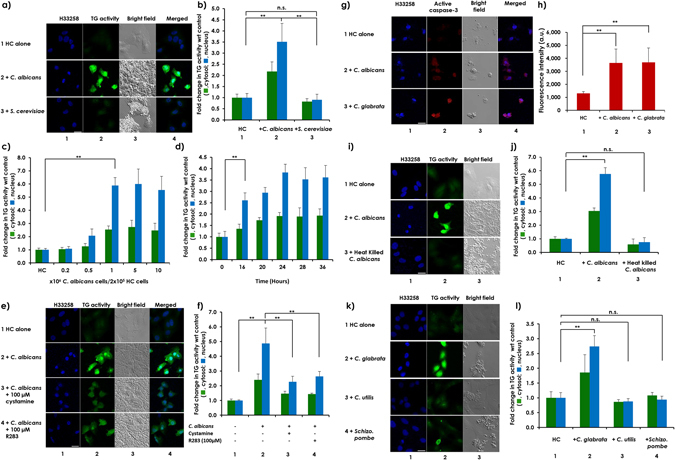
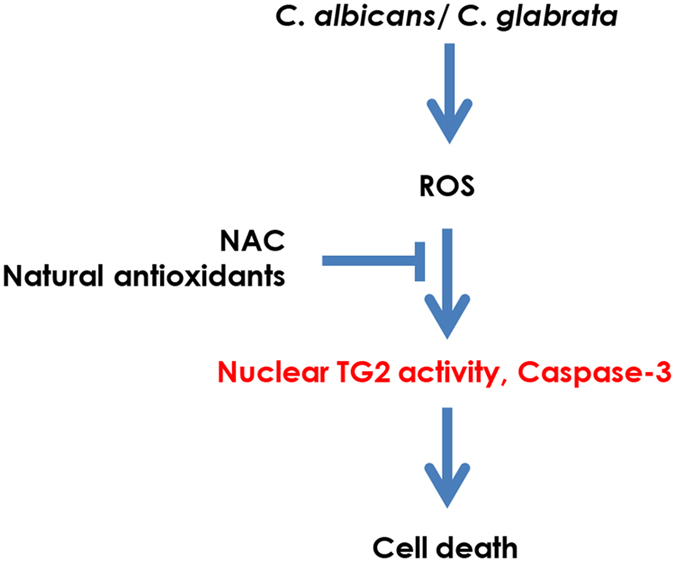
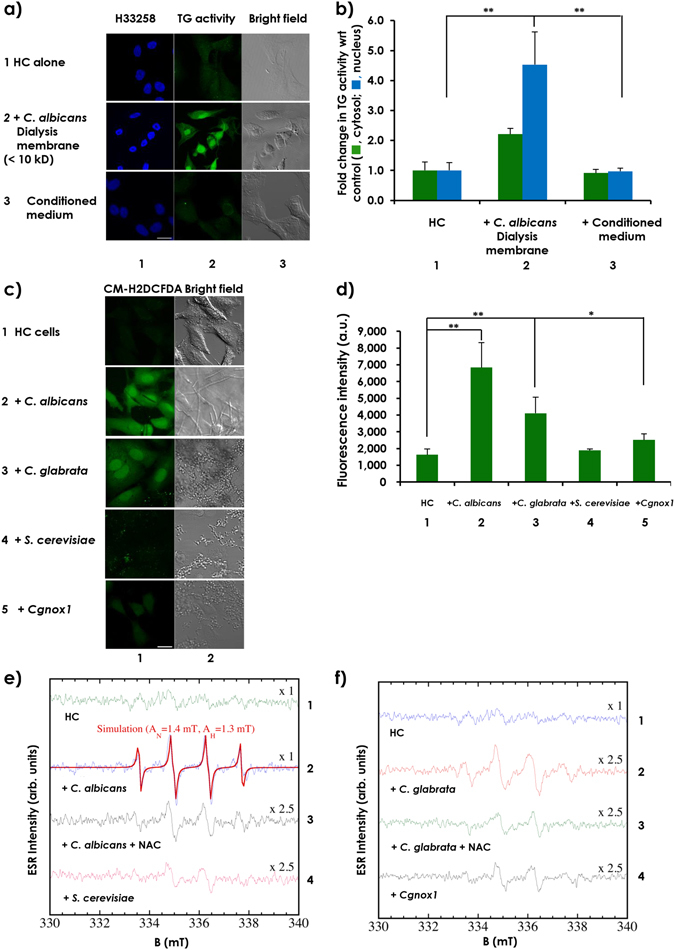
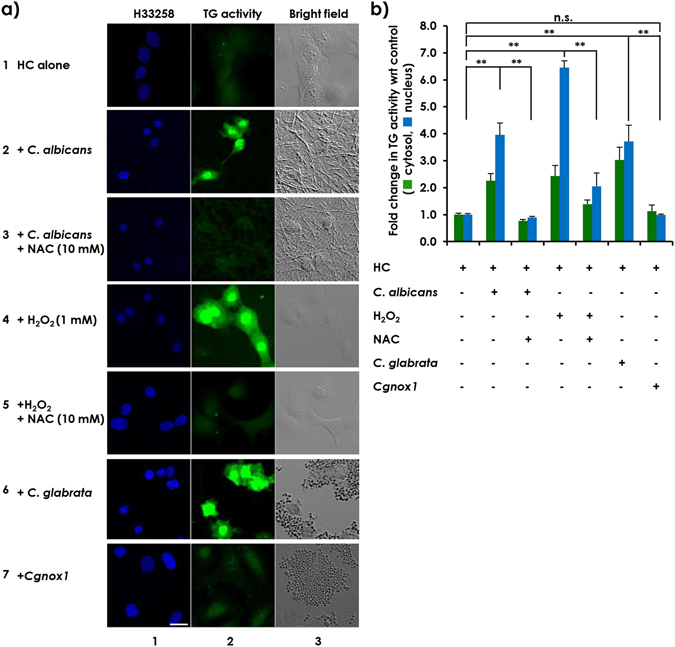
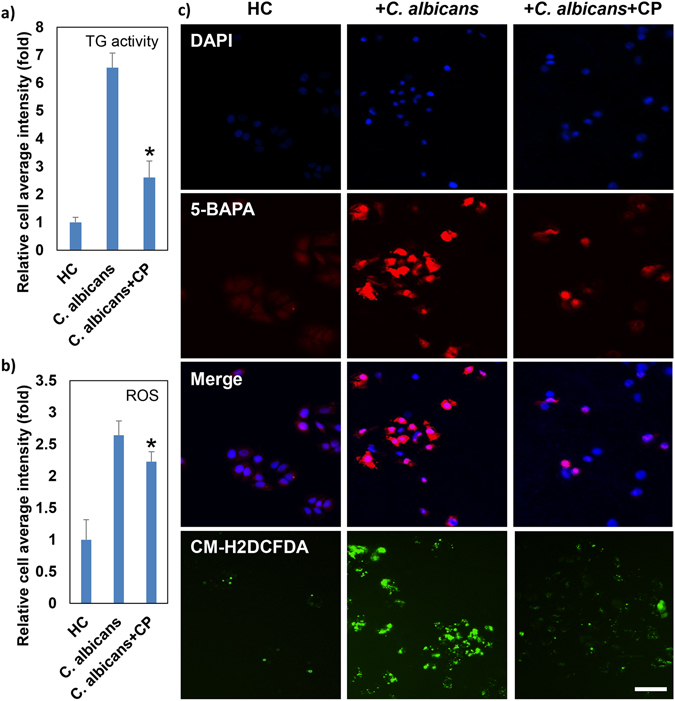
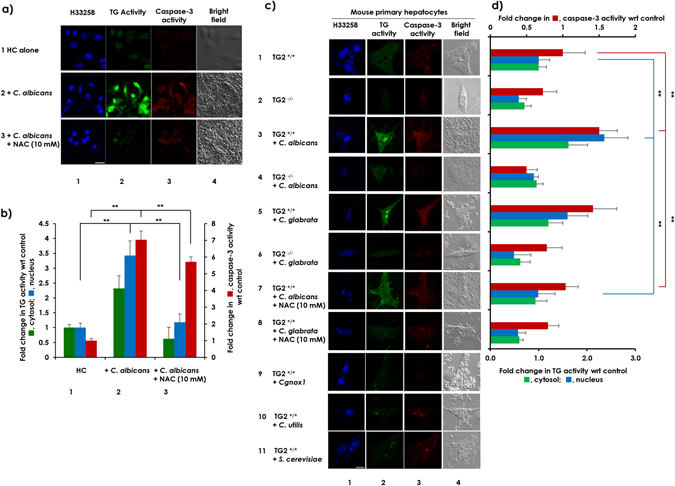
We previously reported the importance of induced nuclear transglutaminase (TG) 2 activity, which results in hepatic cell death, in ethanol-induced liver injury. Here, we show that co-incubation of either human hepatic cells or mouse primary hepatocytes derived from wild-type but not TG2 mice with pathogenic fungi Candida albicans and C. glabrata, but not baker's yeast Saccharomyces cerevisiae, induced cell death in host cells by enhancing cellular, particularly nuclear, TG activity. Further pharmacological and genetic approaches demonstrated that this phenomenon was mediated partly by the production of reactive oxygen species (ROS) such as hydroxyl radicals, as detected by a fluorescent probe and electron spin resonance. A ROS scavenger, N-acetyl cysteine, blocked enhanced TG activity primarily in the nuclei and inhibited cell death. In contrast, deletion of C. glabrata nox-1, which encodes a ROS-generating enzyme, resulted in a strain that failed to induce the same phenomena. A similar induction of hepatic ROS and TG activities was observed in C. albicans-infected mice. An antioxidant corn peptide fraction inhibited these phenomena in hepatic cells. These results address the impact of ROS-generating pathogens in inducing nuclear TG2-related liver injuries, which provides novel therapeutic targets for preventing and curing alcoholic liver disease.
我们之前报道了诱导型谷氨酰胺转移酶(TG)2 活性在乙醇诱导的肝损伤中的重要性,这种酶会导致肝细胞死亡。在这里,我们表明,与人肝细胞或源自野生型但不是 TG2 基因敲除型小鼠的原代肝细胞共孵育,无论是致病性真菌白色念珠菌和光滑念珠菌,还是非致病性酿酒酵母,都会通过增强细胞内特别是核内 TG 活性,导致宿主细胞死亡。进一步的药理学和遗传学方法表明,这种现象部分是通过产生活性氧(ROS)介导的,如通过荧光探针和电子自旋共振检测到的羟基自由基。ROS 清除剂 N-乙酰半胱氨酸阻断了主要在核内的增强的 TG 活性,并抑制了细胞死亡。相比之下,缺失编码 ROS 生成酶的光滑念珠菌nox-1 的基因,导致该菌株无法诱导相同的现象。在白色念珠菌感染的小鼠中也观察到类似的肝 ROS 和 TG 活性诱导。抗氧化玉米肽可抑制肝细胞中的这些现象。这些结果表明 ROS 生成性病原体在诱导与核 TG2 相关的肝损伤方面具有重要作用,为预防和治疗酒精性肝病提供了新的治疗靶点。