Hanschen Franziska S, Schreiner Monika
Leibniz Institute of Vegetable and Ornamental CropsGrossbeeren, Germany.
Front Plant Sci. 2017 Jun 22;8:1095. doi: 10.3389/fpls.2017.01095. eCollection 2017.
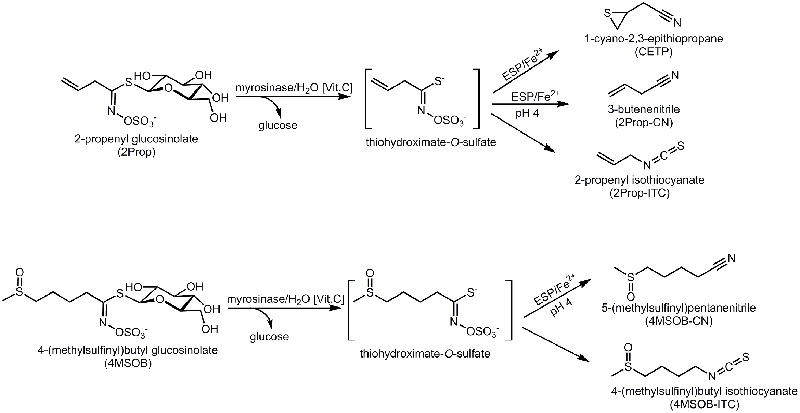
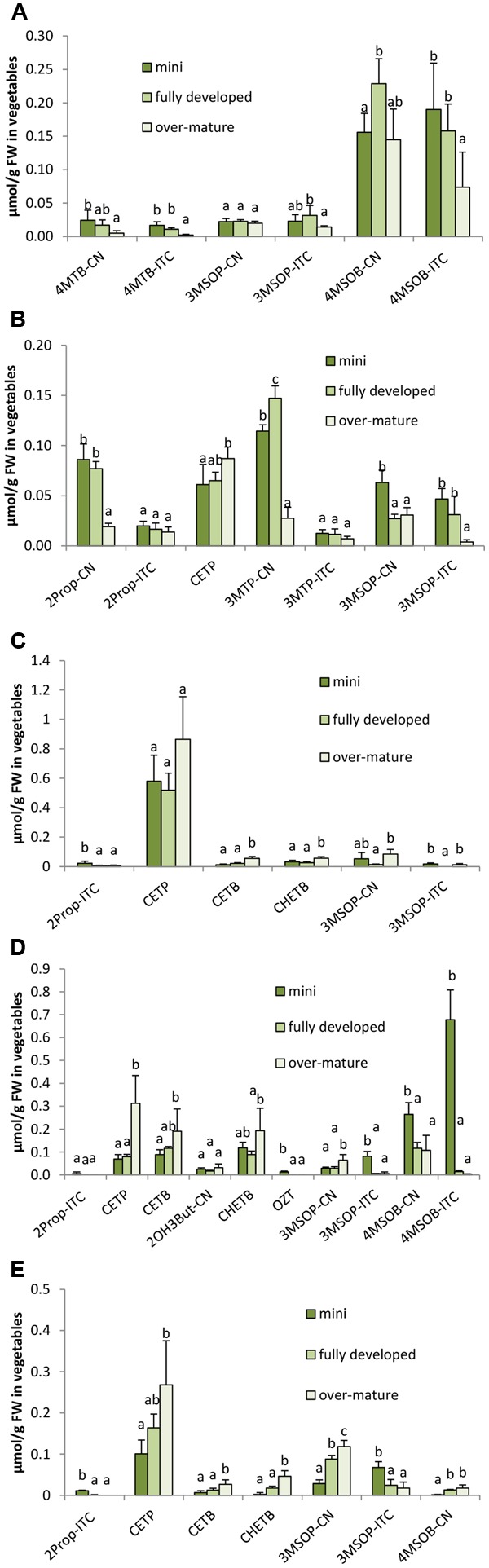
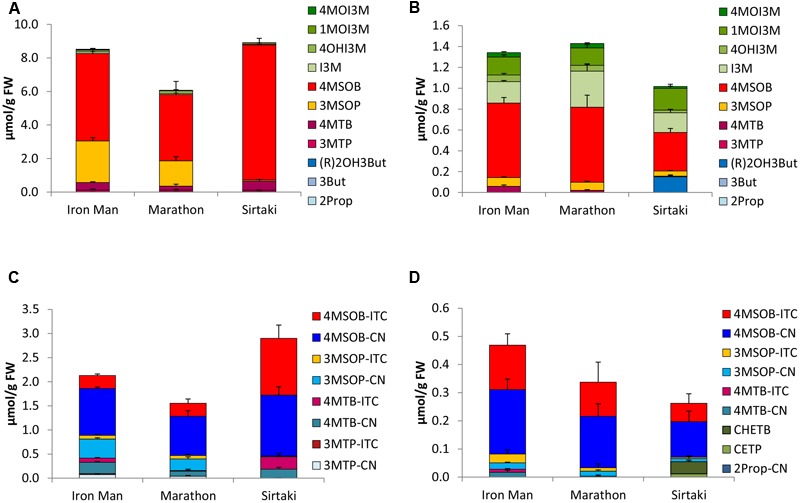
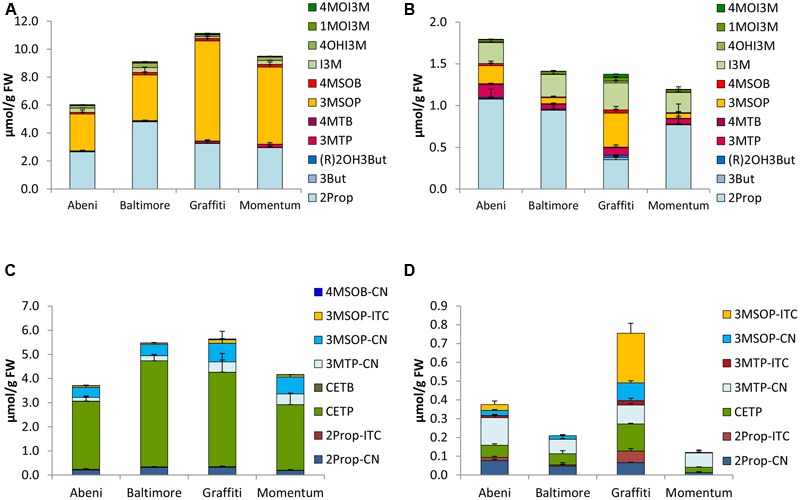
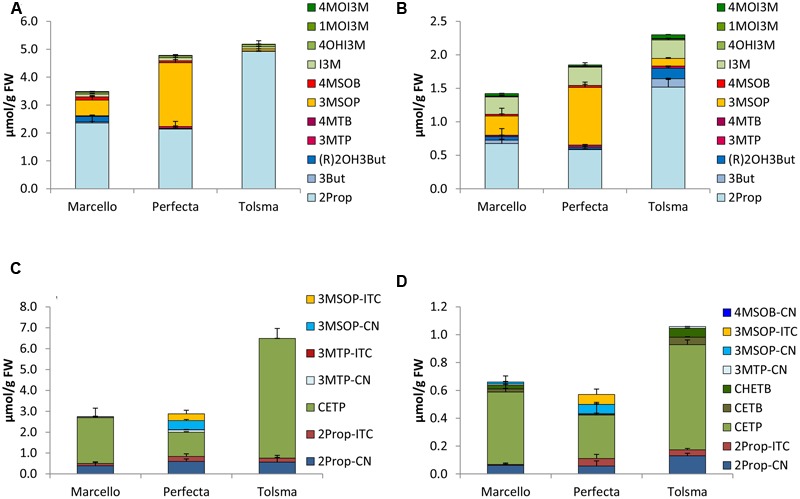
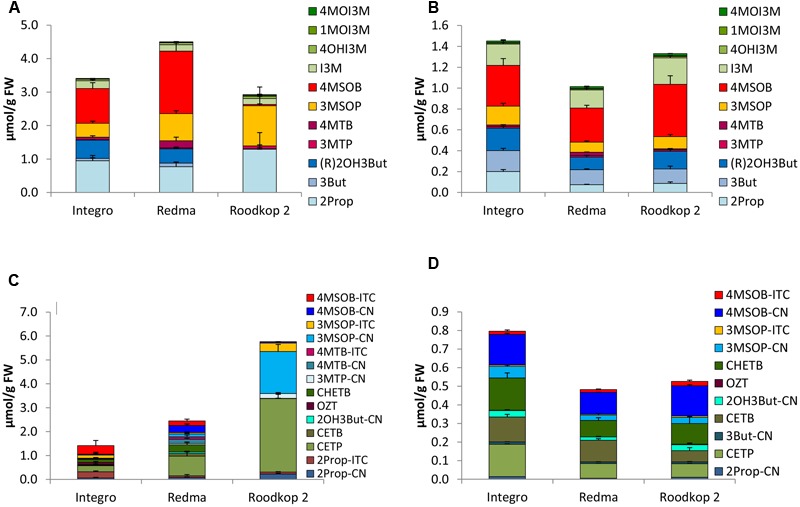
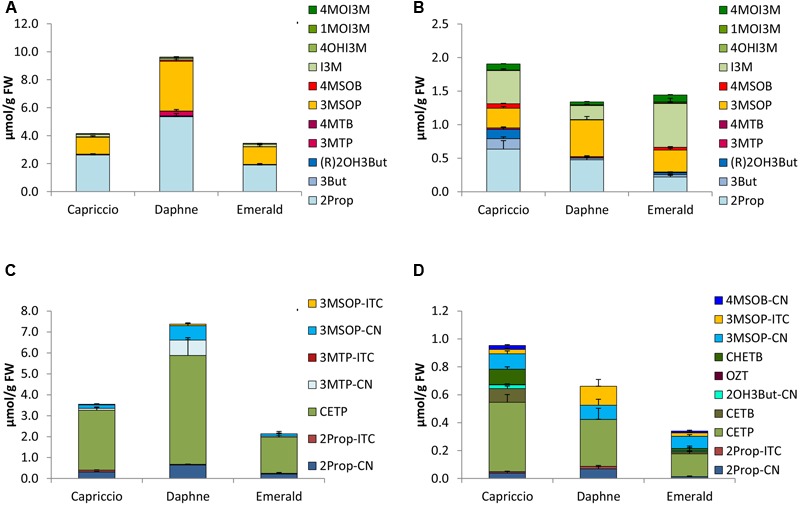
Vegetables of the group, such as broccoli, cauliflower, and cabbage, play an important role for glucosinolate consumption in the human diet. Upon maceration of the vegetable tissue, glucosinolates are degraded enzymatically to form volatile isothiocyanates, nitriles, and epithionitriles. However, only the uptake of isothiocyanates is linked to the cancer-preventive effects. Thus, it is of great interest to evaluate especially the isothiocyanate formation. Here, we studied the formation of glucosinolates and their respective hydrolysis products in sprouts and fully developed vegetable heads of different genotypes of the five varieties: broccoli, cauliflower as well as white, red, and savoy cabbages. Further, the effect of ontogeny (developmental stages) during the head development on the formation of glucosinolates and their respective hydrolysis products was evaluated at three different developmental stages (mini, fully developed, and over-mature head). Broccoli and red cabbage were mainly rich in 4-(methylsulfinyl)butyl glucosinolate (glucoraphanin), whereas cauliflower, savoy cabbage and white cabbage contained mainly 2-propenyl (sinigrin) and 3-(methylsulfinyl)propyl glucosinolate (glucoiberin). Upon hydrolysis, epithionitriles or nitriles were often observed to be the main hydrolysis products, with 1-cyano-2,3-epithiopropane being most abundant with up to 5.7 μmol/g fresh weight in white cabbage sprouts. Notably, sprouts often contained more than 10 times more glucosinolates or their hydrolysis products compared to fully developed vegetables. Moreover, during head development, both glucosinolate concentrations as well as hydrolysis product concentrations changed and mini heads contained the highest isothiocyanate concentrations. Thus, from a cancer-preventive point of view, consumption of mini heads of the varieties is recommended.
该类蔬菜,如西兰花、花椰菜和卷心菜,在人类饮食中对硫代葡萄糖苷的摄入起着重要作用。蔬菜组织被捣碎后,硫代葡萄糖苷会被酶解降解,形成挥发性异硫氰酸酯、腈类和环硫腈类。然而,只有异硫氰酸酯的摄取与防癌作用有关。因此,特别评估异硫氰酸酯的形成具有重要意义。在此,我们研究了西兰花、花椰菜以及白色、红色和皱叶卷心菜这五个品种不同基因型的芽苗和成熟菜头中硫代葡萄糖苷及其各自水解产物的形成。此外,在三个不同发育阶段(微型、成熟和过熟菜头)评估了菜头发育过程中个体发育(发育阶段)对硫代葡萄糖苷及其各自水解产物形成的影响。西兰花和红甘蓝主要富含4-(甲基亚磺酰基)丁基硫代葡萄糖苷(萝卜硫苷),而花椰菜、皱叶卷心菜和白色卷心菜主要含有2-丙烯基(黑芥子硫苷酸钾)和3-(甲基亚磺酰基)丙基硫代葡萄糖苷(葡萄糖异硫氰酸酯)。水解后,环硫腈类或腈类通常是主要的水解产物,在白色卷心菜芽苗中,1-氰基-2,3-环氧丙烷含量最高,可达5.7 μmol/g鲜重。值得注意的是,与成熟蔬菜相比,芽苗中硫代葡萄糖苷或其水解产物的含量通常高出10倍以上。此外,在菜头发育过程中,硫代葡萄糖苷浓度和水解产物浓度都会发生变化,微型菜头中的异硫氰酸酯浓度最高。因此,从防癌角度来看,建议食用这些品种的微型菜头。