Cartwright Ian M, Liu Xinjian, Zhou Min, Li Fang, Li Chuan-Yuan
Department of Dermatology, Duke University Medical Center, Durham, United States.
Department of Pharmacology and Cancer Biology, Duke University Medical Center, Durham, United States.
Elife. 2017 Jul 10;6:e26371. doi: 10.7554/eLife.26371.
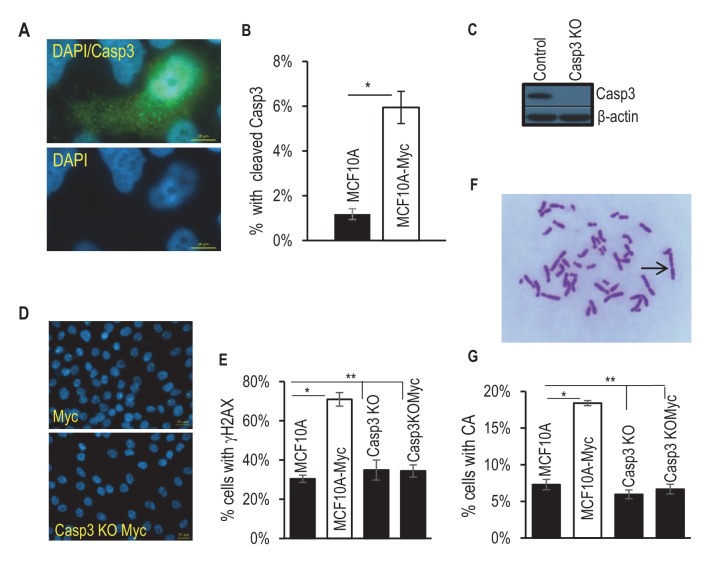
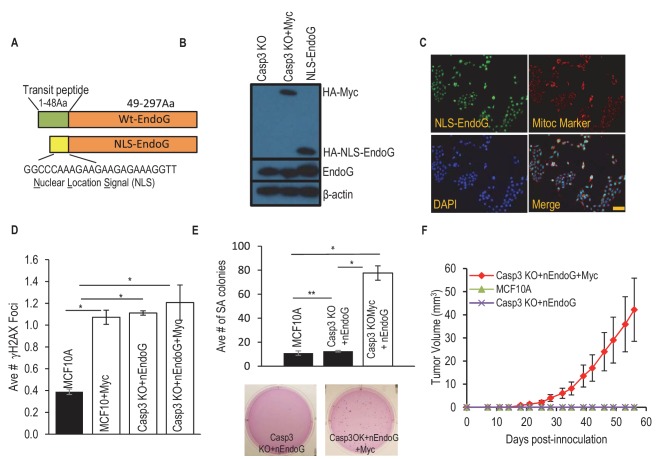
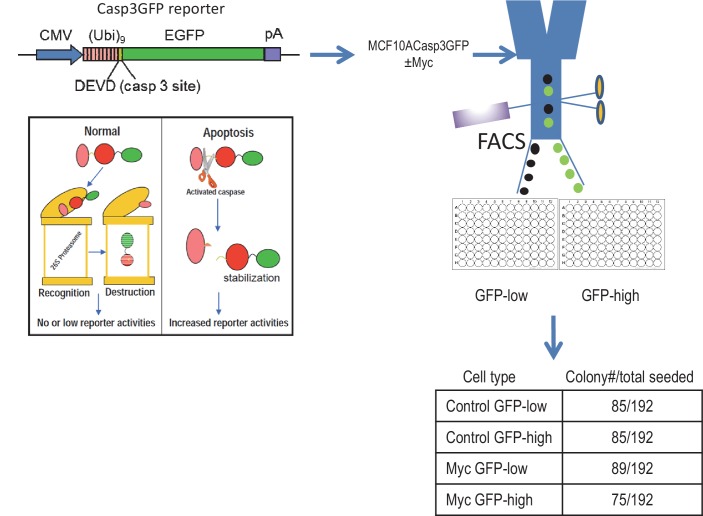
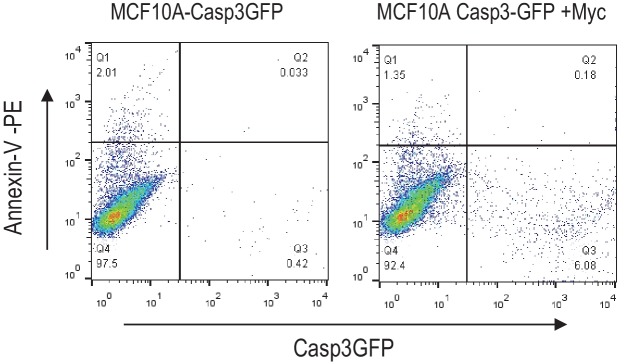
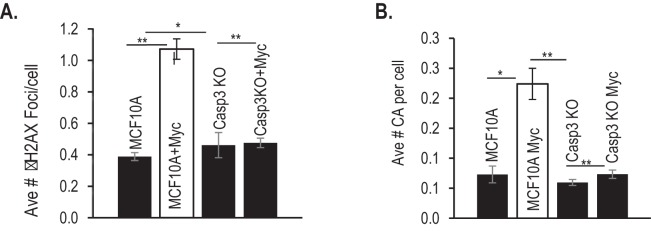
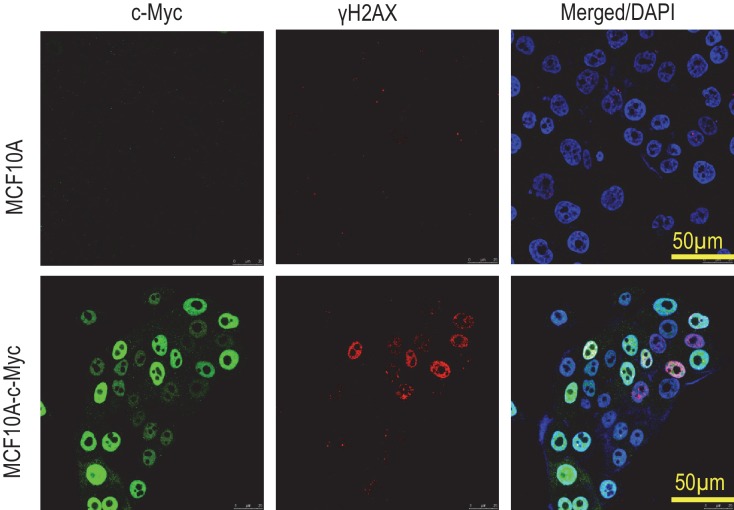
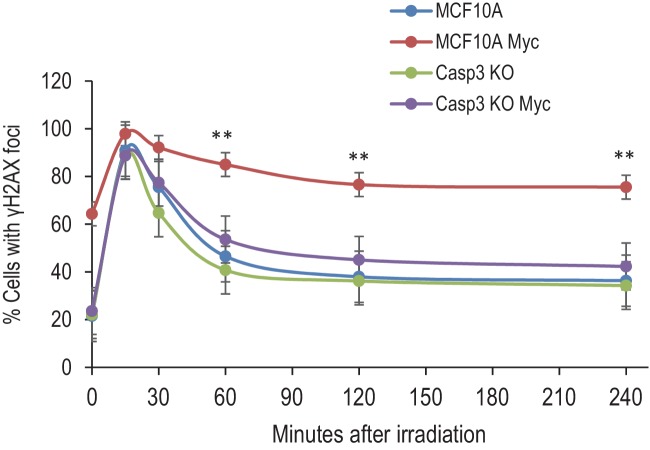
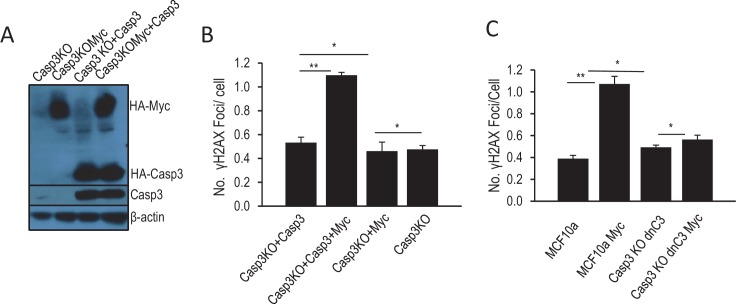
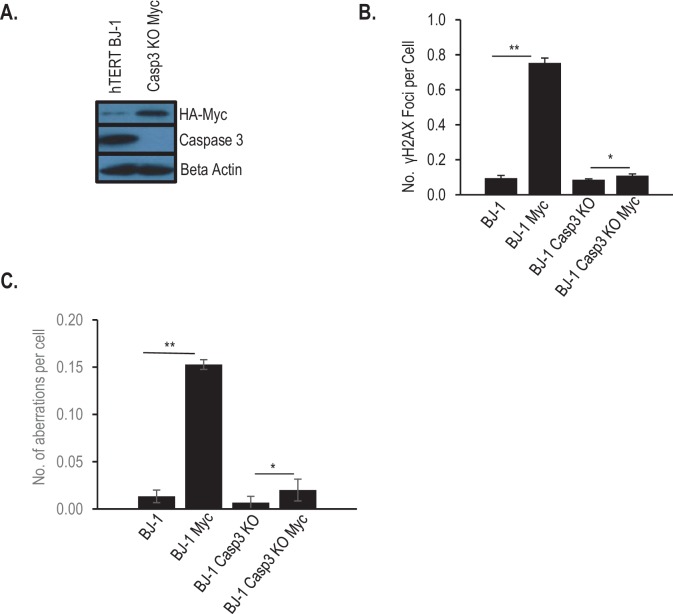
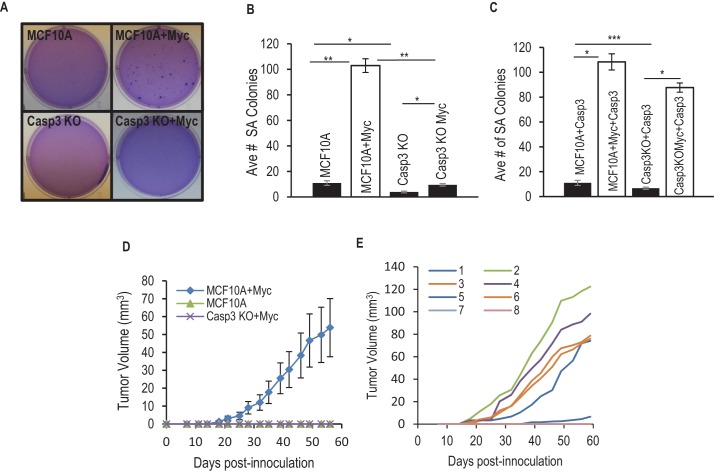
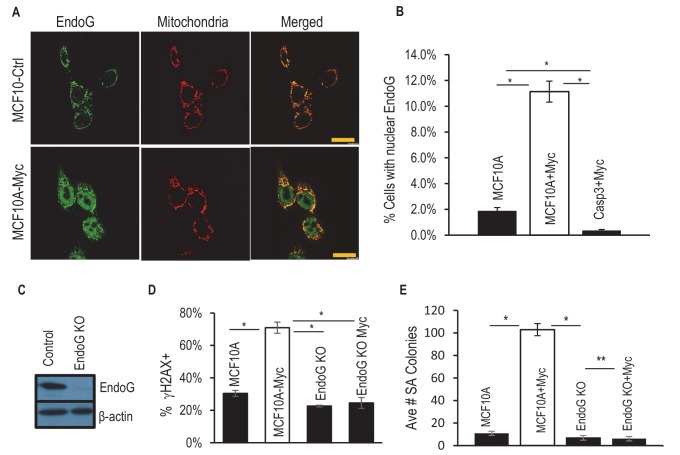
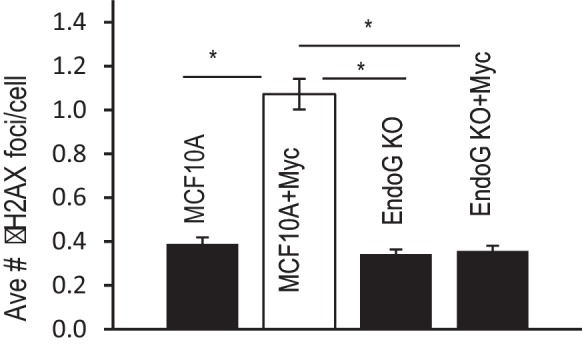
The mechanism for Myc-induced genetic instability is not well understood. Here we show that sublethal activation of Caspase-3 plays an essential, facilitative role in Myc-induced genomic instability and oncogenic transformation. Overexpression of Myc resulted in increased numbers of chromosome aberrations and γH2AX foci in non-transformed MCF10A human mammary epithelial cells. However, such increases were almost completely eliminated in isogenic cells with gene ablation. Furthermore, we show that endonuclease G, an apoptotic nuclease downstream of Caspase-3, is directly responsible for Myc-induced genetic instability. Genetic ablation of either or prevented Myc-induced oncogenic transformation of MCF10A cells. Taken together, we believe that Caspase-3 plays a critical, unexpected role in mediating Myc-induced genetic instability and transformation in mammalian cells.
Myc诱导基因不稳定的机制尚未完全明确。在此我们表明,半胱天冬酶-3的亚致死激活在Myc诱导的基因组不稳定和致癌转化中发挥着重要的促进作用。Myc的过表达导致未转化的MCF10A人乳腺上皮细胞中染色体畸变和γH2AX焦点数量增加。然而,在进行了基因敲除的同基因细胞中,这种增加几乎完全消除。此外,我们表明,核酸内切酶G,一种半胱天冬酶-3下游的凋亡核酸酶,直接导致Myc诱导的基因不稳定。对核酸内切酶G或进行基因敲除可阻止Myc诱导的MCF10A细胞致癌转化。综上所述,我们认为半胱天冬酶-3在介导Myc诱导的哺乳动物细胞基因不稳定和转化中发挥着关键且意想不到的作用。