Zhang Z, Deng Y, Zheng G, Jia X, Xiong Y, Luo K, Qiu Q, Qiu Ni, Yin J, Lu M, Liu H, Gu Y, He Z
Affiliated Cancer Hospital &Institute of Guangzhou Medical University, Guangzhou, Guangdong, China.
Guangzhou Institute of Snake Venom Research, School of Pharmaceutical Sciences, Guangzhou Medical University, Guangzhou, Guangdong, China.
Oncogenesis. 2017 Jul 10;6(7):e360. doi: 10.1038/oncsis.2017.53.
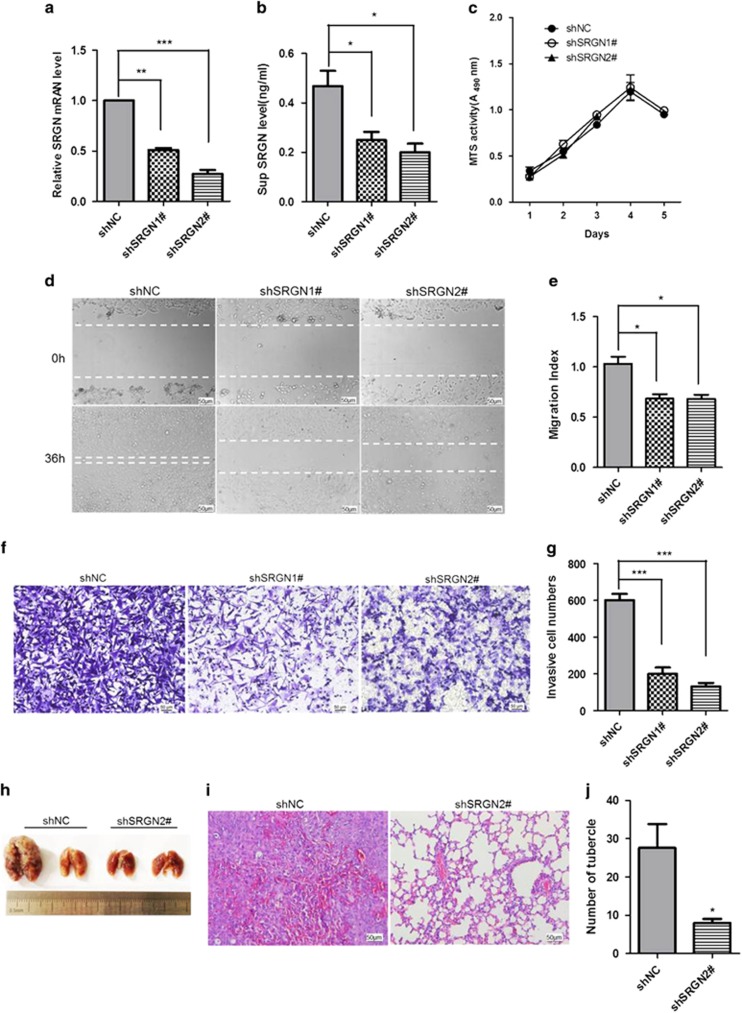
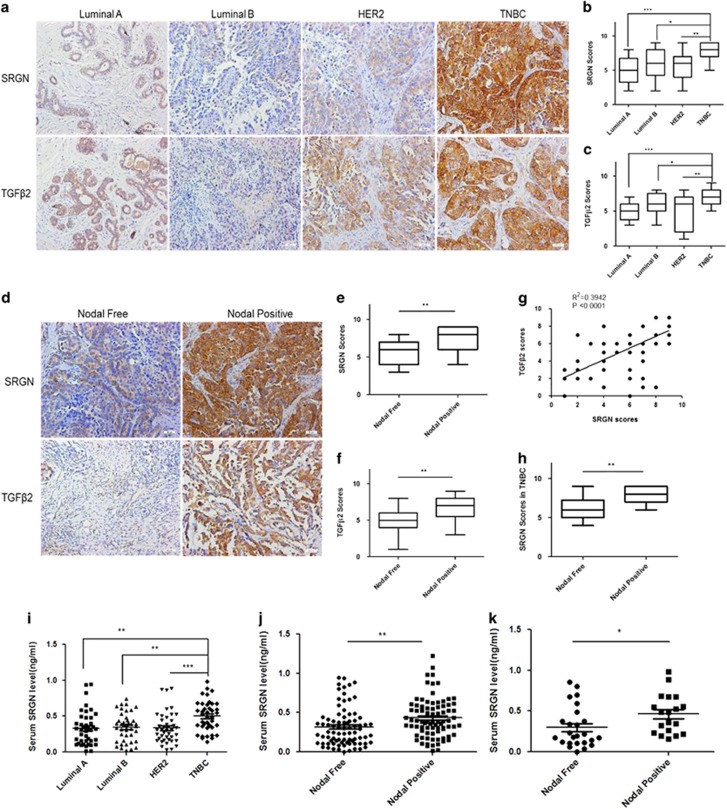
Patients with triple-negative breast cancers (TNBC) are at a high risk for a recurrent or metastatic disease, and the molecular mechanisms associated with this risk are unclear. Proteoglycan serglycin (SRGN) proteins are involved in tumor metastasis, but their role in TNBC has not yet been elucidated. This study investigates the SRGN gene expression and how it regulates TGFβ2 and the downstream signaling of TGFβ2 in TNBC cells and tissues. Our results show that SRGN mRNA and protein expression levels were significantly higher in TNBC cell lines and tumor tissues than that in non-TNBC cells and tissues. We inhibited SRGN expression and protein secretion using shRNA and we observed this inhibited the invasive motility of TNBC cancer cells in vitro and metastasis of TNBC cancer cells in vivo. SRGN protein treatment increased the expression and secretion of transforming growth factor-β2 (TGFβ2) by activating CD44/CREB1 signaling and promoted epithelial-to-mesenchymal transition in TNBC cells. Moreover, TGFβ2 treatment increased the mRNA and protein expression of the SRGN gene by activating Smad3 to target the SRGN relative promoter domain in TNBC cells. Our findings demonstrate that SRGN interacts with TGFβ2 which regulates TNBC metastasis via the autocrine and paracrine routes. SRGN could serve as a potential target for development of agents or therapeutics for the TNBC.
三阴性乳腺癌(TNBC)患者复发或转移性疾病风险较高,而与该风险相关的分子机制尚不清楚。蛋白聚糖丝甘蛋白聚糖(SRGN)参与肿瘤转移,但其在TNBC中的作用尚未阐明。本研究调查了TNBC细胞和组织中SRGN基因的表达情况以及它如何调节TGFβ2及其下游信号传导。我们的结果显示,TNBC细胞系和肿瘤组织中SRGN mRNA和蛋白表达水平显著高于非TNBC细胞和组织。我们使用shRNA抑制SRGN表达和蛋白分泌,观察到这抑制了TNBC癌细胞的体外侵袭运动性和体内转移。SRGN蛋白处理通过激活CD44/CREB1信号增加了转化生长因子-β2(TGFβ2)的表达和分泌,并促进了TNBC细胞的上皮-间质转化。此外,TGFβ2处理通过激活Smad3靶向TNBC细胞中SRGN相关启动子区域增加了SRGN基因的mRNA和蛋白表达。我们的研究结果表明,SRGN与TGFβ2相互作用,通过自分泌和旁分泌途径调节TNBC转移。SRGN可作为开发TNBC药物或治疗方法的潜在靶点。