Alves-Silva Jorge M, Romane Abderrahmane, Efferth Thomas, Salgueiro Lígia
Center for Neuroscience and Cell Biology, Institute for Biomedical Imaging and Life Sciences and Faculty of Pharmacy, University of CoimbraCoimbra, Portugal.
Laboratoire de Chimie Organique Appliquée, Département de Chimie, Faculté des Sciences (Semlalia), Université Cadi AyyadMarrakech, Morocco.
Front Pharmacol. 2017 Jun 26;8:383. doi: 10.3389/fphar.2017.00383. eCollection 2017.
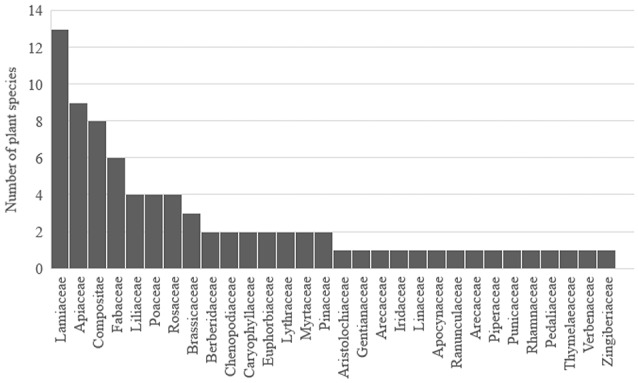
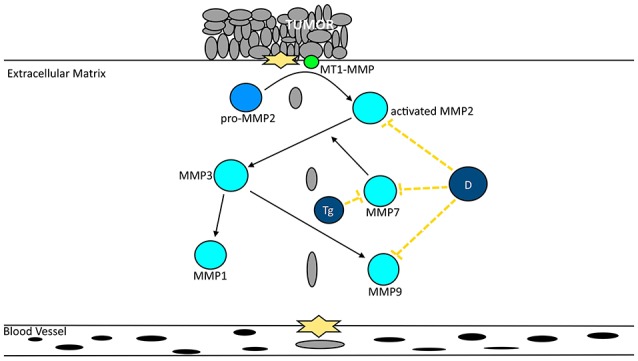
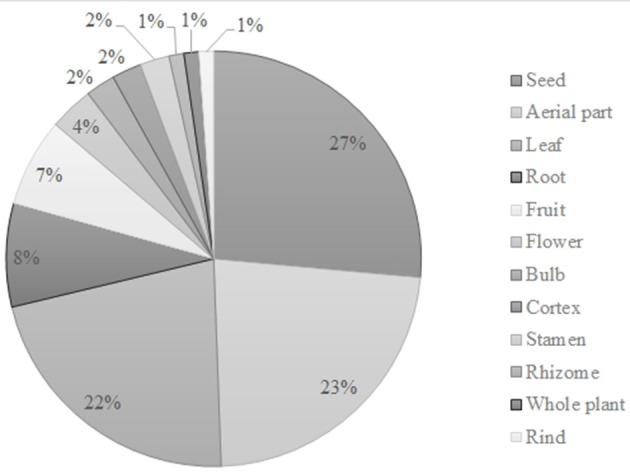
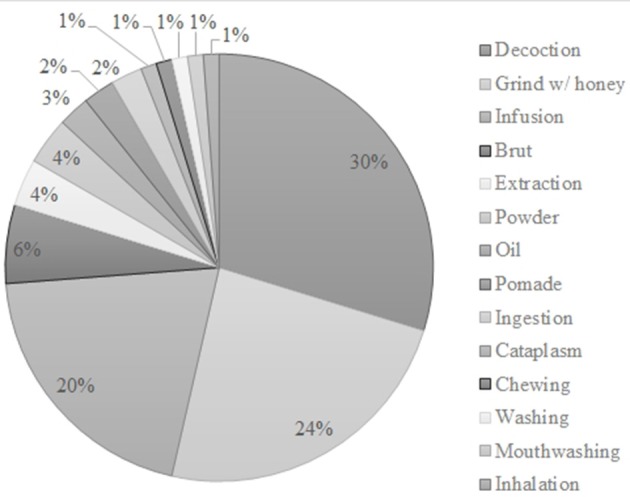
Cancer is a major cause of mortality worldwide with increasing numbers by the years. In North Africa, the number of cancer patients is alarming. Also shocking is that a huge number of cancer patients only have access to traditional medicines due to several factors, e.g., economic difficulties. In fact, medicinal plants are widely used for the treatment of several pathologies, including cancer. Truthfully, herbalists and botanists in North African countries prescribe several plants for cancer treatment. Despite the popularity and the potential of medicinal plants for the treatment of cancer, scientific evidence on their anticancer effects are still scarce for most of the described plants. Bearing in mind the lack of comprehensive and systematic studies, the aim of this review is to give an overview of studies, namely ethnobotanical surveys and experimental evidence of anticancer effects regarding medicinal plants used in North Africa for cancer therapy. The research was conducted on several popular search engines including PubMed, Science Direct, Scopus and Web of Science. The research focused primarily on English written papers published between the years 2000 and 2016. This review on plants traditionally used by herbalists in North Africa highlights that Morocco and Algeria are the countries with most surveys on the use of medicinal plants in folk medicine. Among the plethora of plants used, and are the most referred ones by herbalists for the treatment of cancer. Moreover, a plethora of scientific evidence qualifies them as candidates for further drug development. Furthermore, we report on the underlying cellular and molecular mechanisms. Overall, this review highlights the therapeutic potential of some medicinal plants as anticancer agents. The North African flora offers a rich source of medicinal plants for a wide array of diseases, including cancer. The elucidation of their modes of action represents an indispensable condition for the rational development of new drugs for cancer treatment. Furthermore, testing the anticancer activity and in clinical trials are warranted to explore the full therapeutic potential of North African plants for cancer therapy.
癌症是全球主要的死亡原因,且其患病人数逐年增加。在北非,癌症患者的数量令人担忧。同样令人震惊的是,由于多种因素,如经济困难,大量癌症患者只能获得传统药物。事实上,药用植物被广泛用于治疗多种病症,包括癌症。确切地说,北非国家的草药医生和植物学家会开出多种植物用于癌症治疗。尽管药用植物在癌症治疗方面很受欢迎且具有潜力,但对于大多数已描述的植物,其抗癌效果的科学证据仍然匮乏。考虑到缺乏全面系统的研究,本综述的目的是概述相关研究,即关于北非用于癌症治疗的药用植物的民族植物学调查和抗癌效果的实验证据。研究是在包括PubMed、Science Direct、Scopus和Web of Science在内的多个流行搜索引擎上进行的。研究主要集中在2000年至2016年间发表的英文论文。这篇关于北非草药医生传统使用植物的综述强调,摩洛哥和阿尔及利亚是对民间医学中药用植物使用情况进行调查最多的国家。在所使用的大量植物中,[此处原文缺失两种植物名称]是草药医生在治疗癌症时提及最多的。此外,大量科学证据表明它们有进一步药物开发的潜力。此外,我们还报告了其潜在的细胞和分子机制。总体而言,本综述强调了一些药用植物作为抗癌剂的治疗潜力。北非植物群为包括癌症在内的多种疾病提供了丰富的药用植物来源。阐明它们的作用方式是合理开发癌症治疗新药的必要条件。此外,有必要在临床试验中测试其抗癌活性,以探索北非植物在癌症治疗方面的全部治疗潜力。