Schmidt M F, Bracha M, Schlesinger M J
Proc Natl Acad Sci U S A. 1979 Apr;76(4):1687-91. doi: 10.1073/pnas.76.4.1687.
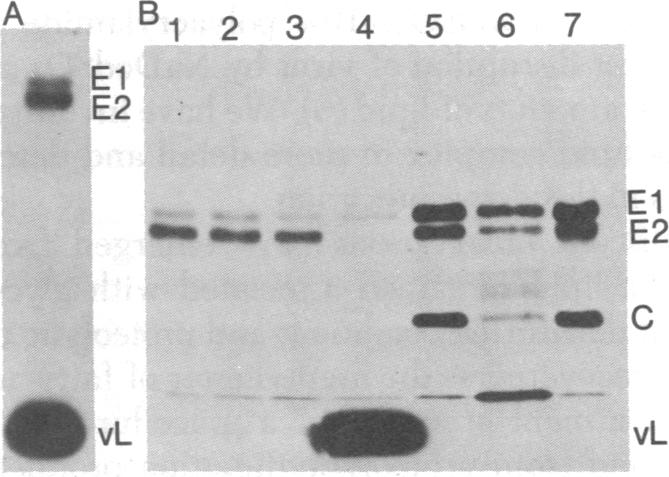
Selective binding of lipid to glycoprotein was detected when [3H]palmitate-labeled Sindbis virus particles or viral-infected cells were disrupted by heating with sodium dodecyl sulfate, and glycoproteins were isolated by electrophoresis in sodium dodecyl sulfate/10% polyacrylamide gels. The smaller glycoprotein (E2) retained 2 to 3 times more labeled lipid than did the larger EI glycoprotein, and the cell-associated glycoprotein precursor (PE2) bound even less lipid. No lipid was associated with the nonglycosylated glycoproteins that accumulated in infected cells treated with tunicamycin. The labeled lipid remained bound to the glycoproteins after exhaustive extraction with chloroform/methanol of virus particles, infected-cell extracts, or isolated glycoproteins, but it could be extracted by chloroform/methanol after treating glycoproteins with mild alkali. Analysis by gas/liquid chromatography showed that 60% of the label was in palmitate and the balance of label was distributed between oleate and stearate. There were approximately 2 mol of fatty acid bound per mol of E1 glycoprotein. Proteolysis of the fatty acid-labeled glycoprotein with pepsin, thermolysin, and Pronase degraded the polypeptide to fragments that retained the fatty acids in an alkali-labile state. These data suggest that a covalent attachment of fatty acid may occur during maturation of the viral glycoproteins.
当用十二烷基硫酸钠加热使[3H]棕榈酸酯标记的辛德毕斯病毒颗粒或病毒感染细胞裂解,并通过在十二烷基硫酸钠/10%聚丙烯酰胺凝胶中电泳分离糖蛋白时,检测到脂质与糖蛋白的选择性结合。较小的糖蛋白(E2)保留的标记脂质比较大的E1糖蛋白多2至3倍,而细胞相关的糖蛋白前体(PE2)结合的脂质甚至更少。用衣霉素处理的感染细胞中积累的非糖基化糖蛋白未与脂质结合。在用氯仿/甲醇对病毒颗粒、感染细胞提取物或分离的糖蛋白进行彻底提取后,标记的脂质仍与糖蛋白结合,但在用温和碱处理糖蛋白后,它可以被氯仿/甲醇提取。气相/液相色谱分析表明,60%的标记物存在于棕榈酸酯中,其余标记物分布在油酸酯和硬脂酸酯之间。每摩尔E1糖蛋白大约结合2摩尔脂肪酸。用胃蛋白酶、嗜热菌蛋白酶和链霉蛋白酶对脂肪酸标记的糖蛋白进行蛋白水解,将多肽降解为在碱不稳定状态下保留脂肪酸的片段。这些数据表明,在病毒糖蛋白成熟过程中可能发生脂肪酸的共价连接。