Tian Lin, Shang Yidan, Chen Rui, Bai Ru, Chen Chunying, Inthavong Kiao, Tu Jiyuan
School of Engineering - Mechanical and Automotive, RMIT University, Bundoora, VIC, Australia.
CAS Key Lab for Biomedical Effects of Nanomaterials and Nanosafety & CAS Center for Excellence in Nanoscience, Beijing Key Laboratory of Ambient Particles Health Effects and Prevention Techniques, National Center for Nanoscience and Technology of China, Beijing, China.
Part Fibre Toxicol. 2017 Jul 12;14(1):24. doi: 10.1186/s12989-017-0203-7.
Exposure to nanoparticles in the workplace is a health concern to occupational workers with increased risk of developing respiratory, cardiovascular, and neurological disorders. Based on animal inhalation study and human lung tumor risk extrapolation, current authoritative recommendations on exposure limits are either on total mass or number concentrations. Effects of particle size distribution and the implication to regional airway dosages are not elaborated.
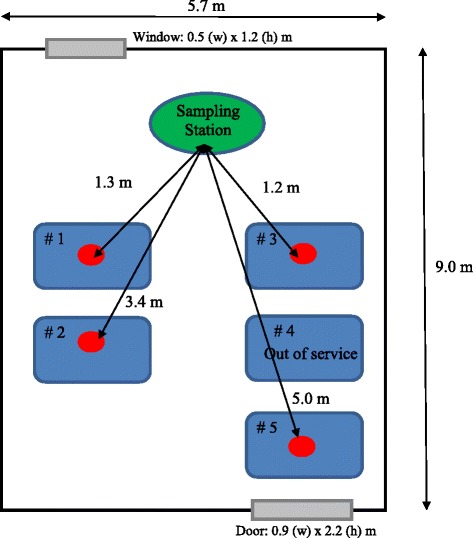
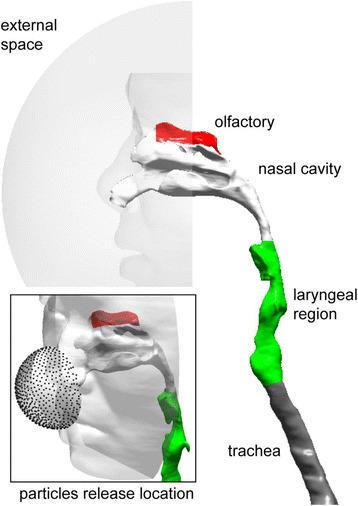
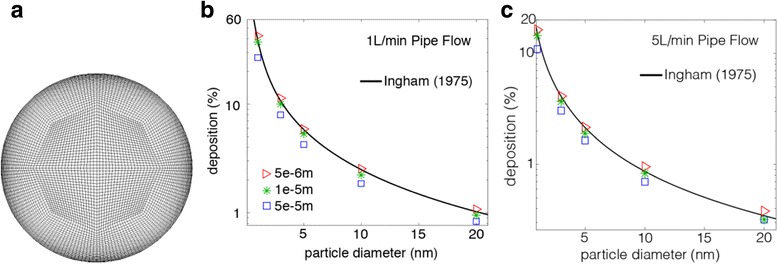
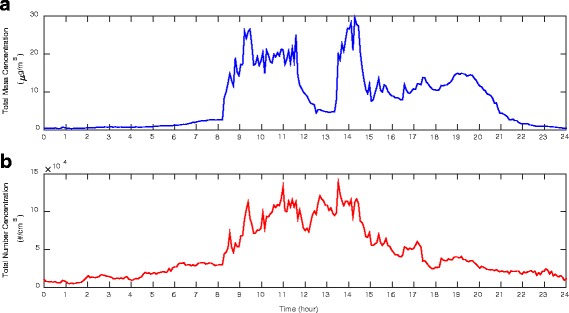
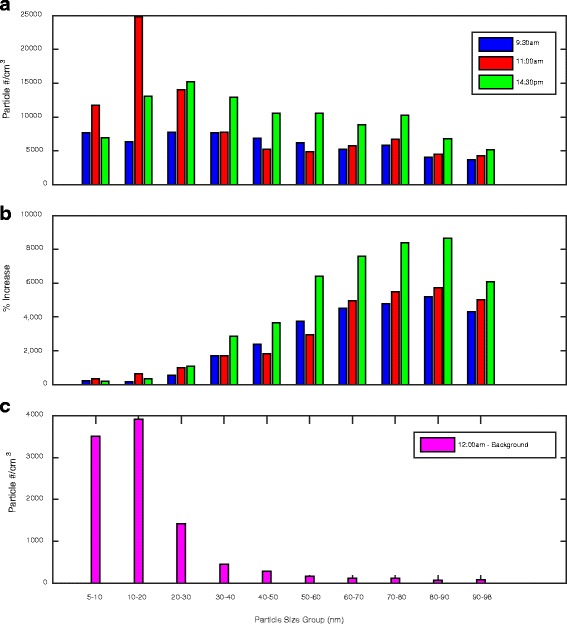
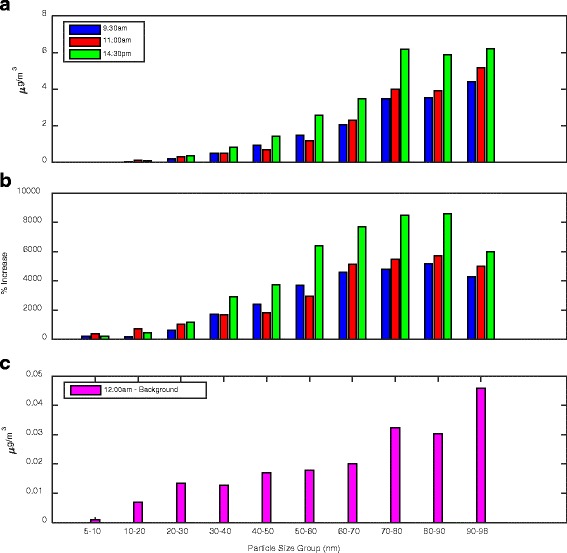
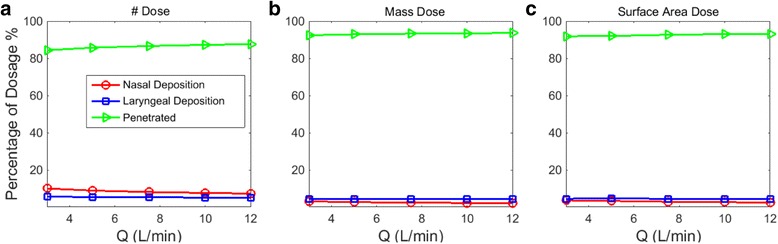
Real time production of particle concentration and size distribution in the range from 5.52 to 98.2 nm were recorded in a wire-cut electrical discharge machine shop (WEDM) during a typical working day. Under the realistic exposure condition, human inhalation simulations were performed in a physiologically realistic nasal and upper airway replica. The combined experimental and numerical study is the first to establish a realistic exposure condition, and under which, detailed dose metric studies can be performed. In addition to mass concentration guided exposure limit, inhalation risks to nano-pollutant were reexamined accounting for the actual particle size distribution and deposition statistics. Detailed dosimetries of the inhaled nano-pollutants in human nasal and upper airways with respect to particle number, mass and surface area were discussed, and empirical equations were developed.
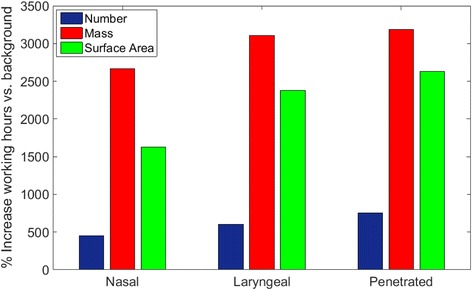
An astonishing enhancement of human airway dosages were detected by current combined experimental and numerical study in the WEDM machine shop. Up to 33 folds in mass, 27 folds in surface area and 8 folds in number dosages were detected during working hours in comparison to the background dosimetry measured at midnight. The real time particle concentration measurement showed substantial emission of nano-pollutants by WEDM machining activity, and the combined experimental and numerical study provided extraordinary details on human inhalation dosimetry. It was found out that human inhalation dosimetry was extremely sensitive to real time particle concentration and size distribution. Averaged particle concentration over 24-h period will inevitably misrepresent the sensible information critical for realistic inhalation risk assessment.
Particle size distribution carries very important information in determining human airway dosimetry. A pure number or mass concentration recommendation on the exposure limit at workplace is insufficient. A particle size distribution, together with the deposition equations, is critical to recognize the actual exposure risks. In addition, human airway dosimetry in number, mass and surface area varies significantly. A complete inhalation risk assessment requires the knowledge of toxicity mechanisms in response to each individual metric. Further improvements in these areas are needed.
职业场所中纳米颗粒的暴露对职业工人的健康构成威胁,他们患呼吸系统、心血管系统和神经系统疾病的风险增加。基于动物吸入研究和人类肺癌风险推断,目前关于暴露限值的权威建议要么基于总质量,要么基于数量浓度。颗粒大小分布的影响以及对局部气道剂量的影响并未详细阐述。
在一个典型工作日期间,在电火花线切割加工车间(WEDM)记录了粒径范围从5.52到98.2纳米的颗粒浓度和大小分布的实时数据。在实际暴露条件下,在生理逼真的鼻腔和上呼吸道模型中进行了人体吸入模拟。这项结合实验和数值研究首次建立了实际暴露条件,在此条件下,可以进行详细的剂量测定研究。除了基于质量浓度的暴露限值,还重新审视了纳米污染物的吸入风险,同时考虑了实际的颗粒大小分布和沉积统计数据。讨论了人体鼻腔和上呼吸道中吸入纳米污染物在颗粒数量、质量和表面积方面的详细剂量学,并建立了经验方程。
通过目前在电火花线切割加工车间进行的结合实验和数值研究,检测到人体气道剂量有惊人的增加。与午夜测量的背景剂量学相比,工作时间内质量剂量高达33倍,表面积剂量高达27倍,数量剂量高达8倍。实时颗粒浓度测量显示,电火花线切割加工活动大量排放纳米污染物,结合实验和数值研究提供了关于人体吸入剂量学的详细信息。研究发现,人体吸入剂量学对实时颗粒浓度和大小分布极其敏感。24小时期间的平均颗粒浓度将不可避免地歪曲对实际吸入风险评估至关重要的敏感信息。
颗粒大小分布在确定人体气道剂量学方面携带非常重要的信息。仅基于数量或质量浓度的工作场所暴露限值建议是不够的。颗粒大小分布以及沉积方程对于识别实际暴露风险至关重要。此外,人体气道在数量、质量和表面积方面的剂量学差异很大。完整的吸入风险评估需要了解针对每个指标的毒性机制。这些领域需要进一步改进。