Jirakittayakorn Nantawachara, Wongsawat Yodchanan
Brain-Computer Interface Laboratory, Department of Biomedical Engineering, Faculty of Engineering, Mahidol UniversityNakhorn Pathom, Thailand.
Front Neurosci. 2017 Jun 28;11:365. doi: 10.3389/fnins.2017.00365. eCollection 2017.
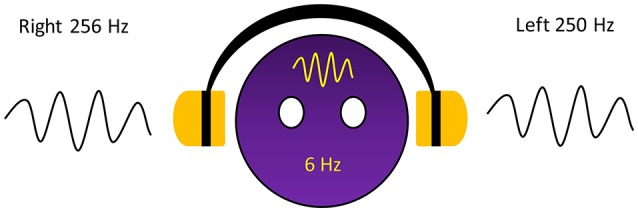
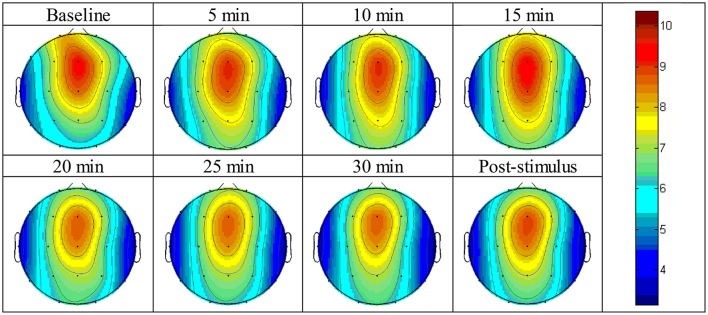
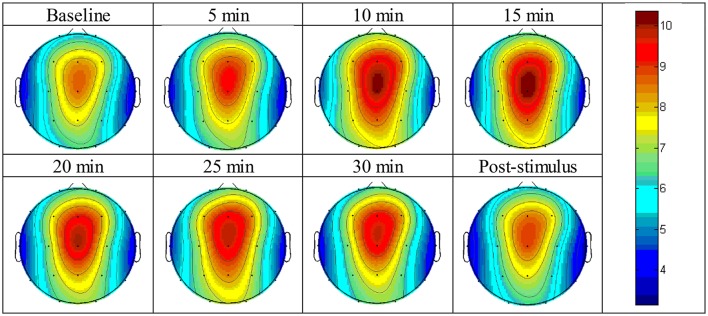
A binaural beat is a beat phenomenon that is generated by the dichotic presentation of two almost equivalent pure tones but with slightly different frequencies. The brain responses to binaural beats remain controversial; therefore, the aim of this study was to investigate theta activity responses to a binaural beat by controlling factors affecting localization, including beat frequency, carrier tone frequency, exposure duration, and recording procedure. Exposure to a 6-Hz binaural beat on a 250 Hz carrier tone for 30 min was utilized in this study. Quantitative electroencephalography (QEEG) was utilized as the recording modality. participants were divided into experimental and control groups. Emotional states were evaluated by Brunel Mood Scale (BRMUS) before and after exposing to the stimulus. The results showed that theta activity was induced in the entire cortex within 10 min of exposure to the stimulus in the experimental group. Compared to the control group, theta activity was also induced at the frontal and parietal-central regions, which included the Fz position, and left hemisphere dominance was presented for other exposure durations. The pattern recorded for 10 min of exposure appeared to be brain functions of a meditative state. Moreover, tension factor of BRUMS was decreased in experimental group compared to control group which resembled the meditation effect. Thus, a 6-Hz binaural beat on a 250 Hz carrier tone was suggested as a stimulus for inducing a meditative state.
双耳节拍是一种节拍现象,它由两个频率几乎相等但略有差异的纯音通过双耳分听呈现而产生。大脑对双耳节拍的反应仍存在争议;因此,本研究的目的是通过控制影响定位的因素,包括节拍频率、载波频率、暴露持续时间和记录程序,来研究θ活动对双耳节拍的反应。本研究采用在250Hz载波频率上暴露于6Hz双耳节拍30分钟的方式。使用定量脑电图(QEEG)作为记录方式。参与者被分为实验组和对照组。在暴露于刺激前后,通过布鲁内尔情绪量表(BRMUS)评估情绪状态。结果显示,实验组在暴露于刺激后10分钟内,整个皮层诱导出了θ活动。与对照组相比,在额叶和顶叶中央区域(包括Fz位置)也诱导出了θ活动,并且在其他暴露持续时间中呈现出左半球优势。暴露10分钟记录的模式似乎是冥想状态下的脑功能。此外,与对照组相比,实验组BRUMS的紧张因子降低,这类似于冥想效果。因此,建议在250Hz载波频率上的6Hz双耳节拍作为诱导冥想状态的刺激。