Mujib Muhammad Danish, Rao Ahmad Zahid, Haque Muhammad Fahim Ul, Alokaily Ahmad O, Hussain Syeda Sehar, Aldohbayb Ahmed A, Qazi Saad Ahmed, Hasan Muhammad Abul
Department of Biomedical Engineering, NED University of Engineering & Technology, Karachi, Pakistan.
Department of Physical Medicine and Rehabilitation, McGovern Medical School, University of Texas Health Science Center at Houston, Houston, TX, United States.
Front Aging Neurosci. 2025 Mar 3;17:1543282. doi: 10.3389/fnagi.2025.1543282. eCollection 2025.
Alzheimer's disease (AD) affects 50 million individuals worldwide, a number projected to triple by 2050. Due to discomfort through electrical and magnetic neuromodulation technologies, this is the first study to propose the potential of auditory binaural beat (BB) stimulation at an alpha frequency (10 Hz) for enhancing cognitive and neurological outcomes in AD patients.
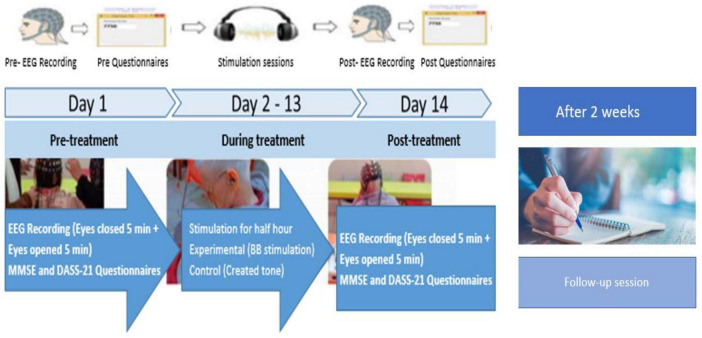
Twenty-five patients were divided into the experimental-Group ( = 15) and control-Group ( = 10). Psychometric and neurological assessments were conducted Pre-Treatment (Day 1) and Post-Treatment (Day 14) following consecutive days of binaural beats (BB) or auditory tone stimulation administered from Day 2 to Day 13.
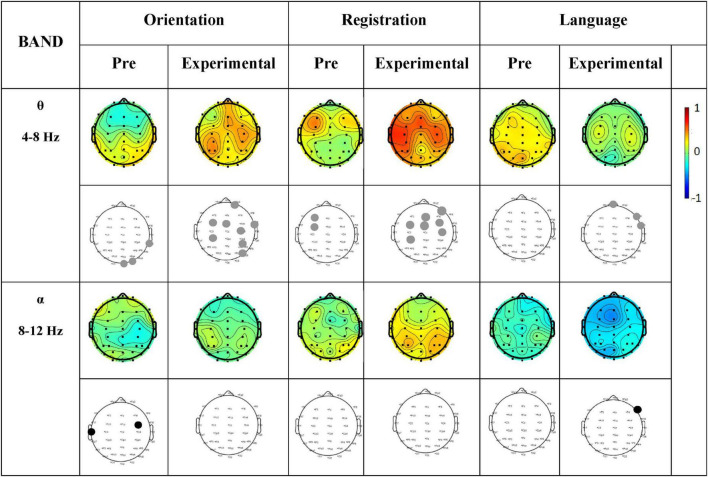
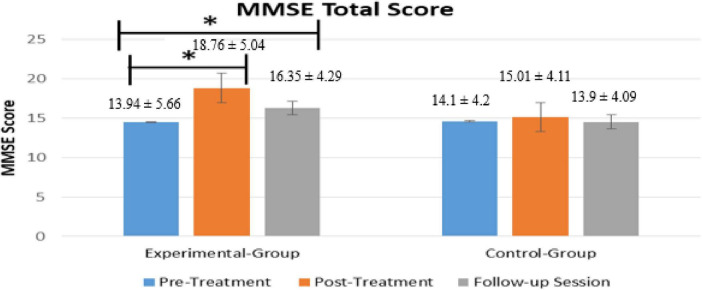
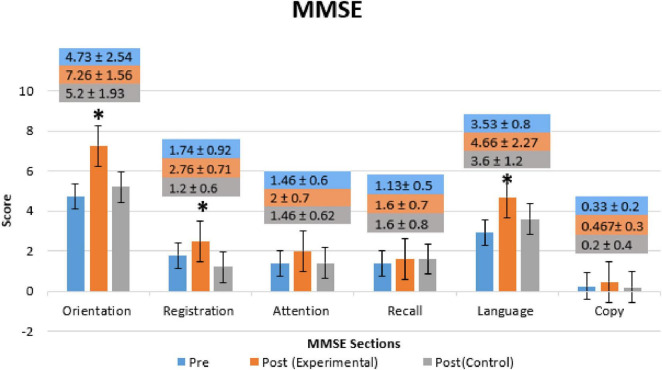
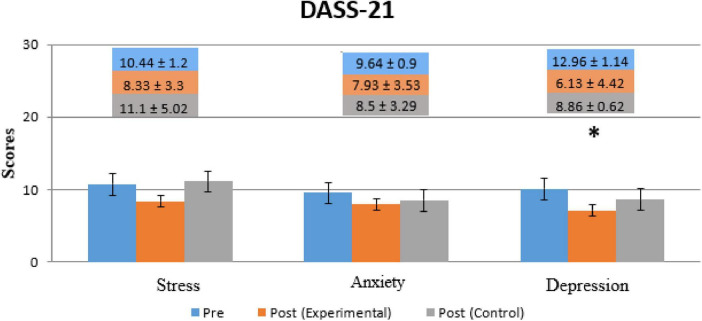
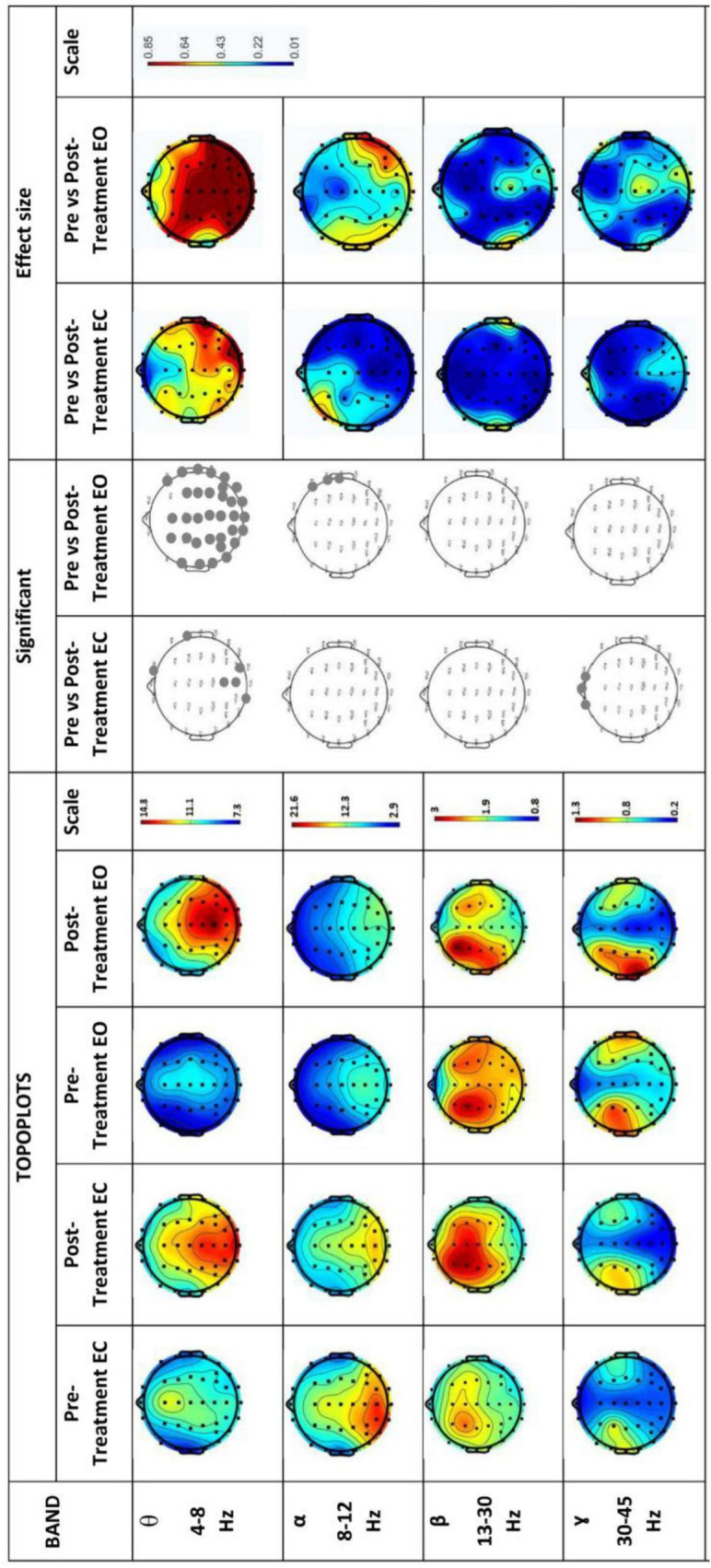
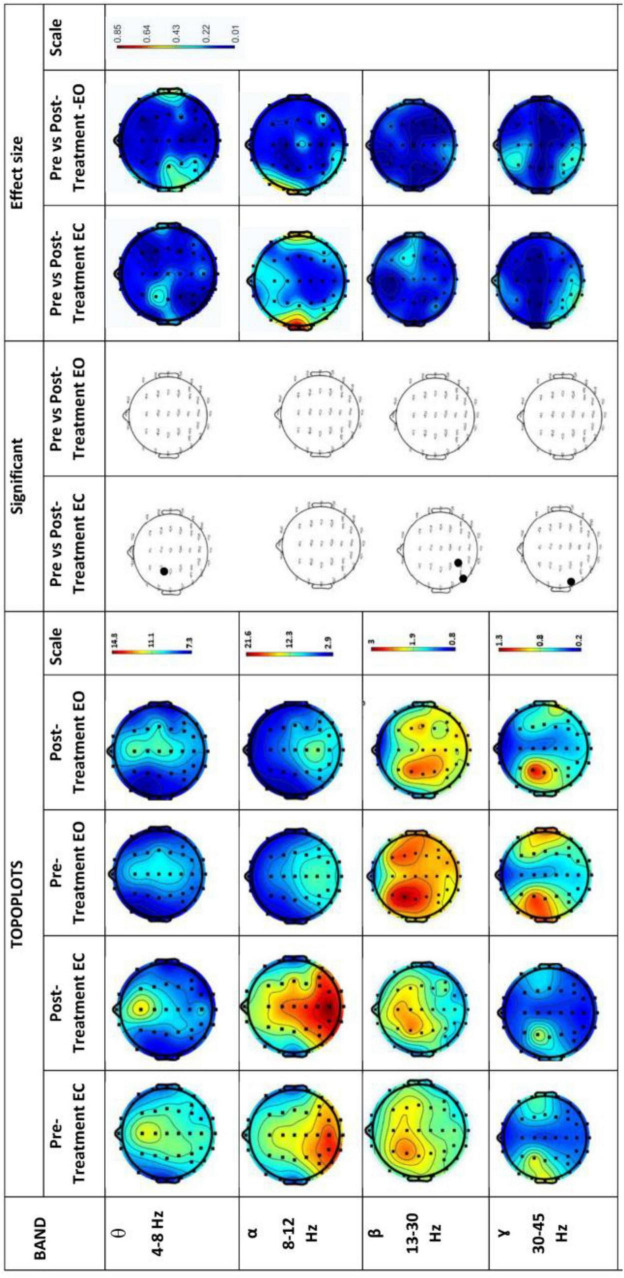
A two-way ANOVA revealed a significant main effect of group ( = 6.087, = 0.016) and session ( = 3.859, = 0.024) on MMSE scores, with the experimental group showing significant improvement in MMSE scores ( = 7.33, = 0.00000012) compared to the control group ( = 0.2306). Paired -tests revealed a significant reduction in depression scores (DASS-21, = 1.701, = 0.0253) in the experimental group, while no significant improvements were noted in the control group. EEG recordings revealed significant changes in α-band, β-band, and γ-band power ( < 0.05). Moreover, The correlation between EEG bands and MMSE subparts showed that increased θ-band power in the experimental group was positively correlated ( < 0.05) with the frontal region during language tasks and in the frontal and central regions during registration and orientation tasks, indicating potential neurocognitive benefits.
The results of this research imply that BB stimulation has untapped potential as a non-invasive therapy for patients with AD, hence there is the need for further studies to manage the dementia epidemic.
阿尔茨海默病(AD)在全球影响着5000万人,预计到2050年这一数字将增至三倍。鉴于电和磁神经调节技术会带来不适,本研究首次提出α频率(10赫兹)双耳节拍(BB)刺激在改善AD患者认知和神经学结果方面的潜力。
25名患者被分为实验组(n = 15)和对照组(n = 10)。在第2天至第13天连续进行双耳节拍(BB)或听觉音调刺激后,于治疗前(第1天)和治疗后(第14天)进行心理测量和神经学评估。
双向方差分析显示,组间(F = 6.087,p = 0.016)和疗程(F = 3.859,p = 0.024)对简易精神状态检查表(MMSE)评分有显著主效应,与对照组(p = 0.2306)相比,实验组的MMSE评分有显著改善(p = 7.33,p = 0.00000012)。配对t检验显示实验组的抑郁评分(抑郁、焦虑和压力量表 - 21,t = 1.701,p = 0.0253)显著降低,而对照组未观察到显著改善。脑电图记录显示α波段、β波段和γ波段功率有显著变化(p < 0.05)。此外,脑电图波段与MMSE子部分之间的相关性表明,实验组θ波段功率增加与语言任务期间的额叶区域以及登记和定向任务期间的额叶和中央区域呈正相关(p < 0.05),表明具有潜在的神经认知益处。
本研究结果表明,BB刺激作为AD患者的一种非侵入性治疗方法具有尚未开发的潜力,因此需要进一步研究以应对痴呆症流行问题。