College of Animal Science and Technology, Nanjing Agricultural University, Nanjing, People's Republic of China.
Institute of Feed Science, College of Animal Science, Zhejiang University, Key Laboratory of Molecular Animal Nutrition, Ministry of Education, Hangzhou Zhejiang Province, People's Republic of China.
PLoS One. 2016 Oct 12;11(10):e0164434. doi: 10.1371/journal.pone.0164434. eCollection 2016.
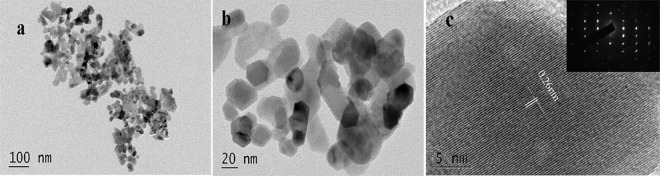
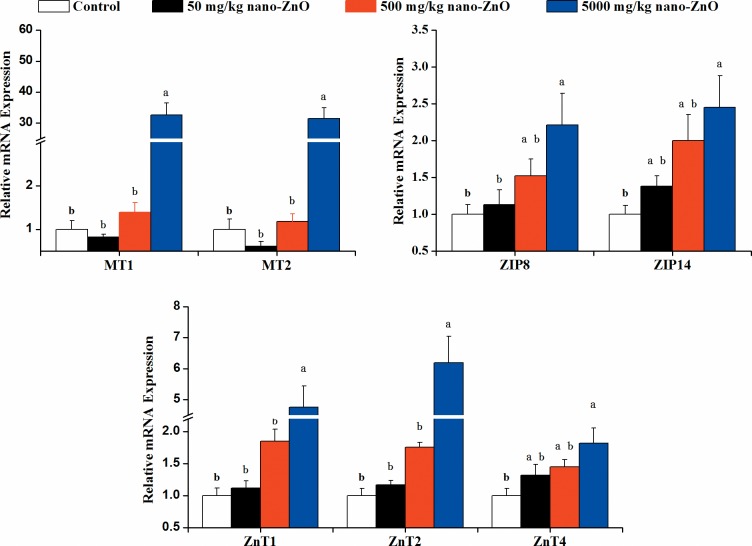
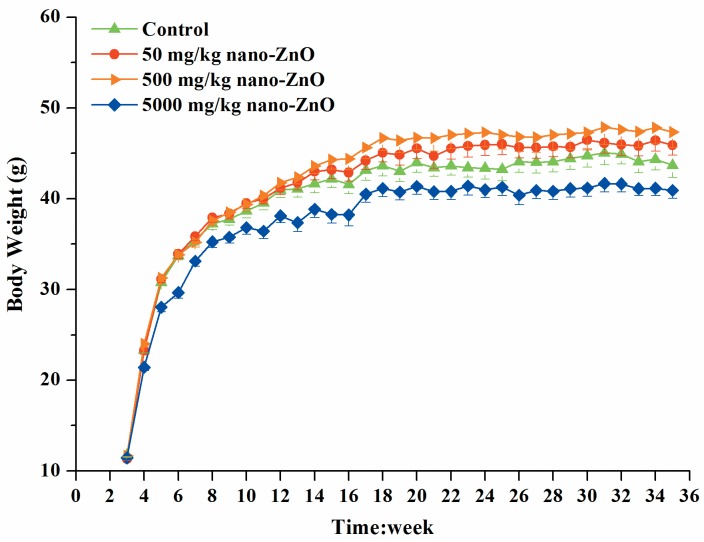
Zinc oxide nanoparticles (nano-ZnOs) are widely used and possess great potentials in agriculture and biomedicine. It is inevitable for human exposure to these nanoparticles. However, no study had been conducted to investigate the long term effects of nano-ZnOs. This study aimed at investigating effects of nano-ZnOs on development, zinc metabolism and biodistribution of minerals (Zn, Fe, Cu, and Mn) in mice from week 3 to 35. After the characteristics of nano-ZnOs were determined, they were added into the basal diet at 0, 50, 500 and 5000 mg/kg. Results indicated that added 50 and 500 mg/kg nano-ZnOs showed minimal toxicity. However, 5000 mg/kg nano-ZnOs significantly decreased body weight (from week 4 to 16) and increased the relative weights of the pancreas, brain and lung. Added 5000 mg/kg nano-ZnOs significantly increased the serum glutamic-pyruvic transaminase activity and zinc content, and significantly enhanced mRNA expression of zinc metabolism-related genes, including metallothionein 1(32.66 folds), metallothionein 2 (31.42 folds), ZIP8 (2.21folds), ZIP14 (2.45 folds), ZnT1 (4.76 folds), ZnT2 (6.19 folds) and ZnT4 (1.82 folds). The biodistribution determination showed that there was a significant accumulation of zinc in the liver, pancreas, kidney, and bones (tibia and fibula) after receiving 5000 mg/kg nano-ZnO diet, while no significant effects on Cu, Fe, and Mn levels, except for liver Fe content and pancreas Mn level. Our results demonstrated that long term exposure to 50 and 500 mg/kg nano-ZnO diets showed minimal toxicity. However, high dose of nano-ZnOs (5000 mg/kg) caused toxicity on development, and altered the zinc metabolism and biodistribution in mice.
氧化锌纳米粒子(nano-ZnO)在农业和生物医学领域得到了广泛应用,并具有很大的潜力。人类不可避免地会接触到这些纳米粒子。然而,目前还没有研究调查 nano-ZnO 的长期影响。本研究旨在从第 3 周到第 35 周调查 nano-ZnO 对小鼠发育、锌代谢和矿物质(锌、铁、铜和锰)生物分布的影响。确定了 nano-ZnO 的特性后,将其添加到基础饮食中,浓度分别为 0、50、500 和 5000mg/kg。结果表明,添加 50 和 500mg/kg 的 nano-ZnO 表现出最小的毒性。然而,5000mg/kg 的 nano-ZnO 显著降低了体重(从第 4 周到第 16 周),并增加了胰腺、大脑和肺的相对重量。添加 5000mg/kg 的 nano-ZnO 显著增加了血清谷氨酸丙酮酸转氨酶的活性和锌含量,并显著增强了锌代谢相关基因的 mRNA 表达,包括金属硫蛋白 1(32.66 倍)、金属硫蛋白 2(31.42 倍)、ZIP8(2.21 倍)、ZIP14(2.45 倍)、ZnT1(4.76 倍)、ZnT2(6.19 倍)和 ZnT4(1.82 倍)。生物分布测定表明,接受 5000mg/kg nano-ZnO 饮食后,肝脏、胰腺、肾脏和骨骼(胫骨和腓骨)中的锌显著积累,而铜、铁和锰水平没有显著影响,除了肝脏铁含量和胰腺锰含量。我们的研究结果表明,长期暴露于 50 和 500mg/kg 的 nano-ZnO 饮食中表现出最小的毒性。然而,高剂量的 nano-ZnO(5000mg/kg)对发育有毒性,并改变了小鼠的锌代谢和生物分布。