Department of Cell Biology, Emory University School of Medicine, 615 Michael Street. Whitehead Research Building #143, Atlanta, GA, 30322, USA.
Department of Pathology and Laboratory Medicine, Emory University School of Medicine, Atlanta, GA, USA.
J Mol Med (Berl). 2017 Sep;95(9):927-934. doi: 10.1007/s00109-017-1557-x. Epub 2017 Jul 13.
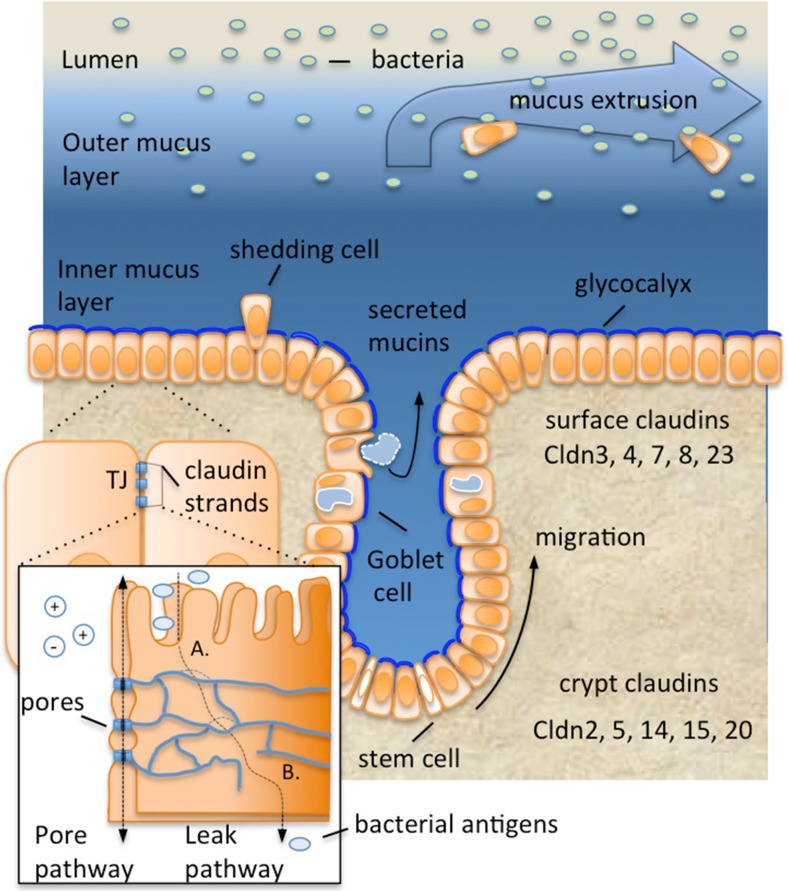
The colonic mucosa provides a vital defensive barrier separating the body from the microbial populations residing in the intestinal lumen. Indeed, growing evidence shows that loss of this barrier may cause disease or exacerbate disease progression. The loss of barrier integrity increases the translocation of bacterial antigens and stimulates inflammation in the intestinal mucosa, which is the central pathological feature of inflammatory bowel diseases (IBDs). This review focuses on how intestinal mucus and intercellular tight junctions (TJs) act together to maintain the integrity of the colonic barrier and how barrier integrity is dysregulated in IBD.
结肠黏膜提供了一个重要的防御屏障,将人体与肠道腔中存在的微生物群体隔离开来。事实上,越来越多的证据表明,这种屏障的丧失可能导致疾病或加重疾病的进展。屏障完整性的丧失会增加细菌抗原的易位,并刺激肠道黏膜的炎症,这是炎症性肠病(IBD)的中心病理特征。本文综述了肠道黏液和细胞间紧密连接(TJs)如何共同作用以维持结肠屏障的完整性,以及 IBD 中屏障完整性如何失调。