Niranjan Rituraj, Thakur Ashwani Kumar
Department of Biological Sciences and Bioengineering (BSBE), Indian Institute of Technology Kanpur, Kanpur, India.
Front Immunol. 2017 Jun 30;8:763. doi: 10.3389/fimmu.2017.00763. eCollection 2017.
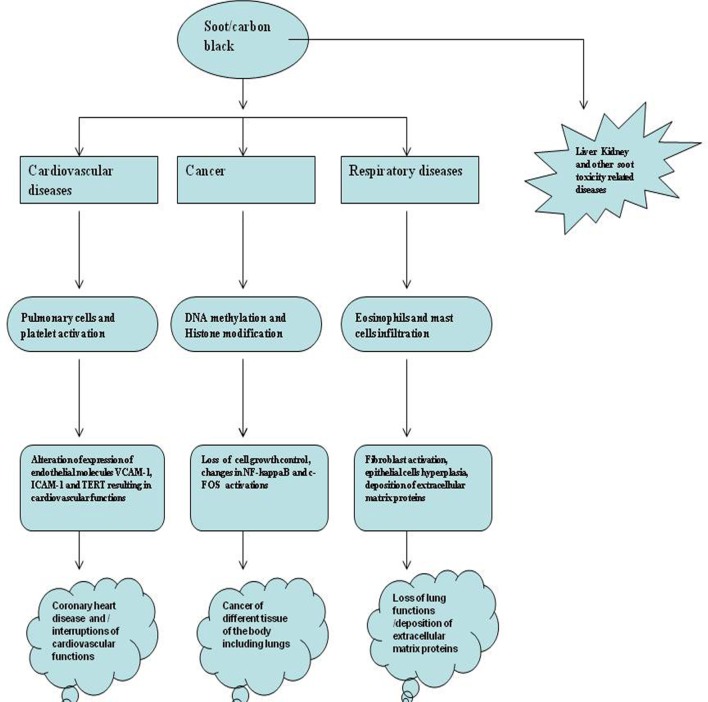
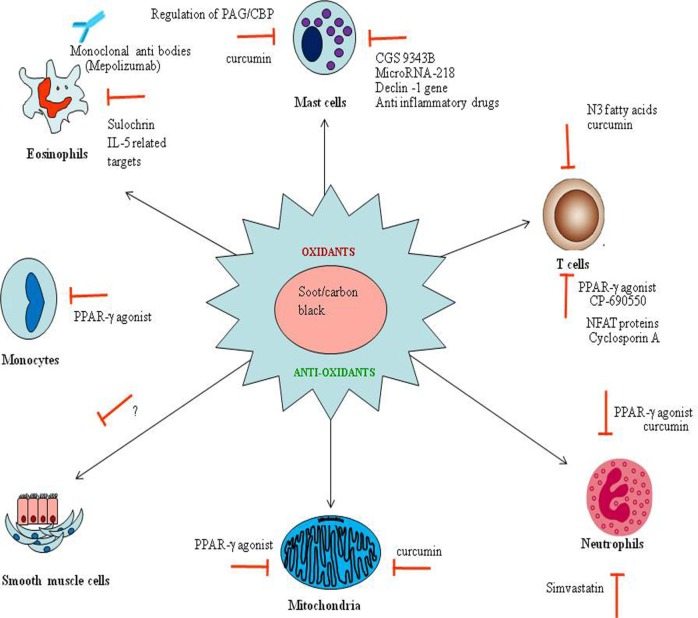
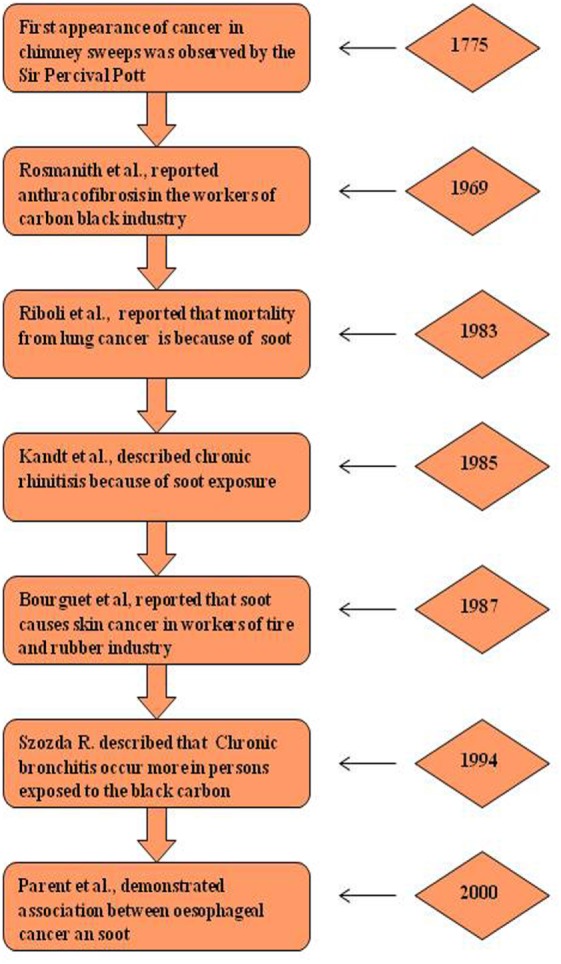
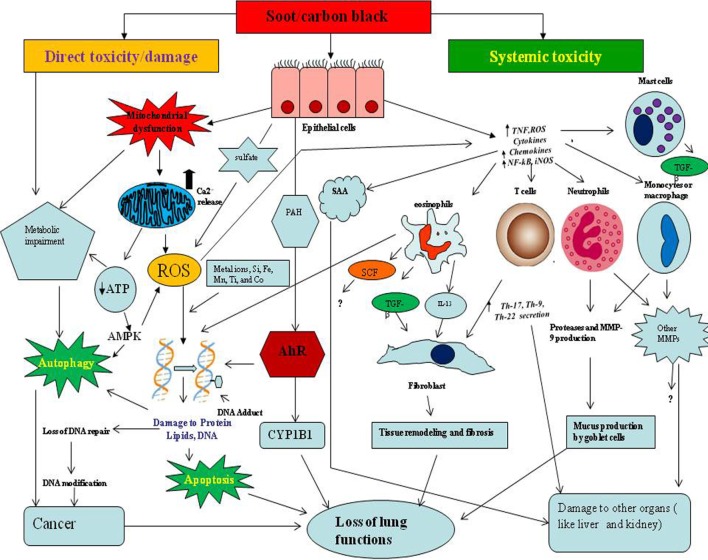
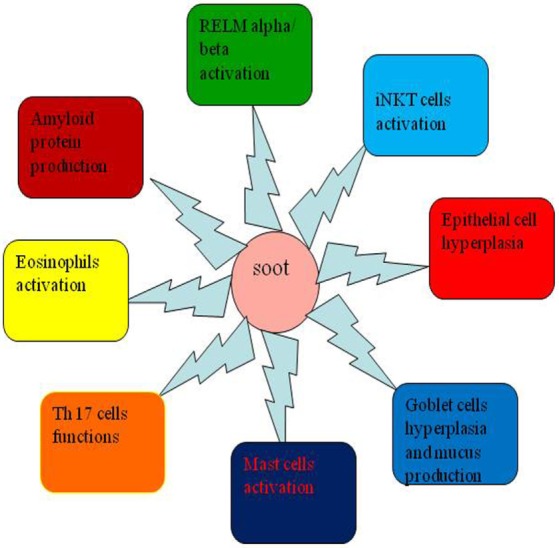
The environmental soot and carbon blacks (CBs) cause many diseases in humans, but their underlying mechanisms of toxicity are still poorly understood. Both are formed after the incomplete combustion of hydrocarbons but differ in their constituents and percent carbon contents. For the first time, "Sir Percival Pott" described soot as a carcinogen, which was subsequently confirmed by many others. The existing data suggest three main types of diseases due to soot and CB exposures: cancer, respiratory diseases, and cardiovascular dysfunctions. Experimental models revealed the involvement of oxidative stress, DNA methylation, formation of DNA adducts, and Aryl hydrocarbon receptor activation as the key mechanisms of soot- and CB-induced cancers. Metals including Si, Fe, Mn, Ti, and Co in soot also contribute in the reactive oxygen species (ROS)-mediated DNA damage. Mechanistically, ROS-induced DNA damage is further enhanced by eosinophils and neutrophils halide (Cl and Br) dependent DNA adducts formation. The activation of pulmonary dendritic cells, T helper type 2 cells, and mast cells is crucial mediators in the pathology of soot- or CB-induced respiratory disease. Polyunsaturated fatty acids (PUFAs) were also found to modulate T cells functions in respiratory diseases. Particularly, telomerase reverse transcriptase was found to play the critical role in soot- and CB-induced cardiovascular dysfunctions. In this review, we propose integrated mechanisms of soot- and CB-induced toxicity emphasizing the role of inflammatory mediators and oxidative stress. We also suggest use of antioxidants and PUFAs as protective strategies against soot- and CB-induced disorders.
环境中的煤烟和炭黑(CBs)会引发人类的多种疾病,但其潜在的毒性机制仍鲜为人知。二者均由碳氢化合物不完全燃烧后形成,但成分和碳含量百分比有所不同。“珀西瓦尔·波特爵士”首次将煤烟描述为致癌物,随后被许多人证实。现有数据表明,因接触煤烟和CBs会引发三种主要疾病:癌症、呼吸系统疾病和心血管功能障碍。实验模型揭示,氧化应激、DNA甲基化、DNA加合物的形成以及芳烃受体激活是煤烟和CBs诱发癌症的关键机制。煤烟中的硅、铁、锰、钛和钴等金属也会导致活性氧(ROS)介导的DNA损伤。从机制上讲,嗜酸性粒细胞和中性粒细胞依赖卤化物(氯和溴)形成DNA加合物,进一步加剧了ROS诱导的DNA损伤。肺树突状细胞、2型辅助性T细胞和肥大细胞的激活是煤烟或CBs诱发呼吸系统疾病病理过程中的关键介质。还发现多不饱和脂肪酸(PUFAs)可调节呼吸系统疾病中T细胞的功能。特别是,端粒酶逆转录酶被发现在煤烟和CBs诱发的心血管功能障碍中起关键作用。在本综述中,我们提出了煤烟和CBs诱发毒性的综合机制,强调了炎症介质和氧化应激的作用。我们还建议使用抗氧化剂和PUFAs作为预防煤烟和CBs诱发疾病的保护策略。