Chang Ming Xian, Zhang Jie
State Key Laboratory of Freshwater Ecology and Biotechnology, Institute of Hydrobiology, Chinese Academy of Sciences, Wuhan 430072, China.
Key Laboratory of Aquaculture Disease Control, Ministry of Agriculture, Institute of Hydrobiology, Chinese Academy of Sciences, Wuhan 430072, China.
Int J Mol Sci. 2017 Jul 15;18(7):1530. doi: 10.3390/ijms18071530.
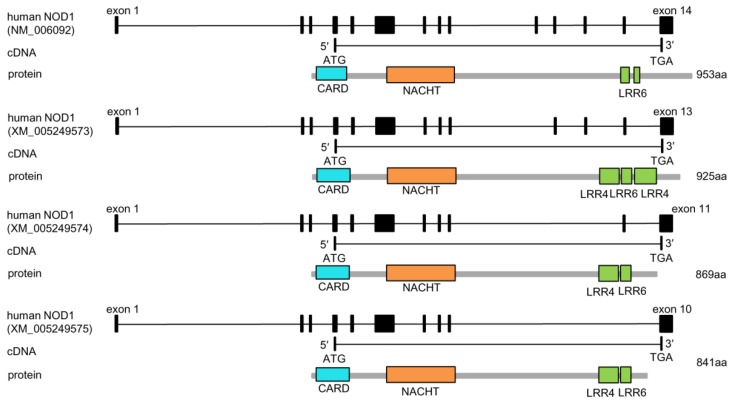
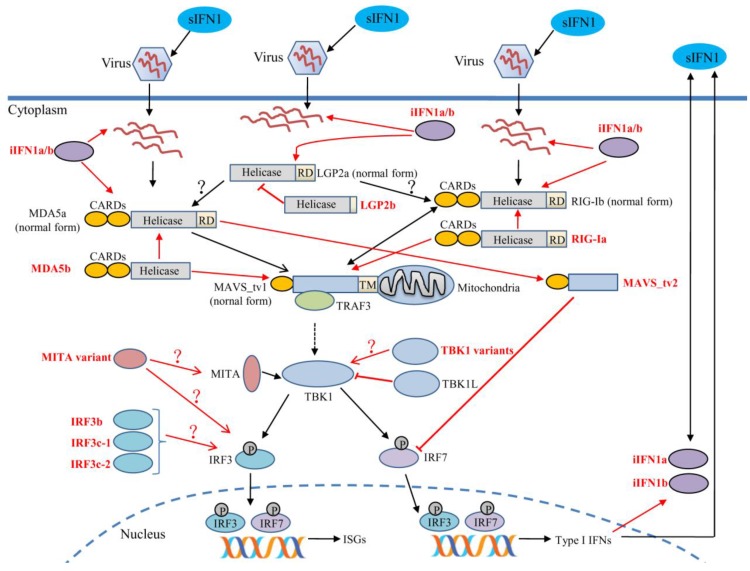
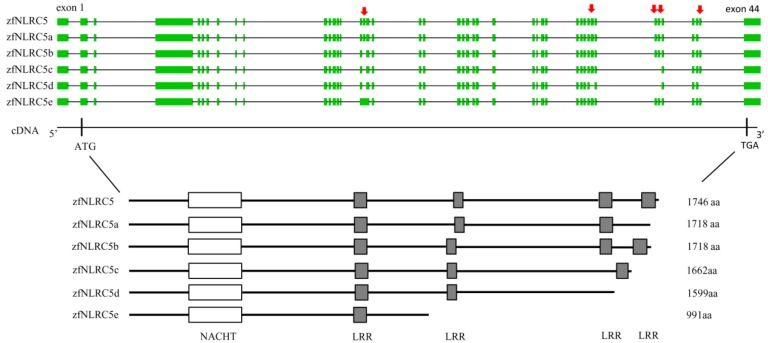
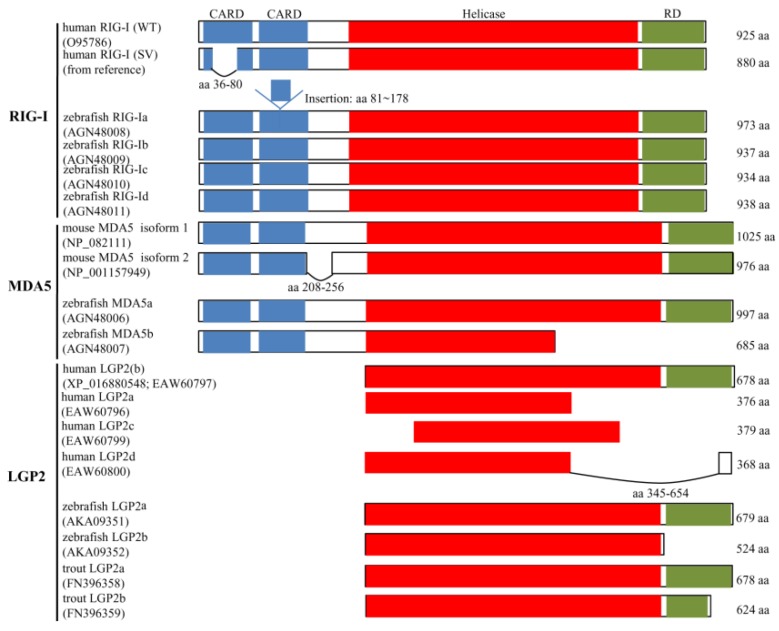
Pre-mRNA splicing is the process by which introns are removed and the protein coding elements assembled into mature mRNAs. Alternative pre-mRNA splicing provides an important source of transcriptome and proteome complexity through selectively joining different coding elements to form mRNAs, which encode proteins with similar or distinct functions. In mammals, previous studies have shown the role of alternative splicing in regulating the function of the immune system, especially in the regulation of T-cell activation and function. As lower vertebrates, teleost fish mainly rely on a large family of pattern recognition receptors (PRRs) to recognize pathogen-associated molecular patterns (PAMPs) from various invading pathogens. In this review, we summarize recent advances in our understanding of alternative splicing of piscine PRRs including peptidoglycan recognition proteins (PGRPs), nucleotide binding and oligomerization domain (NOD)-like receptors (NLRs), retinoic acid-inducible gene-I (RIG-I)-like receptors (RLRs) and their downstream signaling molecules, compared to splicing in mammals. We also discuss what is known and unknown about the function of splicing isoforms in the innate immune responses against pathogens infection in mammals and teleost fish. Finally, we highlight the consequences of alternative splicing in the innate immune system and give our view of important directions for future studies.
前体mRNA剪接是去除内含子并将蛋白质编码元件组装成成熟mRNA的过程。可变前体mRNA剪接通过选择性地连接不同的编码元件以形成mRNA,从而为转录组和蛋白质组的复杂性提供了重要来源,这些mRNA编码具有相似或不同功能的蛋白质。在哺乳动物中,先前的研究已经表明可变剪接在调节免疫系统功能中的作用,尤其是在T细胞活化和功能的调节方面。作为低等脊椎动物,硬骨鱼主要依靠一大类模式识别受体(PRR)来识别来自各种入侵病原体的病原体相关分子模式(PAMP)。在这篇综述中,与哺乳动物的剪接相比,我们总结了目前对硬骨鱼PRR可变剪接的理解进展,包括肽聚糖识别蛋白(PGRP)、核苷酸结合寡聚化结构域(NOD)样受体(NLR)、视黄酸诱导基因I(RIG-I)样受体(RLR)及其下游信号分子。我们还讨论了关于剪接异构体在哺乳动物和硬骨鱼针对病原体感染的先天免疫反应中的功能已知和未知的方面。最后,我们强调了可变剪接在先天免疫系统中的后果,并给出了我们对未来研究重要方向的看法。