Szabó András, Merks Roeland M H
Centrum Wiskunde & Informatica, Amsterdam, The Netherlands.
Mathematical Institute, Leiden University, Leiden, The Netherlands.
PLoS Comput Biol. 2017 Jul 17;13(7):e1005635. doi: 10.1371/journal.pcbi.1005635. eCollection 2017 Jul.
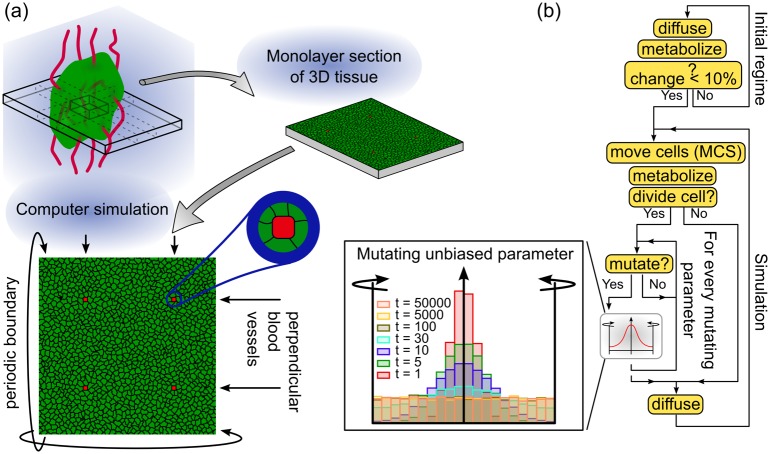
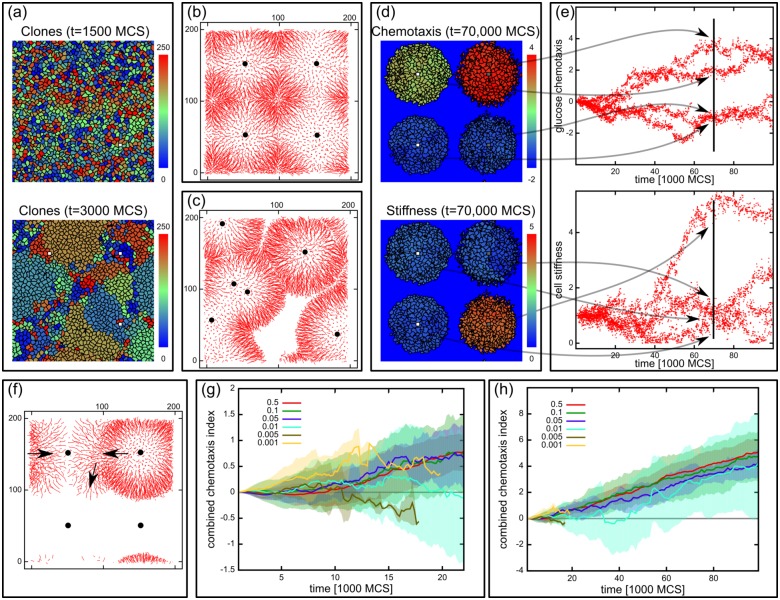
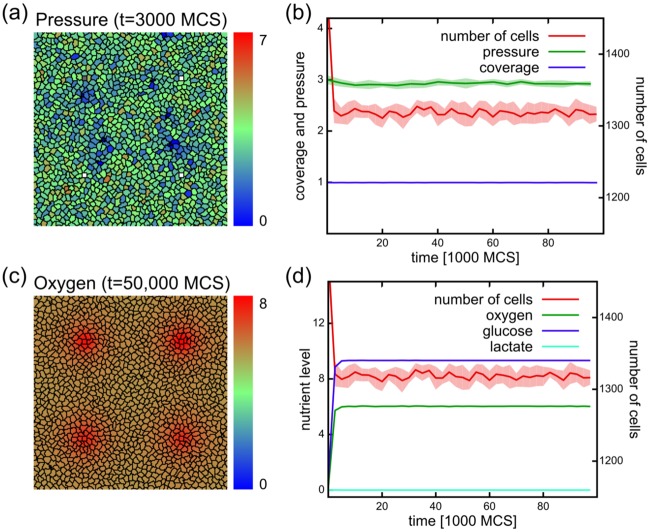
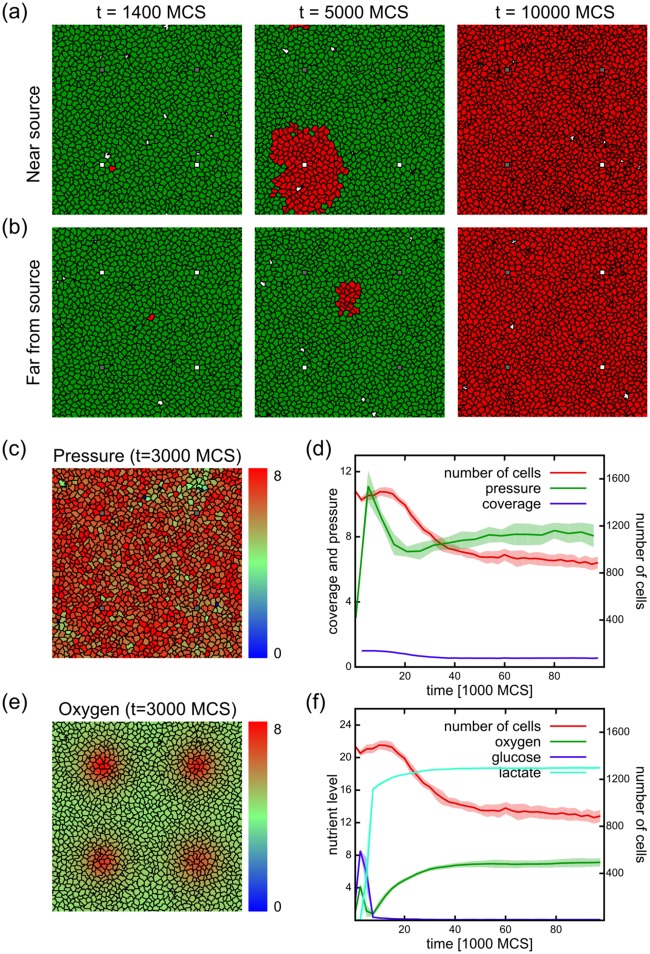
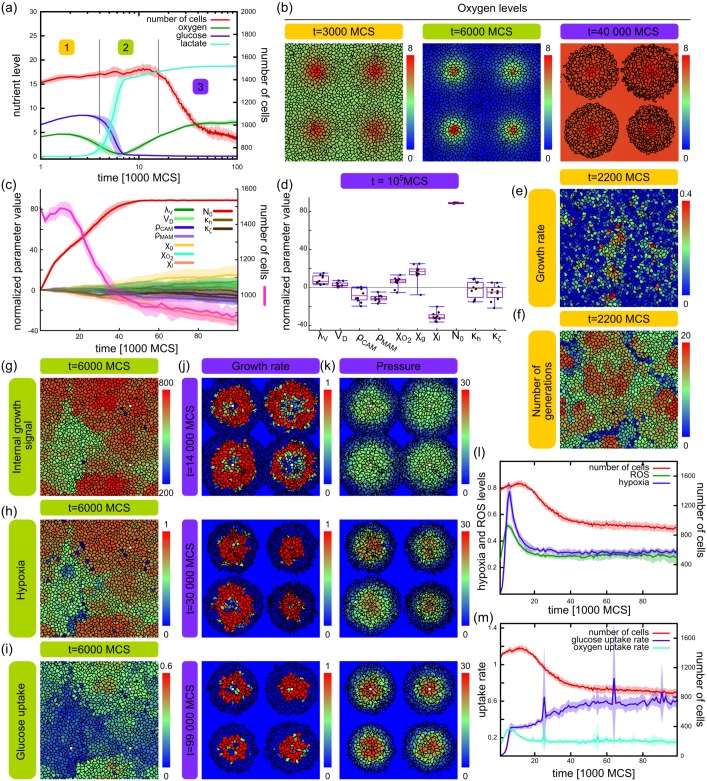
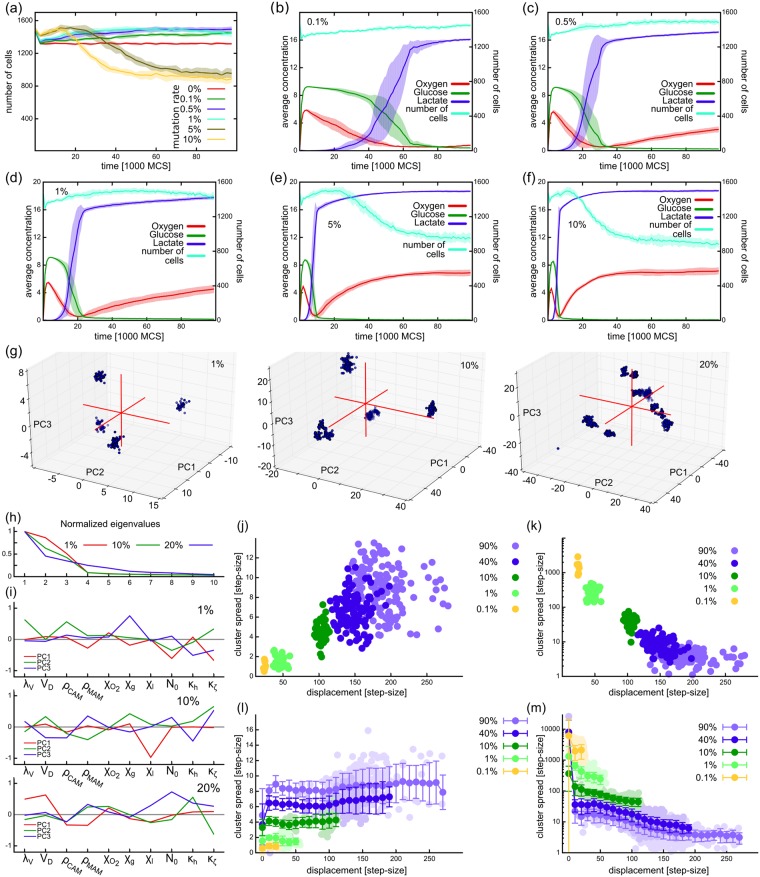
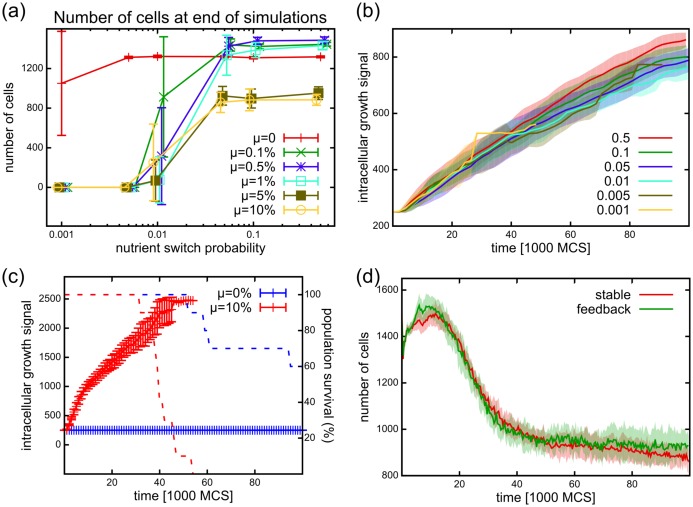
Cancer is a disease of cellular regulation, often initiated by genetic mutation within cells, and leading to a heterogeneous cell population within tissues. In the competition for nutrients and growth space within the tumors the phenotype of each cell determines its success. Selection in this process is imposed by both the microenvironment (neighboring cells, extracellular matrix, and diffusing substances), and the whole of the organism through for example the blood supply. In this view, the development of tumor cells is in close interaction with their increasingly changing environment: the more cells can change, the more their environment will change. Furthermore, instabilities are also introduced on the organism level: blood supply can be blocked by increased tissue pressure or the tortuosity of the tumor-neovascular vessels. This coupling between cell, microenvironment, and organism results in behavior that is hard to predict. Here we introduce a cell-based computational model to study the effect of blood flow obstruction on the micro-evolution of cells within a cancerous tissue. We demonstrate that stages of tumor development emerge naturally, without the need for sequential mutation of specific genes. Secondly, we show that instabilities in blood supply can impact the overall development of tumors and lead to the extinction of the dominant aggressive phenotype, showing a clear distinction between the fitness at the cell level and survival of the population. This provides new insights into potential side effects of recent tumor vasculature normalization approaches.
癌症是一种细胞调节疾病,通常由细胞内的基因突变引发,并导致组织内细胞群体的异质性。在肿瘤内对营养物质和生长空间的竞争中,每个细胞的表型决定其成败。这一过程中的选择既受到微环境(相邻细胞、细胞外基质和扩散物质)的影响,也受到整个生物体(例如通过血液供应)的影响。从这个角度来看,肿瘤细胞的发展与其日益变化的环境密切相互作用:细胞变化越多,其环境变化就越大。此外,在生物体层面也会引入不稳定性:组织压力增加或肿瘤新生血管的迂曲可能会阻断血液供应。细胞、微环境和生物体之间的这种耦合导致了难以预测的行为。在这里,我们引入一个基于细胞的计算模型来研究血流阻塞对癌组织内细胞微进化的影响。我们证明肿瘤发展阶段自然出现,无需特定基因的顺序突变。其次,我们表明血液供应的不稳定性会影响肿瘤的整体发展,并导致占主导地位的侵袭性表型灭绝,这表明细胞水平的适应性与群体生存之间存在明显区别。这为近期肿瘤血管正常化方法的潜在副作用提供了新的见解。