Silva Saura R, Alvarenga Danillo O, Aranguren Yani, Penha Helen A, Fernandes Camila C, Pinheiro Daniel G, Oliveira Marcos T, Michael Todd P, Miranda Vitor F O, Varani Alessandro M
Departamento de Botânica, Instituto de Biociências, Universidade Estadual Paulista (UNESP), Botucatu, São Paulo, Brazil.
Departamento de Tecnologia, Faculdade de Ciências Agrárias e Veterinárias, Universidade Estadual Paulista (Unesp), Jaboticabal, São Paulo, Brazil.
PLoS One. 2017 Jul 19;12(7):e0180484. doi: 10.1371/journal.pone.0180484. eCollection 2017.
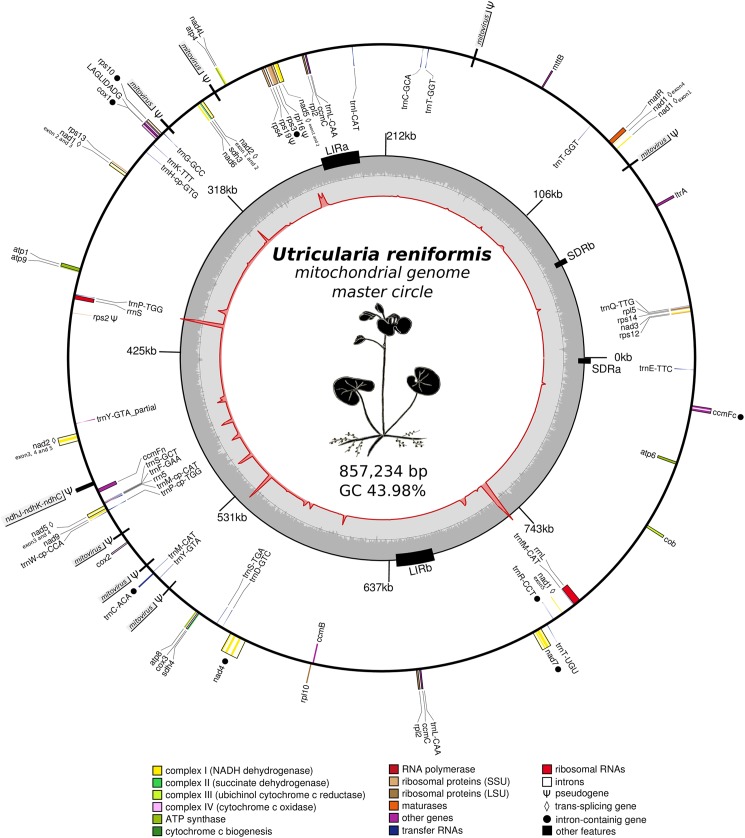
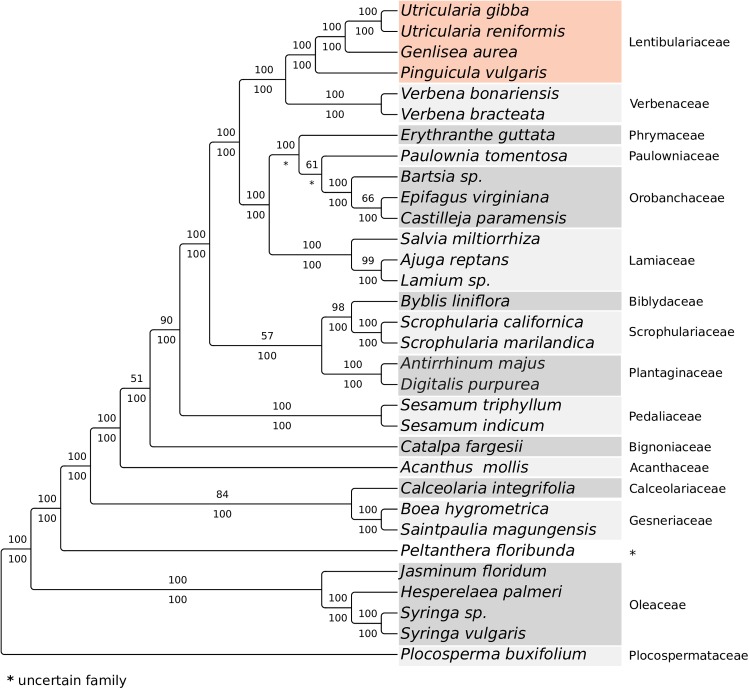
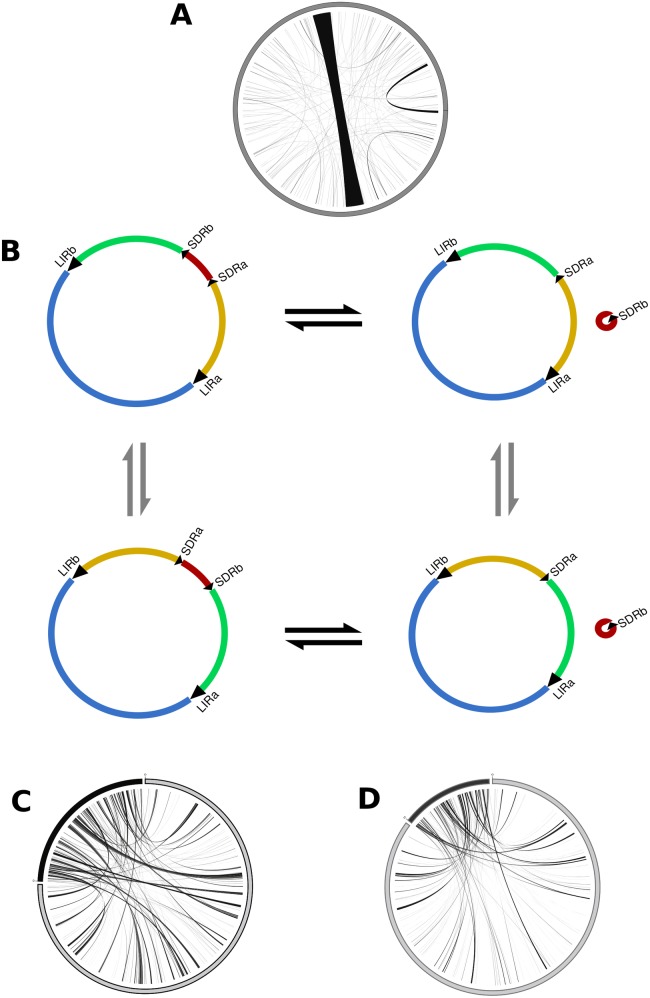
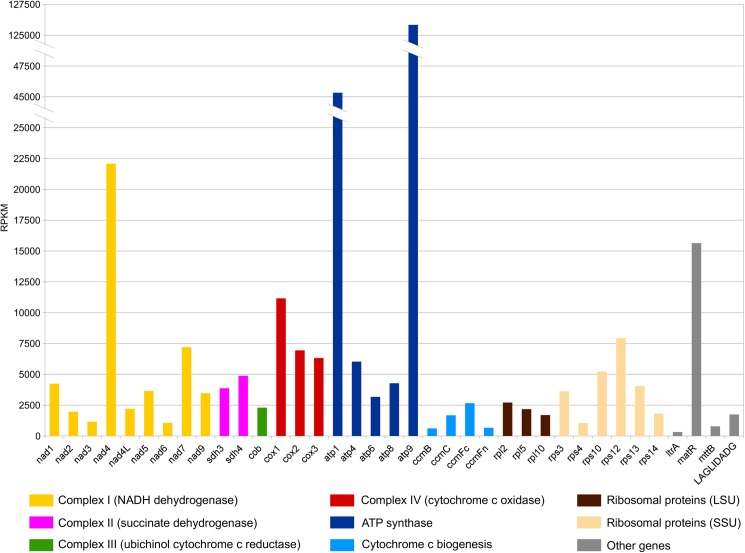
The carnivorous plants of the family Lentibulariaceae have attained recent attention not only because of their interesting lifestyle, but also because of their dynamic nuclear genome size. Lentibulariaceae genomes span an order of magnitude and include species with the smallest genomes in angiosperms, making them a powerful system to study the mechanisms of genome expansion and contraction. However, little is known about mitochondrial DNA (mtDNA) sequences of this family, and the evolutionary forces that shape this organellar genome. Here we report the sequencing and assembly of the complete mtDNA from the endemic terrestrial Brazilian species Utricularia reniformis. The 857,234bp master circle mitochondrial genome encodes 70 transcriptionaly active genes (42 protein-coding, 25 tRNAs and 3 rRNAs), covering up to 7% of the mtDNA. A ltrA-like protein related to splicing and mobility and a LAGLIDADG homing endonuclease have been identified in intronic regions, suggesting particular mechanisms of genome maintenance. RNA-seq analysis identified properties with putative diverse and important roles in genome regulation and evolution: 1) 672kbp (78%) of the mtDNA is covered by full-length reads; 2) most of the 243kbp intergenic regions exhibit transcripts; and 3) at least 69 novel RNA editing sites in the protein-coding genes. Additional genomic features are hypothetical ORFs (48%), chloroplast insertions, including truncated plastid genes that have been lost from the chloroplast DNA (5%), repeats (5%), relics of transposable elements mostly related to LTR retrotransposons (5%), and truncated mitovirus sequences (0.4%). Phylogenetic analysis based on 32 different Lamiales mitochondrial genomes corroborate that Lentibulariaceae is a monophyletic group. In summary, the U. reniformis mtDNA represents the eighth largest plant mtDNA described to date, shedding light on the genomic trends and evolutionary characteristics and phylogenetic history of the family Lentibulariaceae.
狸藻科食虫植物近来备受关注,不仅因其有趣的生活方式,还因其动态变化的核基因组大小。狸藻科植物的基因组跨度达一个数量级,其中包括被子植物中基因组最小的物种,这使其成为研究基因组扩张和收缩机制的有力系统。然而,对于该科植物的线粒体DNA(mtDNA)序列以及塑造这个细胞器基因组的进化力量,人们知之甚少。在此,我们报告了来自巴西特有陆生物种肾形狸藻完整mtDNA的测序和组装情况。这个857,234bp的线粒体主环基因组编码70个转录活性基因(42个蛋白质编码基因、25个tRNA和3个rRNA),覆盖了mtDNA的7%。在内含子区域鉴定出了一种与剪接和移动性相关的类似ltrA的蛋白质以及一种LAGLIDADG归巢内切酶,这暗示了基因组维持的特殊机制。RNA测序分析确定了在基因组调控和进化中具有假定的多样且重要作用的特性:1)mtDNA的672kbp(78%)被全长reads覆盖;2)243kbp的基因间区域大部分都有转录本;3)蛋白质编码基因中至少有69个新的RNA编辑位点。其他基因组特征包括假设的开放阅读框(48%)、叶绿体插入片段,包括已从叶绿体DNA中丢失的截短质体基因(5%)、重复序列(5%)、主要与LTR反转录转座子相关的转座元件遗迹(5%)以及截短的线粒体病毒序列(0.4%)。基于32种不同唇形目线粒体基因组的系统发育分析证实狸藻科是一个单系类群。总之,肾形狸藻的mtDNA是迄今为止描述的第八大植物mtDNA,为狸藻科的基因组趋势、进化特征和系统发育历史提供了线索。