Wickenden Mary, Mulligan Diane, Fefoame Gertrude O, Katende Phoebe
Institute for Global Health, University College London, United Kingdom.
Sightsavers, United Kingdom.
Afr J Disabil. 2012 Oct 3;1(1):1. doi: 10.4102/ajod.v1i1.1. eCollection 2012.
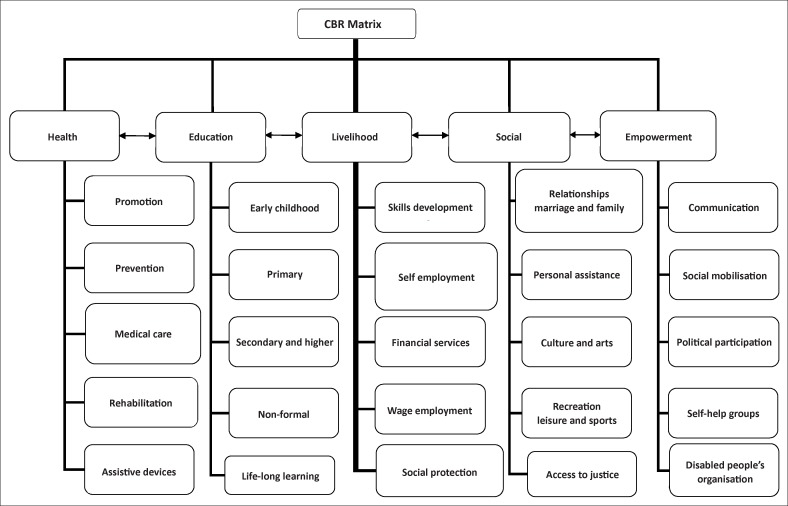
The focus of this paper is the new broadened conceptualisation of community-based rehabilitation (CBR), which promotes the empowerment and inclusion of people with disabilities (PWDs) in diverse ways within their communities. New guidelines for CBR were launched in October 2010 by WHO/ILO/UNESCO/IDDC, and this paper describes part of the process by which these were produced using participatory approaches involving International Non-Government Organisations (INGOs) and local partners. The paper reviews the evolution of CBR and describes how grassroots consultation by INGOs working with key stakeholders in the disability arena can influence policy on disability issues, and reciprocally how policy change can inform organisations' practice and research activities. This ongoing bidirectional influence is illustrated with data from the participatory consultation process about the new CBR guidelines carried out by Sightsavers in Uganda and Ghana.
To consult with key stakeholders in the disability arena in Uganda and Ghana, in order to gain their opinions and suggestions for improvements to the then draft CBR guidelines, as part of a wider global participatory process of consultation on the document.
The INGO Sightsavers gathered qualitative data through focus group discussions and questionnaires in both countries.
The participants' critiques of the draft guidelines carried out in multiagency participatory processes were analysed thematically and fed back to the CBR guidelines editorial team.
The paper concludes that stakeholders in diverse communities can actively contribute to shaping policy and practice through participatory consultations. Local and national government and non-government organisations and other key informants can inform the development of national and international guidelines and policies. This participatory approach can be successfully facilitated by INGOs. In turn, these processes have prompted organisations to adapt their own policies and programmes in order to be more responsive to the local needs and concerns of PWDs.
本文的重点是社区康复(CBR)新的拓展概念,它以多种方式促进残疾人在其社区中获得赋权并融入其中。世界卫生组织/国际劳工组织/联合国教科文组织/国际残疾人发展中心于2010年10月发布了社区康复新指南,本文描述了使用涉及国际非政府组织(INGO)和当地合作伙伴的参与式方法制定这些指南的部分过程。本文回顾了社区康复的发展历程,并描述了与残疾领域关键利益相关者合作的国际非政府组织进行的基层协商如何能够影响残疾问题政策,以及政策变化又如何为组织的实践和研究活动提供信息。国际防盲救盲组织在乌干达和加纳开展的关于新社区康复指南的参与式协商过程中的数据说明了这种持续的双向影响。
与乌干达和加纳残疾领域的关键利益相关者进行协商,以便作为该文件更广泛的全球参与式协商过程的一部分,获取他们对当时社区康复指南草案改进的意见和建议。
国际非政府组织国际防盲救盲组织通过焦点小组讨论和问卷调查在这两个国家收集了定性数据。
对多机构参与式过程中参与者对指南草案的批评进行了主题分析,并反馈给了社区康复指南编辑团队。
本文得出结论,不同社区的利益相关者可以通过参与式协商积极为政策和实践的形成做出贡献。地方和国家政府、非政府组织及其他关键信息提供者可为国家和国际指南及政策的制定提供信息。国际非政府组织能够成功推动这种参与式方法。反过来,这些过程促使组织调整自身政策和项目,以便更能回应残疾人的当地需求和关切。