El-Salhy Magdy, Ystad Synne Otterasen, Mazzawi Tarek, Gundersen Doris
Division of Gastroenterology, Department of Medicine, Stord Hospital, 5416 Stord, Norway.
National Centre for Functional Gastrointestinal Disorders, Department of Medicine, Haukeland University Hospital, 5020 Bergen, Norway.
Int J Mol Med. 2017 Sep;40(3):607-613. doi: 10.3892/ijmm.2017.3072. Epub 2017 Jul 19.
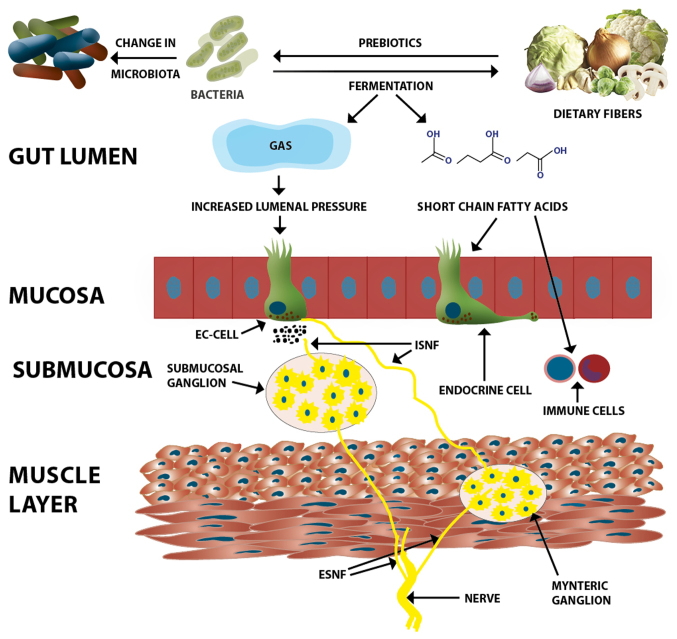
Irritable bowel syndrome (IBS) is a common chronic gastrointestinal disorder. It is widely believed that IBS is caused by a deficient intake of dietary fiber, and most physicians recommend that patients with IBS increase their intake of dietary fiber in order to relieve their symptoms. However, different types of dietary fiber exhibit marked differences in physical and chemical properties, and the associated health benefits are specific for each fiber type. Short-chain soluble and highly fermentable dietary fiber, such as oligosaccharides results in rapid gas production that can cause abdominal pain/discomfort, abdominal bloating/distension and flatulence in patients with IBS. By contrast, long-chain, intermediate viscous, soluble and moderately fermentable dietary fiber, such as psyllium results in a low gas production and the absence of the symptoms related to excessive gas production. The effects of type of fiber have been documented in the management of IBS, and it is known to improve the overall symptoms in patients with IBS. Dietary fiber acts on the gastrointestinal tract through several mechanisms, including increased fecal mass with mechanical stimulation/irritation of the colonic mucosa with increasing secretion and peristalsis, and the actions of fermentation byproducts, particularly short-chain fatty acids, on the intestinal microbiota, immune system and the neuroendocrine system of the gastrointestinal tract. Fiber supplementation, particularly psyllium, is both safe and effective in improving IBS symptoms globally. Dietary fiber also has other health benefits, such as lowering blood cholesterol levels, improving glycemic control and body weight management.
肠易激综合征(IBS)是一种常见的慢性胃肠道疾病。人们普遍认为,肠易激综合征是由膳食纤维摄入不足引起的,大多数医生建议肠易激综合征患者增加膳食纤维的摄入量以缓解症状。然而,不同类型的膳食纤维在物理和化学性质上存在显著差异,且每种纤维类型所带来的健康益处也各不相同。短链可溶性且高度可发酵的膳食纤维,如低聚糖,会导致快速产气,从而使肠易激综合征患者出现腹痛/不适、腹胀/膨隆和肠胃胀气。相比之下,长链、中等黏性、可溶性且发酵程度适中的膳食纤维,如车前草纤维,产气较少,且不会出现与产气过多相关的症状。纤维类型的影响在肠易激综合征的治疗中已有记载,并且已知它能改善肠易激综合征患者的整体症状。膳食纤维通过多种机制作用于胃肠道,包括增加粪便量,通过机械刺激/刺激结肠黏膜来增加分泌和蠕动,以及发酵副产物,特别是短链脂肪酸,对肠道微生物群、免疫系统和胃肠道神经内分泌系统的作用。补充膳食纤维,尤其是车前草纤维,在全球范围内改善肠易激综合征症状方面既安全又有效。膳食纤维还有其他健康益处,如降低血液胆固醇水平、改善血糖控制和体重管理。