INSERM U1016, Cochin Institute, Paris, France.
CNRS UMR 8104, Paris, France.
Elife. 2017 Jul 21;6:e27564. doi: 10.7554/eLife.27564.
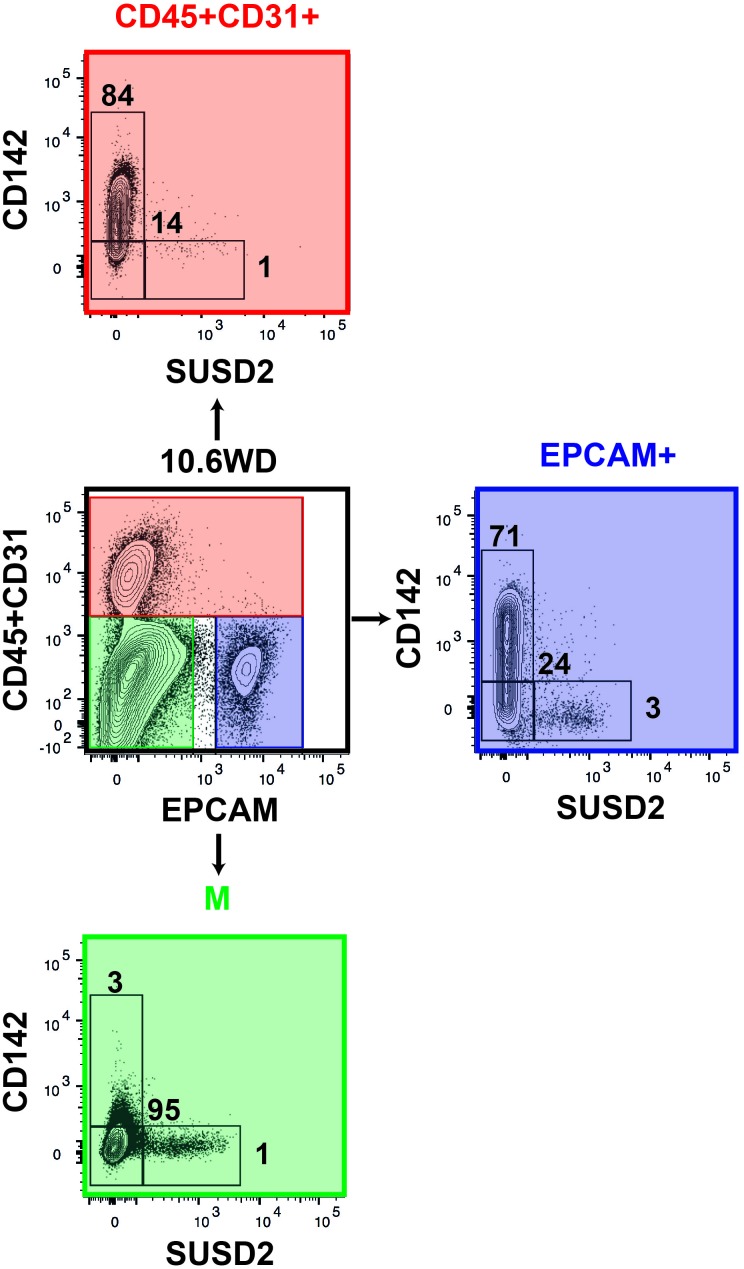
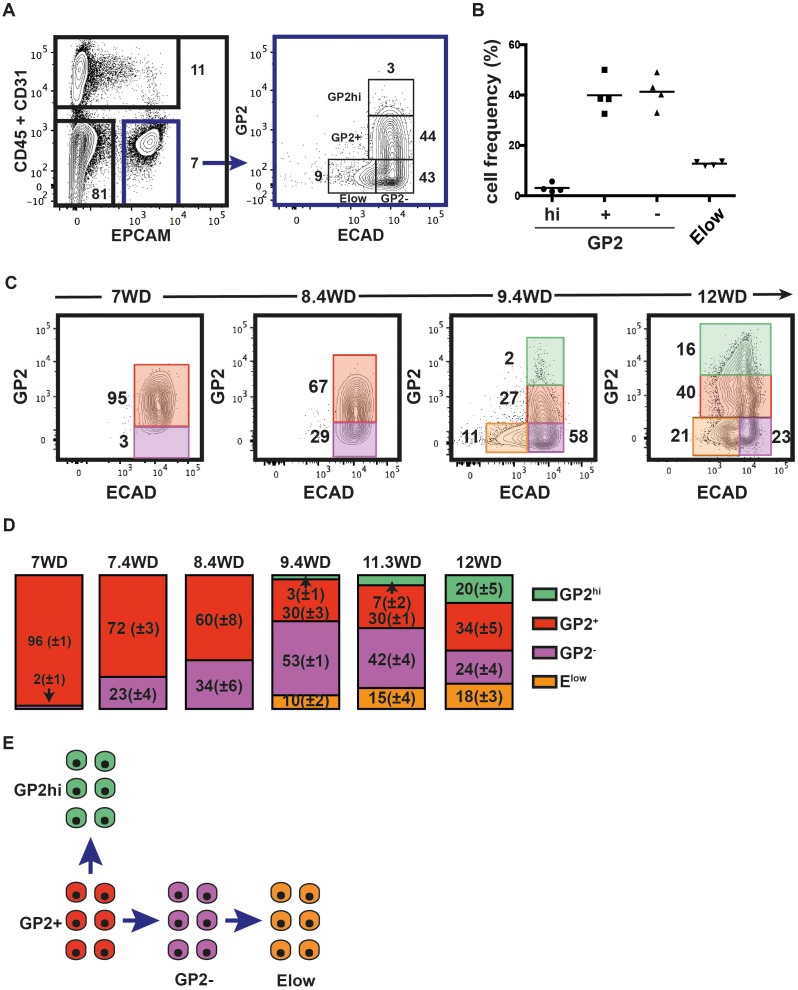
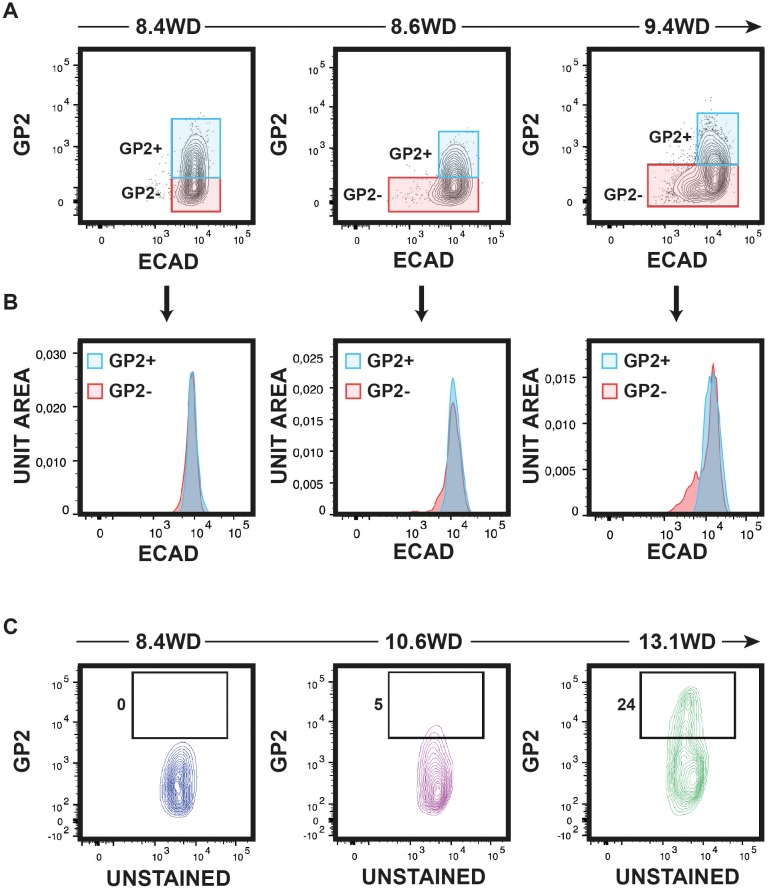
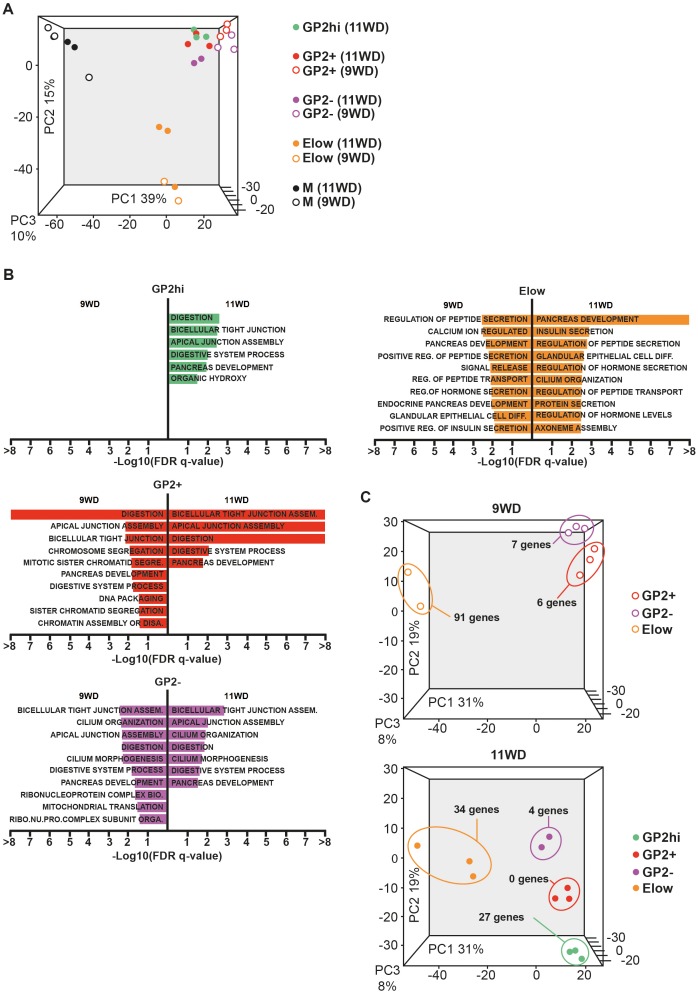
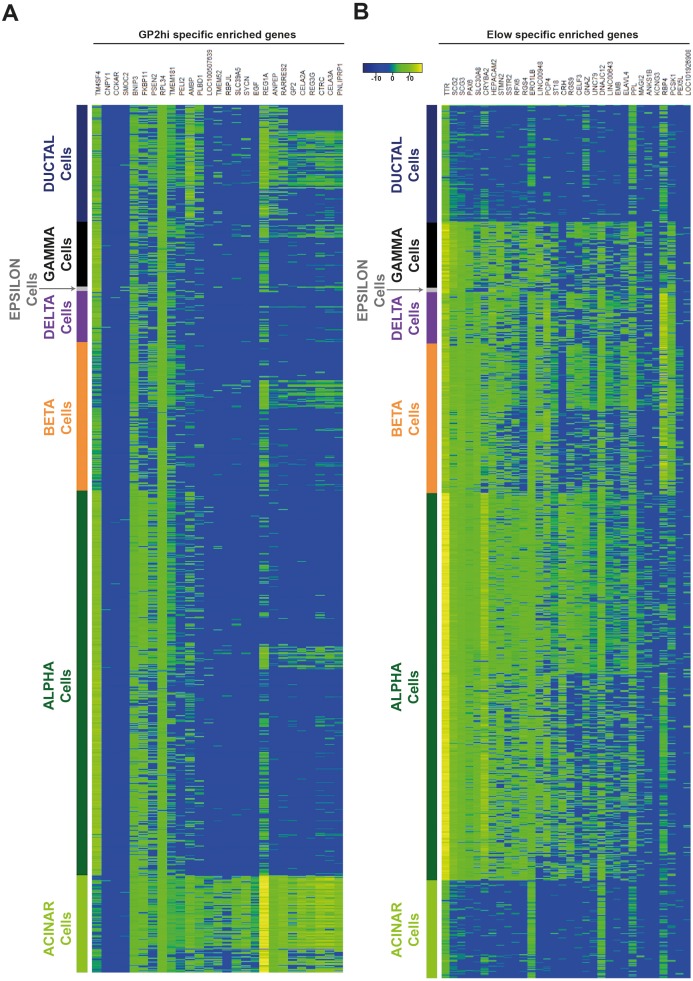
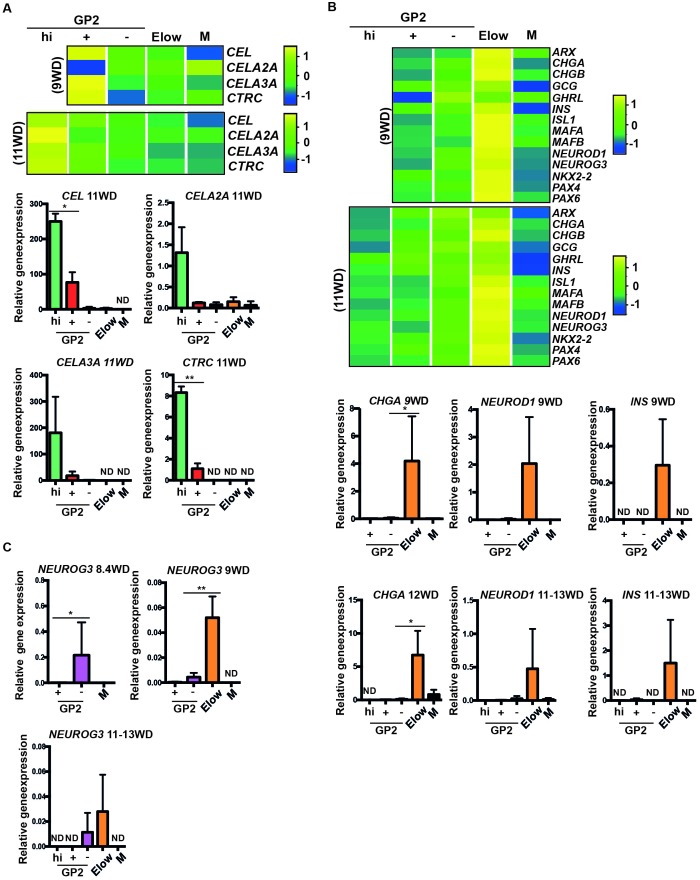
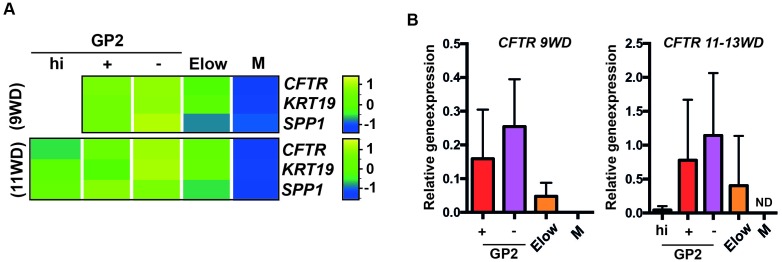
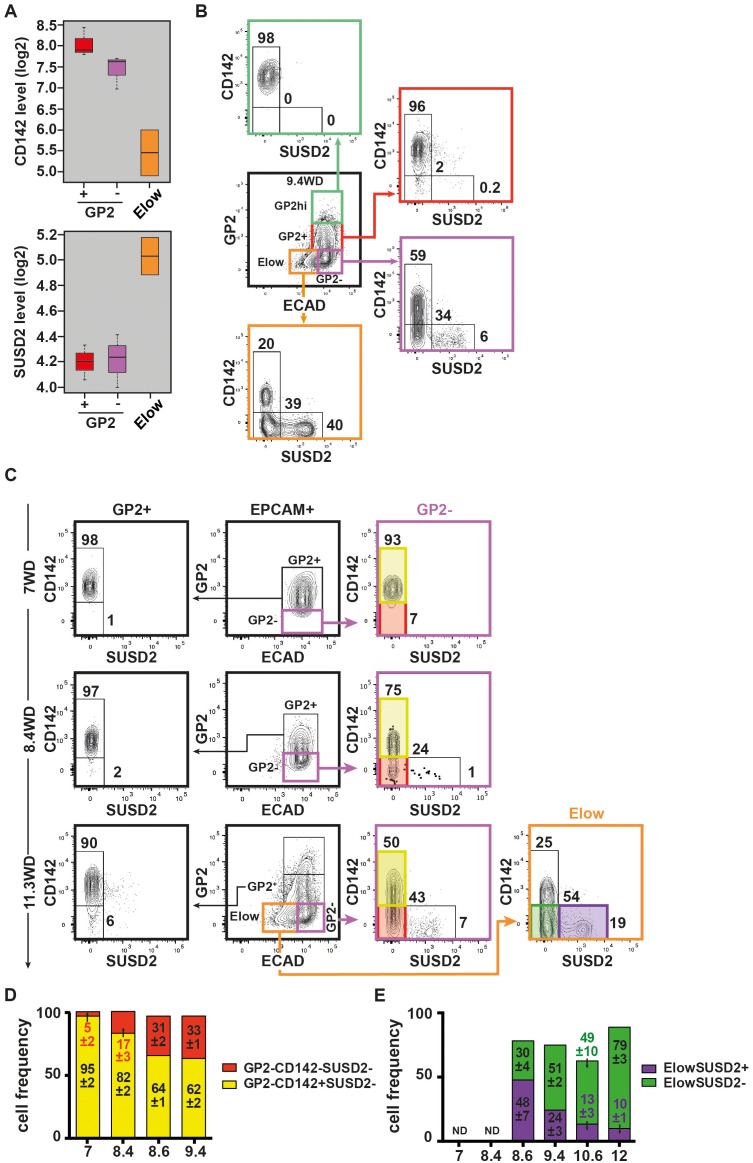
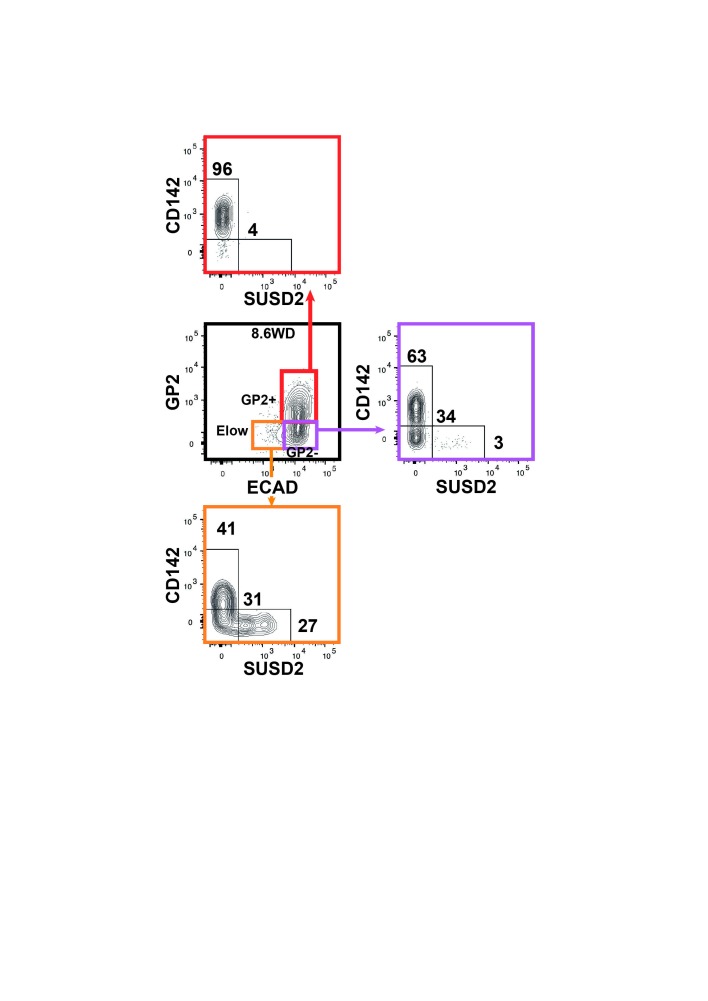
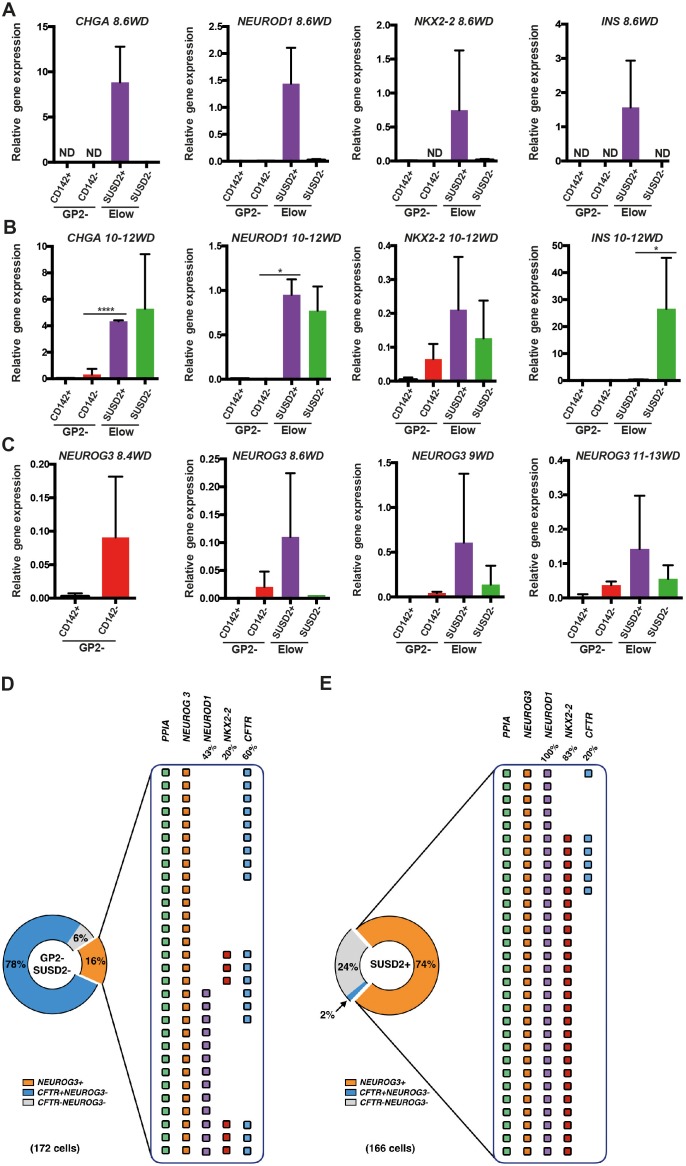
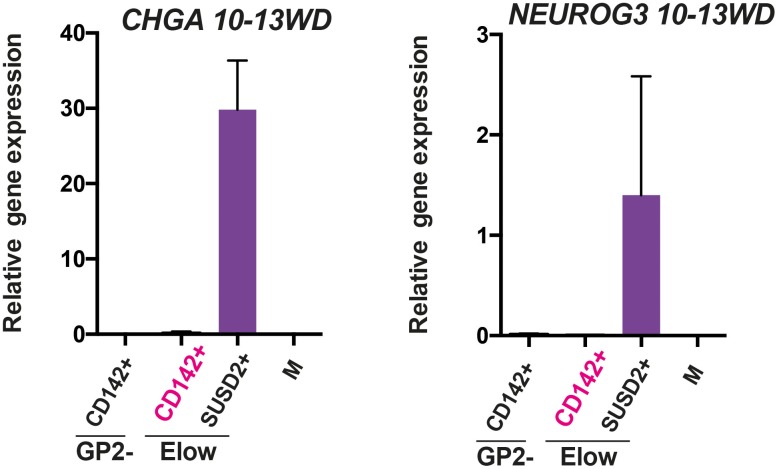
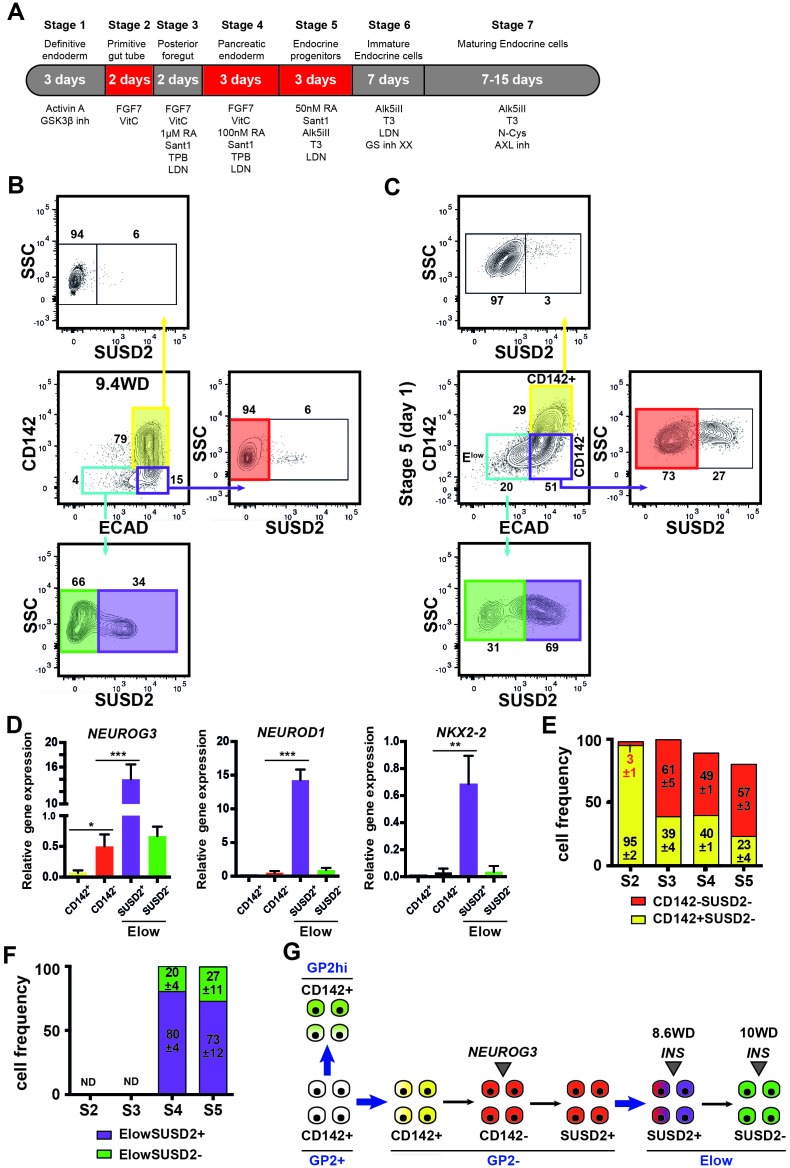
Information remains scarce on human development compared to animal models. Here, we reconstructed human fetal pancreatic differentiation using cell surface markers. We demonstrate that at 7weeks of development, the glycoprotein 2 (GP2) marks a multipotent cell population that will differentiate into the acinar, ductal or endocrine lineages. Development towards the acinar lineage is paralleled by an increase in GP2 expression. Conversely, a subset of the GP2 population undergoes endocrine differentiation by down-regulating GP2 and CD142 and turning on , a marker of endocrine differentiation. Endocrine maturation progresses by up-regulating SUSD2 and lowering ECAD levels. Finally, in vitro differentiation of pancreatic endocrine cells derived from human pluripotent stem cells mimics key in vivo events. Our work paves the way to extend our understanding of the origin of mature human pancreatic cell types and how such lineage decisions are regulated.
与动物模型相比,人类发育方面的信息仍然很少。在这里,我们使用细胞表面标志物重建了人类胎儿胰腺的分化。我们证明,在发育的 7 周时,糖蛋白 2 (GP2) 标记了一个多能细胞群,该细胞群将分化为腺泡、导管或内分泌谱系。向腺泡谱系的发育伴随着 GP2 表达的增加。相反,GP2 群体的一部分通过下调 GP2 和 CD142 并开启 ,一个内分泌分化的标志物,经历内分泌分化。内分泌成熟是通过上调 SUSD2 和降低 ECAD 水平来实现的。最后,源自人类多能干细胞的胰腺内分泌细胞的体外分化模拟了关键的体内事件。我们的工作为进一步了解成熟人类胰腺细胞类型的起源以及这种谱系决定是如何调控的铺平了道路。