Department of Biostatistics, University of Liverpool, Waterhouse Building, Liverpool, UK.
School of Social and Community Medicine, University of Bristol, Bristol, UK.
Res Synth Methods. 2017 Dec;8(4):485-495. doi: 10.1002/jrsm.1257. Epub 2017 Aug 23.
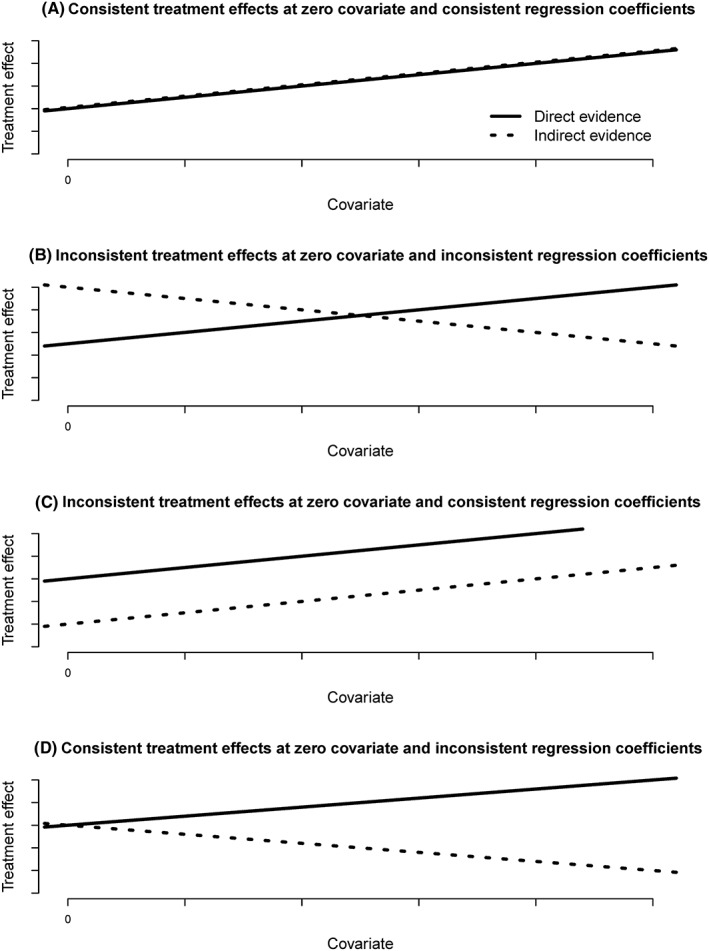
Many reviews aim to compare numerous treatments and report results stratified by subgroups (eg, by disease severity). In such cases, a network meta-analysis model including treatment by covariate interactions can estimate the relative effects of all treatment pairings for each subgroup of patients. Two key assumptions underlie such models: consistency of treatment effects and consistency of the regression coefficients for the interactions. Consistency may differ depending on the covariate value at which consistency is assessed. For valid inference, we need to be confident of consistency for the relevant range of covariate values. In this paper, we demonstrate how to assess consistency of treatment effects from direct and indirect evidence at various covariate values.
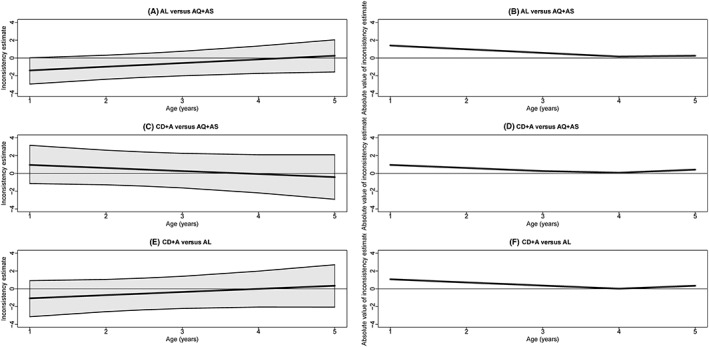
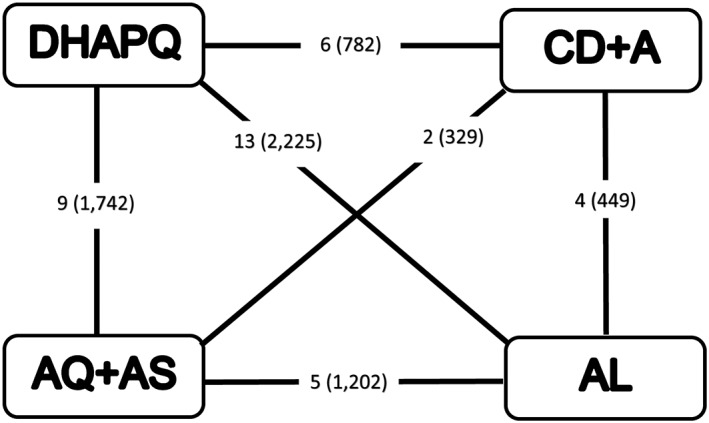
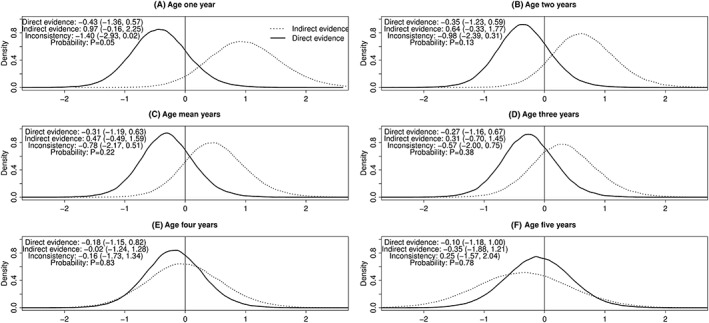
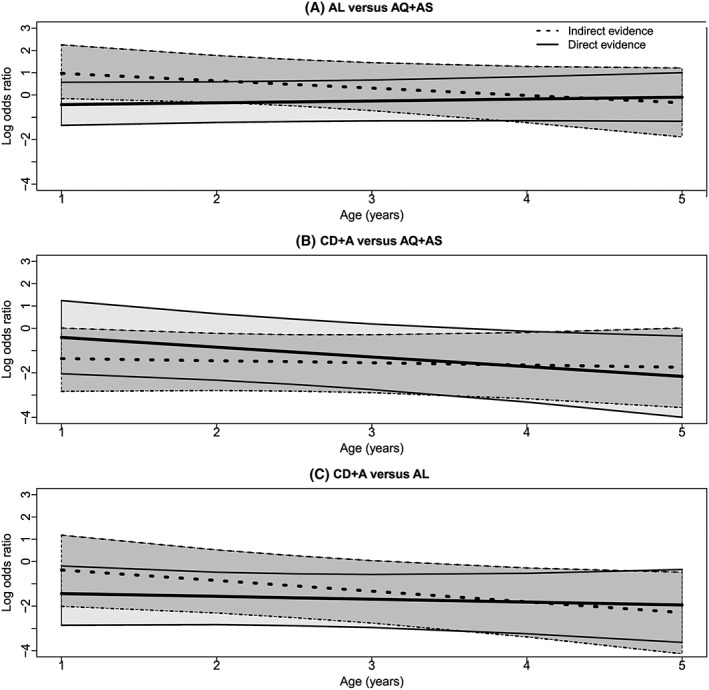
Consistency is assessed using visual inspection, inconsistency estimates, and probabilities. The method is applied to an individual patient dataset comparing artemisinin combination therapies for treating uncomplicated malaria in children using the covariate age.
The magnitude of the inconsistency appears to be decreasing with increasing age for each comparison. For one comparison, direct and indirect evidence differ for age 1 (P = .05), and this brings results for age 1 for all comparisons into question.
When fitting models including interactions, the consistency of direct and indirect evidence must be assessed across the range of covariates included in the trials. Clinical inferences are only valid for covariate values for which results are consistent.
许多综述旨在比较多种治疗方法,并按亚组(如疾病严重程度)报告结果。在这种情况下,包含治疗与协变量交互作用的网络荟萃分析模型可以估计所有治疗组合对每个患者亚组的相对效果。此类模型有两个关键假设:治疗效果的一致性和交互作用回归系数的一致性。一致性可能因评估一致性的协变量值而异。为了进行有效的推断,我们需要对相关协变量值范围内的一致性有信心。本文演示了如何在各种协变量值下从直接和间接证据评估治疗效果的一致性。
使用直观检查、不一致性估计和概率来评估一致性。该方法应用于比较儿童治疗无并发症疟疾的青蒿素联合疗法的个体患者数据集,使用协变量年龄。
对于每一次比较,不一致的程度似乎随着年龄的增加而降低。对于一次比较,年龄 1 时的直接证据和间接证据不同(P =.05),这使得所有比较的年龄 1 的结果受到质疑。
当拟合包含交互作用的模型时,必须在试验中包含的协变量范围内评估直接证据和间接证据的一致性。临床推论仅对结果一致的协变量值有效。