Cha-Molstad Hyunjoo, Yu Ji Eun, Feng Zhiwei, Lee Su Hyun, Kim Jung Gi, Yang Peng, Han Bitnara, Sung Ki Woon, Yoo Young Dong, Hwang Joonsung, McGuire Terry, Shim Sang Mi, Song Hyun Dong, Ganipisetti Srinivasrao, Wang Nuozhou, Jang Jun Min, Lee Min Jae, Kim Seung Jun, Lee Kyung Ho, Hong Jin Tae, Ciechanover Aaron, Mook-Jung Inhee, Kim Kwang Pyo, Xie Xiang-Qun, Kwon Yong Tae, Kim Bo Yeon
World Class Institute, Anticancer Agents Research Center, Korea Research Institute of Bioscience and Biotechnology, Ochang, Cheongwon, 28116, Korea.
Department of Drug Discovery and Development, College of Pharmacy, Chungbuk National University, Chungbuk, Cheongju, 28644, Korea.
Nat Commun. 2017 Jul 24;8(1):102. doi: 10.1038/s41467-017-00085-7.
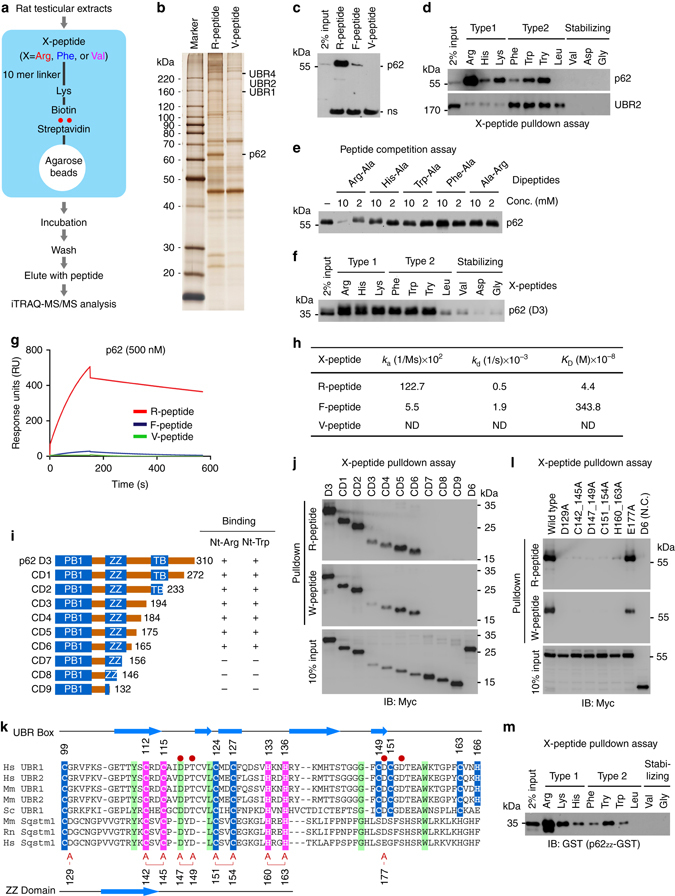
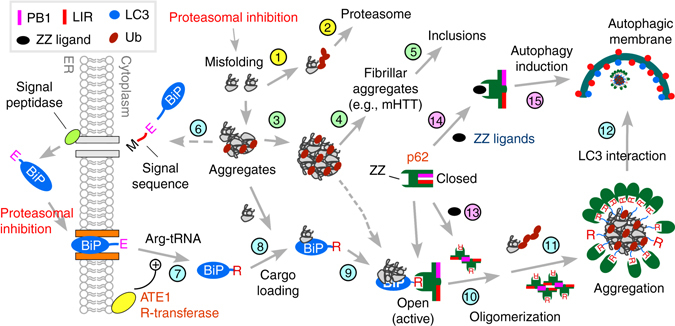
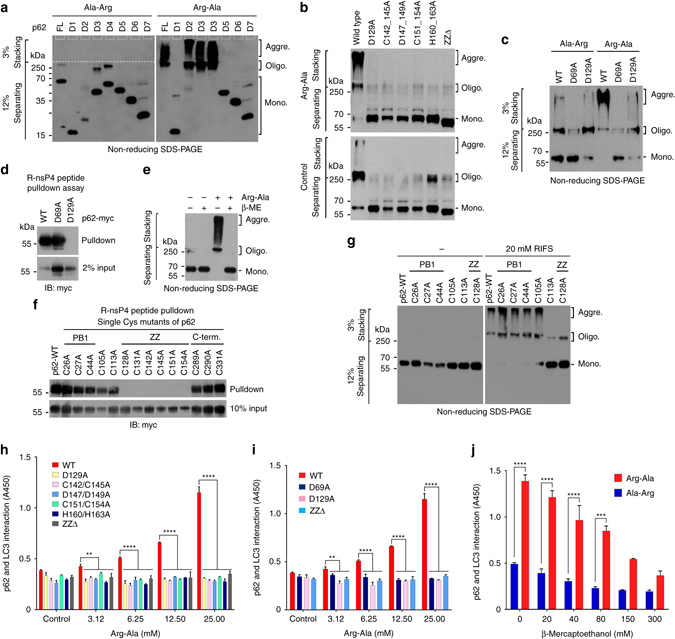
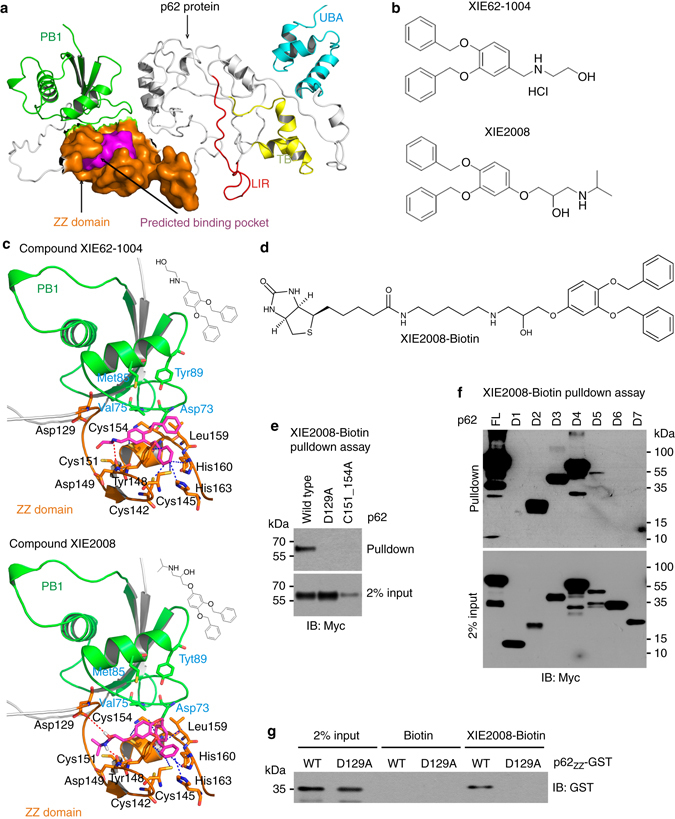
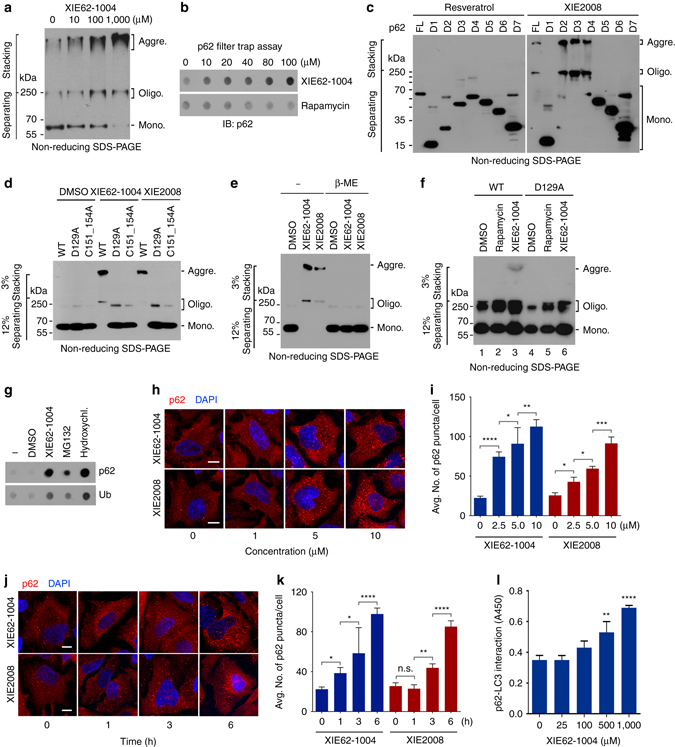
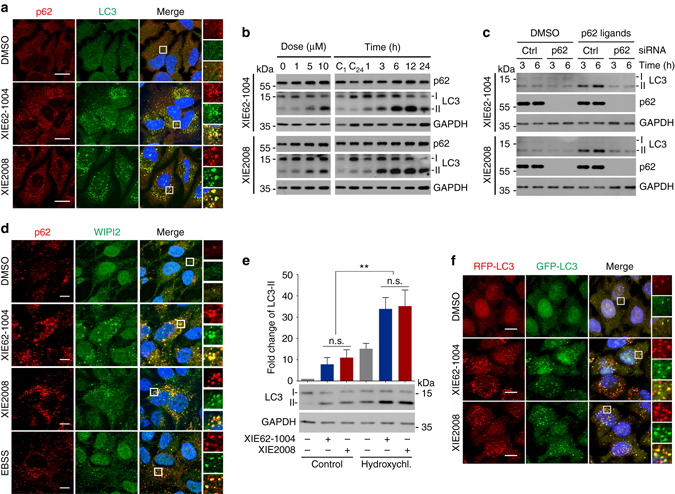
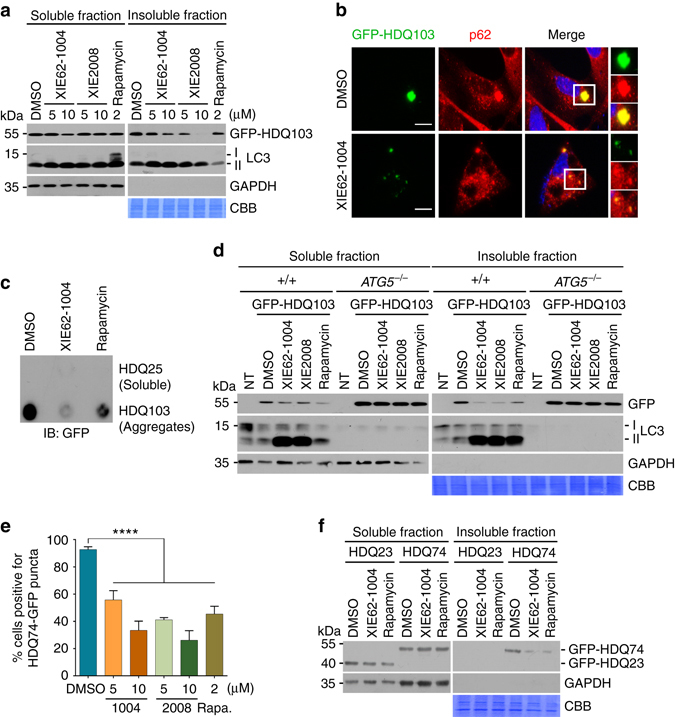
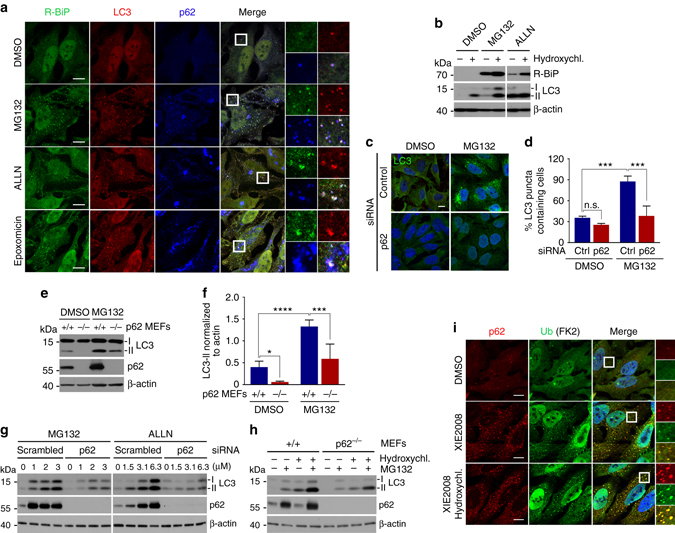
Macroautophagy mediates the selective degradation of proteins and non-proteinaceous cellular constituents. Here, we show that the N-end rule pathway modulates macroautophagy. In this mechanism, the autophagic adapter p62/SQSTM1/Sequestosome-1 is an N-recognin that binds type-1 and type-2 N-terminal degrons (N-degrons), including arginine (Nt-Arg). Both types of N-degrons bind its ZZ domain. By employing three-dimensional modeling, we developed synthetic ligands to p62 ZZ domain. The binding of Nt-Arg and synthetic ligands to ZZ domain facilitates disulfide bond-linked aggregation of p62 and p62 interaction with LC3, leading to the delivery of p62 and its cargoes to the autophagosome. Upon binding to its ligand, p62 acts as a modulator of macroautophagy, inducing autophagosome biogenesis. Through these dual functions, cells can activate p62 and induce selective autophagy upon the accumulation of autophagic cargoes. We also propose that p62 mediates the crosstalk between the ubiquitin-proteasome system and autophagy through its binding Nt-Arg and other N-degrons.Soluble misfolded proteins that fail to be degraded by the ubiquitin proteasome system (UPS) are redirected to autophagy via specific adaptors, such as p62. Here the authors show that p62 recognises N-degrons in these proteins, acting as a N-recognin from the proteolytic N-end rule pathway, and targets these cargos to autophagosomal degradation.
巨自噬介导蛋白质和非蛋白质细胞成分的选择性降解。在此,我们表明N端规则途径调节巨自噬。在这一机制中,自噬衔接蛋白p62/SQSTM1/聚集体小体蛋白-1是一种N识别蛋白,可结合1型和2型N端降解子(N-降解子),包括精氨酸(Nt-Arg)。这两种类型的N-降解子均结合其ZZ结构域。通过三维建模,我们开发了p62 ZZ结构域的合成配体。Nt-Arg和合成配体与ZZ结构域的结合促进了p62的二硫键连接聚集以及p62与LC3的相互作用,从而导致p62及其货物被递送至自噬体。与配体结合后,p62作为巨自噬的调节剂,诱导自噬体生物发生。通过这些双重功能,细胞可在自噬货物积累时激活p62并诱导选择性自噬。我们还提出,p62通过结合Nt-Arg和其他N-降解子介导泛素-蛋白酶体系统与自噬之间的串扰。未能被泛素蛋白酶体系统(UPS)降解的可溶性错误折叠蛋白通过特定衔接蛋白(如p62)被重定向至自噬。本文作者表明,p62识别这些蛋白中的N-降解子,作为蛋白水解N端规则途径中的N识别蛋白,并将这些货物靶向自噬体降解。