Cha-Molstad Hyunjoo, Sung Ki Sa, Hwang Joonsung, Kim Kyoung A, Yu Ji Eun, Yoo Young Dong, Jang Jun Min, Han Dong Hoon, Molstad Michael, Kim Jung Gi, Lee Yoon Jee, Zakrzewska Adriana, Kim Su-Hyeon, Kim Sung Tae, Kim Sun Yong, Lee Hee Gu, Soung Nak Kyun, Ahn Jong Seog, Ciechanover Aaron, Kim Bo Yeon, Kwon Yong Tae
World Class Institute, Korea Research Institute of Bioscience and Biotechnology, Ochang 363-883, Cheongwon, Korea.
1] Protein Metabolism Medical Research Center and Department of Biomedical Sciences, College of Medicine, Seoul National University, Seoul 110-799, Korea [2] Center for Pharmacogenetics and Department of Pharmaceutical Sciences, School of Pharmacy, University of Pittsburgh, Pittsburgh, Pennsylvania 15261, USA.
Nat Cell Biol. 2015 Jul;17(7):917-29. doi: 10.1038/ncb3177. Epub 2015 Jun 15.
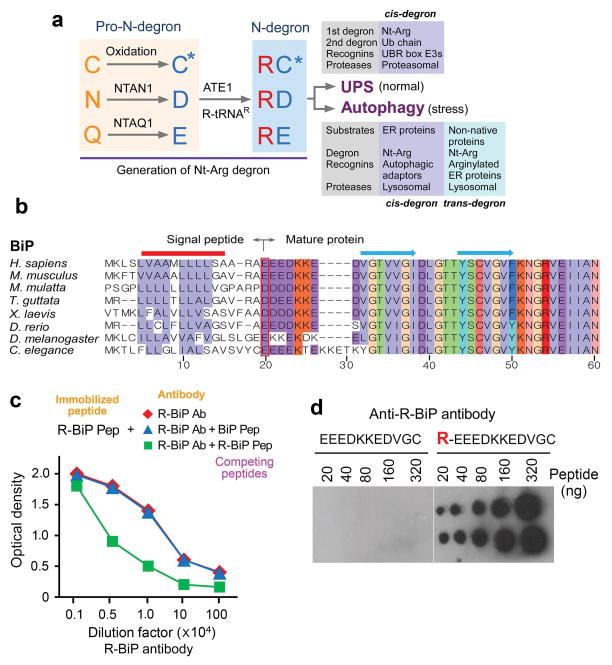
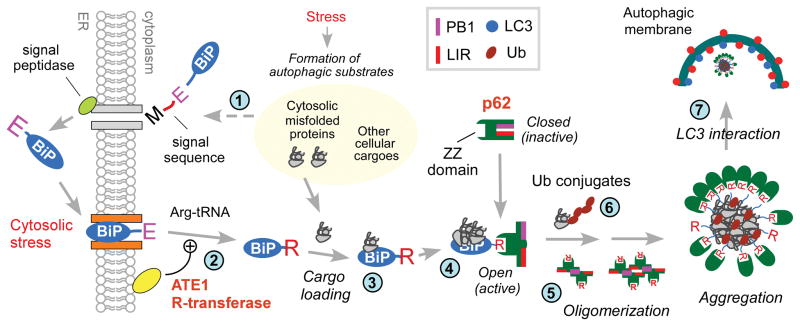
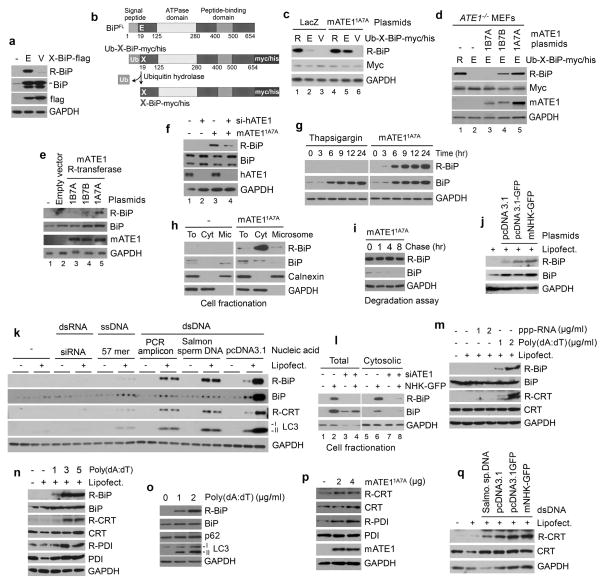
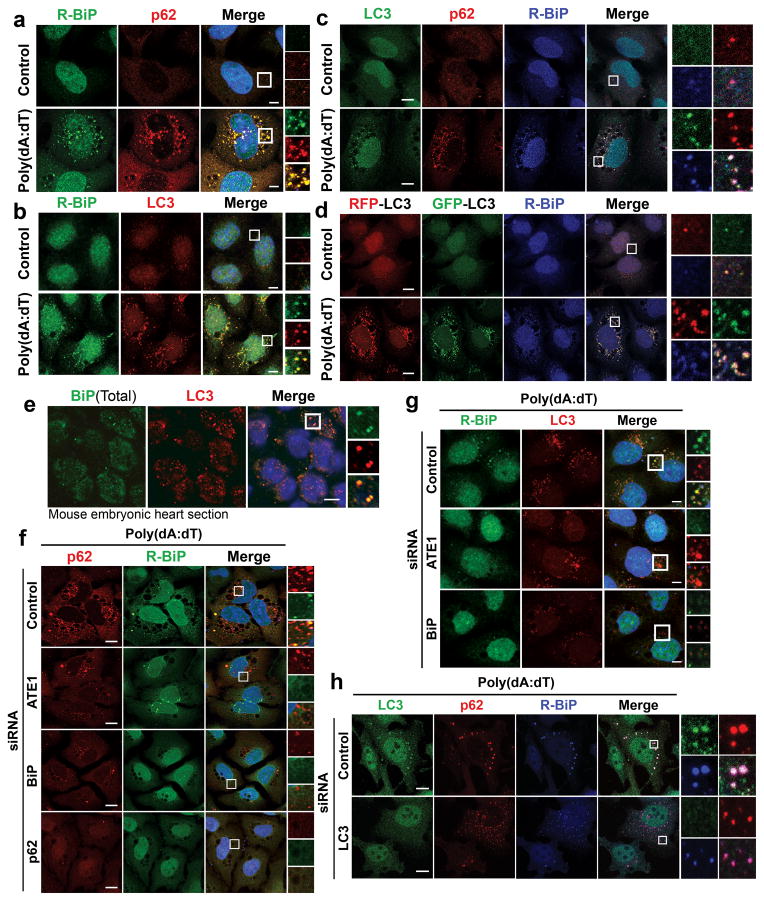
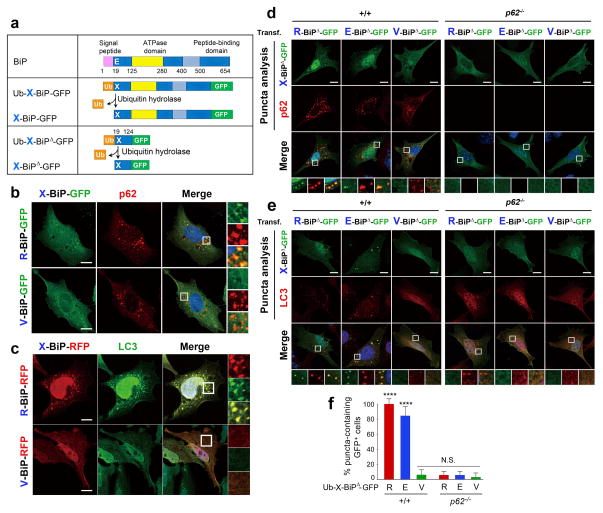
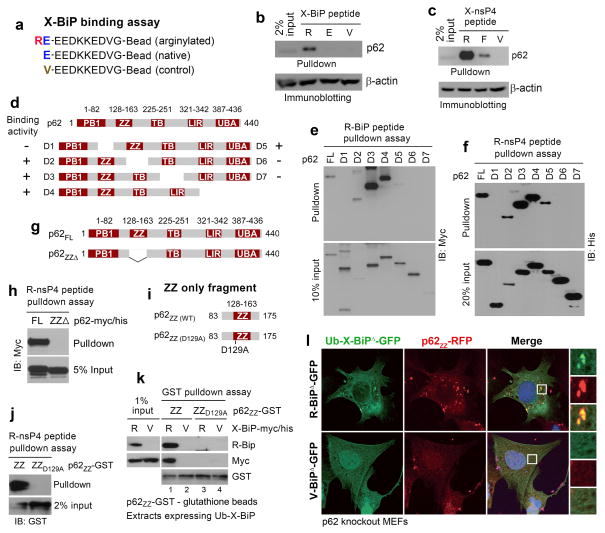
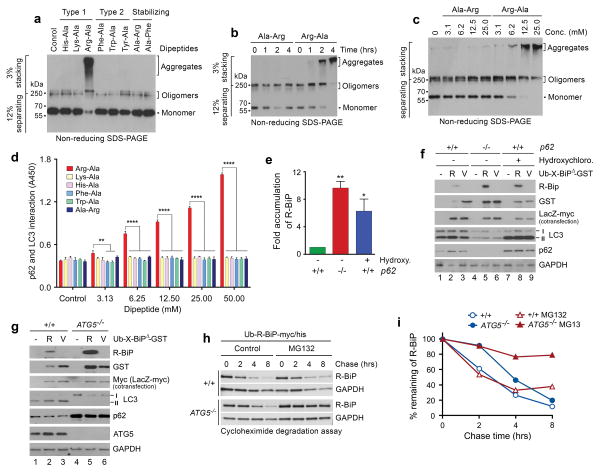
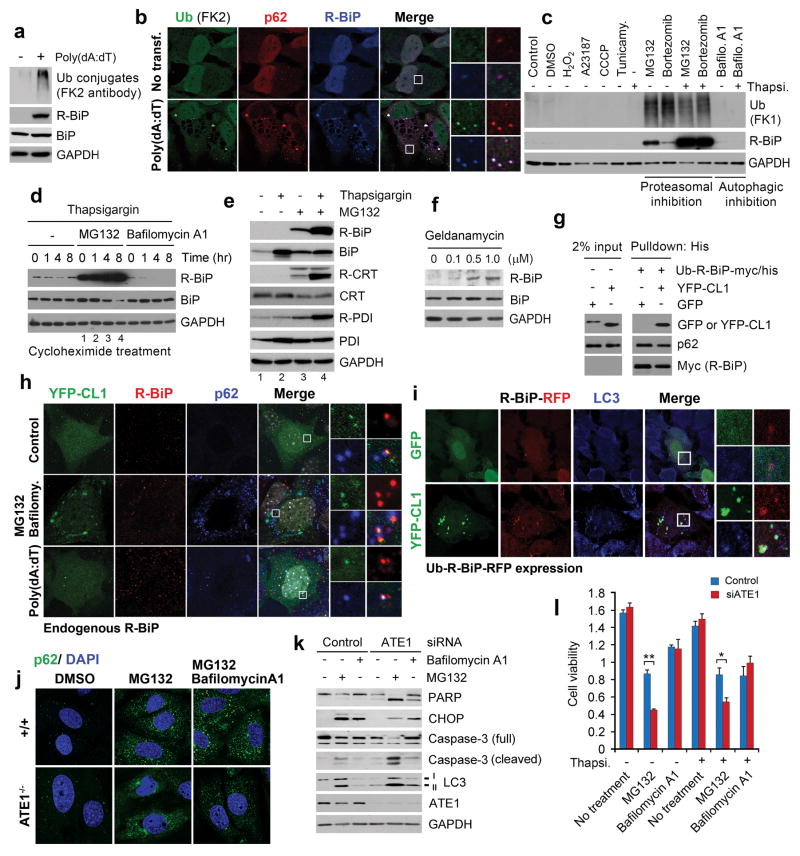
We show that ATE1-encoded Arg-transfer RNA transferase (R-transferase) of the N-end rule pathway mediates N-terminal arginylation of multiple endoplasmic reticulum (ER)-residing chaperones, leading to their cytosolic relocalization and turnover. N-terminal arginylation of BiP (also known as GRP78), protein disulphide isomerase and calreticulin is co-induced with autophagy during innate immune responses to cytosolic foreign DNA or proteasomal inhibition, associated with increased ubiquitylation. Arginylated BiP (R-BiP) is induced by and associated with cytosolic misfolded proteins destined for p62 (also known as sequestosome 1, SQSTM1) bodies. R-BiP binds the autophagic adaptor p62 through the interaction of its N-terminal arginine with the p62 ZZ domain. This allosterically induces self-oligomerization and aggregation of p62 and increases p62 interaction with LC3, leading to p62 targeting to autophagosomes and selective lysosomal co-degradation of R-BiP and p62 together with associated cargoes. In this autophagic mechanism, Nt-arginine functions as a delivery determinant, a degron and an activating ligand. Bioinformatics analysis predicts that many ER residents use arginylation to regulate non-ER processes.
我们发现,N端规则途径中由ATE1编码的精氨酸转移RNA转移酶(R转移酶)介导多种内质网(ER)驻留伴侣蛋白的N端精氨酸化,导致它们重新定位到细胞质并发生周转。在对细胞质外源DNA的天然免疫反应或蛋白酶体抑制过程中,BiP(也称为GRP78)、蛋白二硫键异构酶和钙网蛋白的N端精氨酸化与自噬共同被诱导,这与泛素化增加有关。精氨酸化的BiP(R-BiP)由细胞质中错误折叠的蛋白质诱导产生,并与之相关,这些蛋白质最终进入p62(也称为聚集体蛋白1,SQSTM1)小体。R-BiP通过其N端精氨酸与p62 ZZ结构域的相互作用结合自噬衔接蛋白p62。这会变构诱导p62的自我寡聚化和聚集,并增加p62与LC3的相互作用,导致p62靶向自噬体,并使R-BiP和p62与相关货物一起被选择性地溶酶体共降解。在这种自噬机制中,N端精氨酸起到传递决定因素、降解信号和激活配体 的作用。生物信息学分析预测,许多内质网驻留蛋白利用精氨酸化来调节非内质网过程。