Chen Allen M, Cao Minsong, Hsu Sophia, Lamb James, Mikaeilian Argin, Yang Yingli, Agazaryan Nzhde, Low Daniel A, Steinberg Michael L
Department of Radiation Oncology, University of California, David Geffen School of Medicine, Los Angeles, California.
Adv Radiat Oncol. 2017 Feb 21;2(2):167-175. doi: 10.1016/j.adro.2017.02.002. eCollection 2017 Apr-Jun.
To report a single-institutional experience using magnetic resonance imaging (MRI) guided radiation therapy for the reirradiation of recurrent and second cancers of the head and neck.
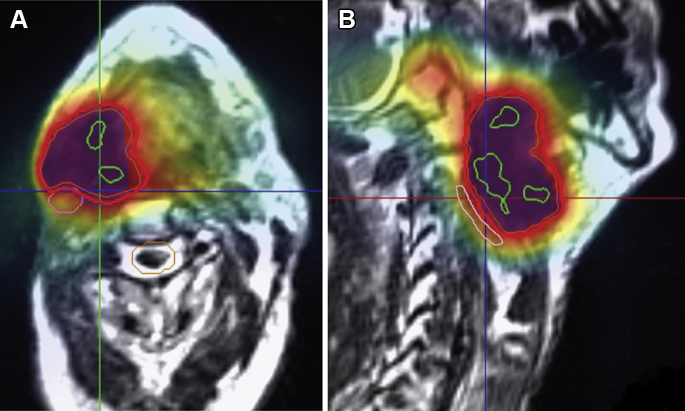
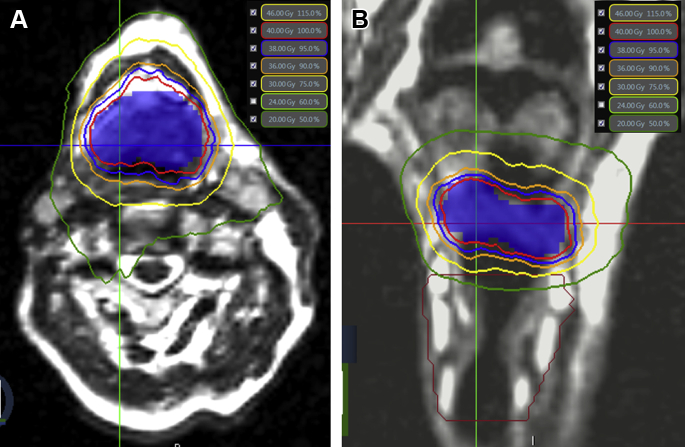
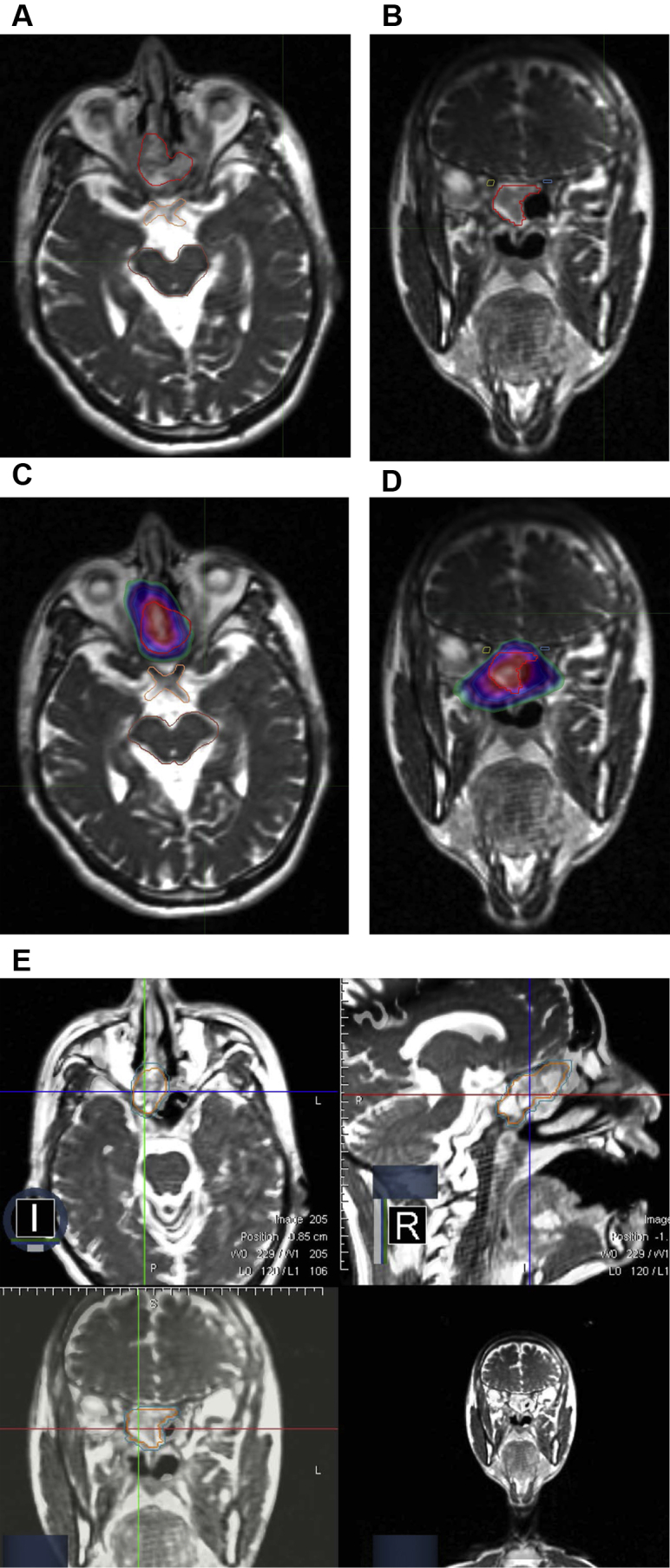
Between October 2014 and August 2016, 13 consecutive patients with recurrent or new primary cancers of the head and neck that occurred in a previously irradiated field were prospectively enrolled in an institutional registry trial to investigate the feasibility and efficacy of MRI guided radiation therapy using a 0.35-T MRI scanner with a cobalt-60 radiation therapy source called the ViewRay system (ViewRay Inc., Cleveland, OH). Eligibility criteria included biopsy-proven evidence of recurrent or new primary squamous cell carcinoma of the head and neck, measurable disease, and previous radiation to >60 Gy. MRI guided reirradiation was delivered either using intensity modulated radiation therapy with conventional fractionation to a median dose of 66 Gy or stereotactic body radiation therapy (SBRT) using 7 to 8 Gy fractions on nonconsecutive days to a median dose of 40 Gy. Two patients (17%) received concurrent chemotherapy.
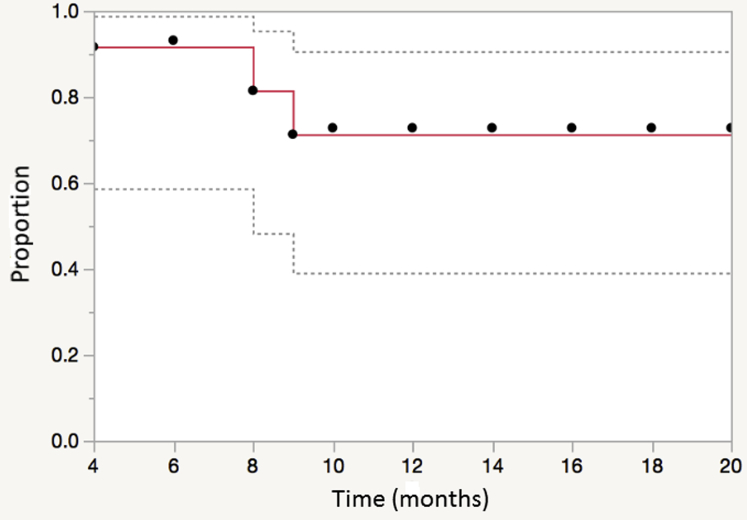
The 1- and 2-year estimates of in-field control were 72% and 72%, respectively. A total of 227 daily MRI scans were obtained to guide reirradiation. The 2-year estimates of overall survival and progression-free survival were 53% and 59%, respectively. There were no treatment-related fatalities or hospitalizations. Complications included skin desquamation, odynophagia, otitis externa, keratitis and/or conjunctivitis, and 1 case of aspiration pneumonia.
Our preliminary findings show that reirradiation with MRI guided radiation therapy results in effective disease control with relatively low morbidity for patients with recurrent and second primary cancers of the head and neck. The superior soft tissue resolution of the MRI scans that were used for planning and delivery has the potential to improve the therapeutic ratio.
报告单机构使用磁共振成像(MRI)引导放射治疗对头颈部复发性癌和二次癌进行再照射的经验。
2014年10月至2016年8月期间,连续13例头颈部复发性癌或新原发性癌患者,其肿瘤发生在先前接受过照射的区域,被前瞻性纳入一项机构注册试验,以研究使用配备钴-60放射治疗源(称为ViewRay系统,ViewRay公司,俄亥俄州克利夫兰)的0.35-T MRI扫描仪进行MRI引导放射治疗的可行性和疗效。入选标准包括经活检证实的头颈部复发性或新原发性鳞状细胞癌、可测量的疾病以及先前接受过>60 Gy的放射治疗。MRI引导再照射采用调强放射治疗,常规分割,中位剂量为66 Gy,或采用立体定向体部放射治疗(SBRT),在非连续日期给予7至8 Gy分割剂量,中位剂量为40 Gy。两名患者(17%)接受了同步化疗。
1年和2年的靶区内控制率估计分别为72%和72%。共获得227次每日MRI扫描以指导再照射。2年的总生存率和无进展生存率估计分别为53%和59%。没有与治疗相关的死亡或住院情况。并发症包括皮肤脱屑、吞咽痛、外耳道炎、角膜炎和/或结膜炎,以及1例吸入性肺炎。
我们的初步研究结果表明,对于头颈部复发性癌和二次原发性癌患者,MRI引导放射治疗再照射可有效控制疾病,且发病率相对较低。用于计划和实施的MRI扫描具有卓越的软组织分辨率,有可能提高治疗增益比。