Northwestern University.
New York University.
Child Dev. 2018 Jul;89(4):e323-e331. doi: 10.1111/cdev.12889. Epub 2017 Jul 24.
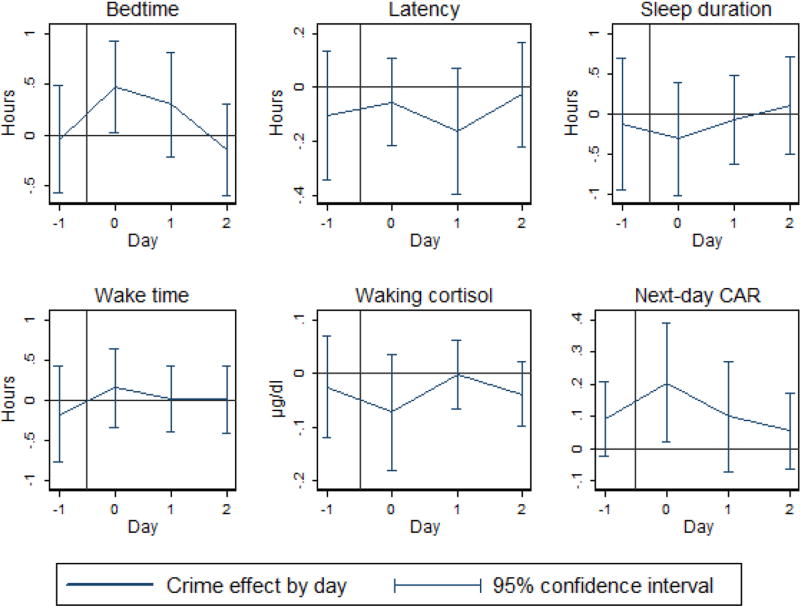
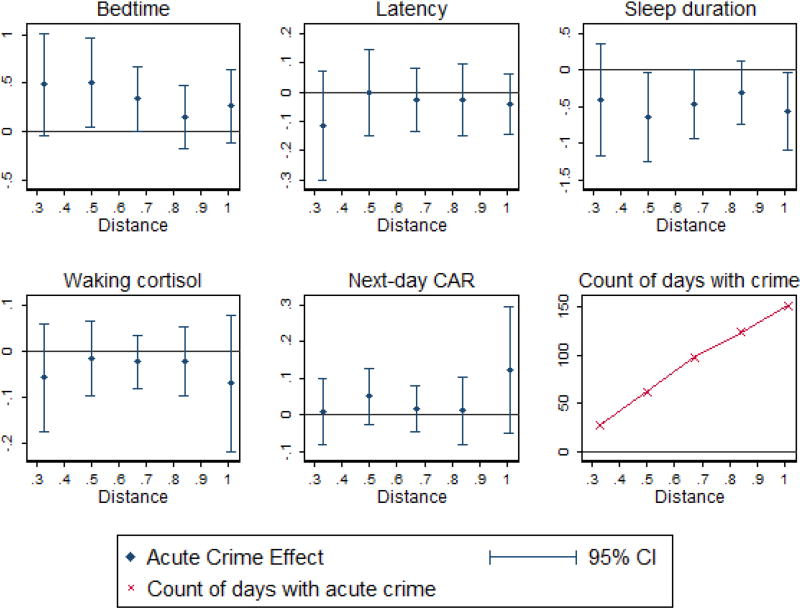
The data combine objectively measured sleep and thrice-daily salivary cortisol collected from a 4-day diary study in a large Midwestern city with location data on all violent crimes recorded during the same time period for N = 82 children (M = 14.90, range = 11.27-18.11). The primary empirical strategy uses a within-person design to measure the change in sleep and cortisol from the person's typical pattern on the night/day immediately following a local violent crime. On the night following a violent crime, children have later bedtimes. Children also have disrupted cortisol patterns the following morning. Supplementary analyses using varying distances of the crime to the child's home address confirm more proximate crimes correspond to later bedtimes.
这些数据结合了在中西部大城市进行的为期 4 天的日记研究中客观测量的睡眠数据和每日三次的唾液皮质醇数据,以及同一时期所有暴力犯罪的位置数据,共涉及 82 名儿童(M = 14.90,范围 = 11.27-18.11)。主要的实证策略是使用个体内设计来衡量睡眠和皮质醇从个体在当地暴力犯罪发生后的当晚/日的典型模式的变化。在暴力犯罪发生后的当晚,儿童的就寝时间较晚。儿童在第二天早上的皮质醇模式也受到干扰。使用犯罪与儿童家庭住址的不同距离进行的补充分析证实,距离更近的犯罪与更晚的就寝时间相对应。