State Key Laboratory of Respiratory Disease, The First Affiliated Hospital of Guangzhou Medical University, 151 Yanjiang Road, Guangzhou, 510120, China.
The School of Basic Medicine, Guangzhou Medical University, Guangzhou, China.
Respir Res. 2017 Jul 25;18(1):143. doi: 10.1186/s12931-017-0626-6.
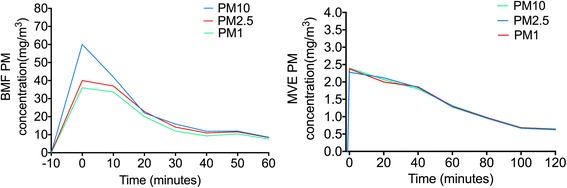
Ambient particulate matter exposure has been shown to increase the risks of respiratory diseases. However, the role of the lung microbiome and the immune response to inhaled particulate matter are largely unexplored. We studied the influence of biomass fuel and motor vehicle exhaust particles on the lung microbiome and pulmonary immunologic homeostasis in rats.
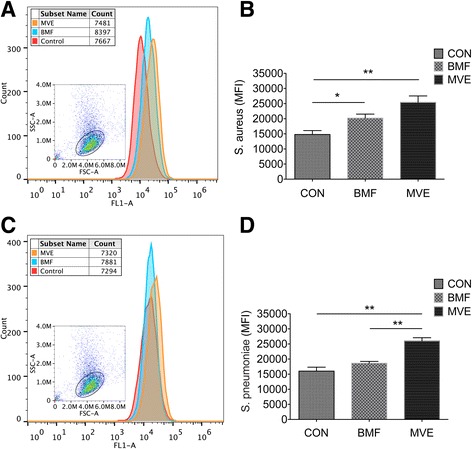
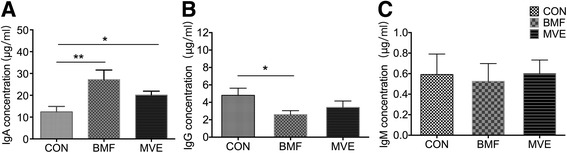
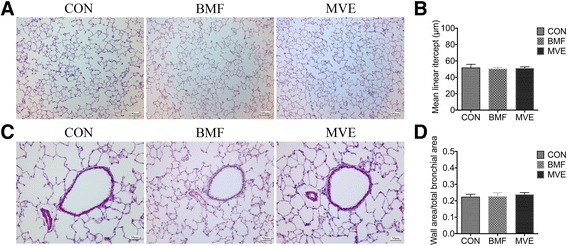
Fifty-seven Sprague-Dawley rats were randomly divided into clean air (CON), biomass fuel (BMF), and motor vehicle exhaust (MVE) groups. After a 4-week exposure, the microbial composition of the lung was assessed by 16S rRNA pyrosequencing, the structure of the lung tissue was assessed with histological analysis, the phagocytic response of alveolar macrophages to bacteria was determined by flow cytometry, and immunoglobulin concentrations were measured with commercial ELISA kits.
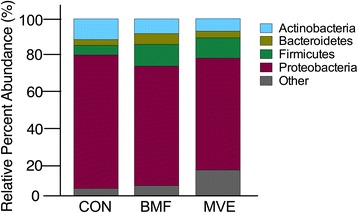
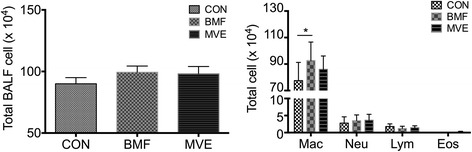
There was no significant difference in lung morphology between the groups. However, the BMF and MVE groups displayed greater bacterial abundance and diversity. Proteobacteria were present in higher proportions in the MVE group, and 12 bacterial families differed in their relative abundances between the three groups. In addition, particulate matter exposure significantly increased the capacity of alveolar macrophages to phagocytose bacteria and induced changes in immunoglobulin levels.
We demonstrated that particulate matter exposure can alter the microbial composition and change the pulmonary immunologic homeostasis in the rat lung.
环境颗粒物暴露已被证明会增加呼吸道疾病的风险。然而,肺部微生物组和对吸入颗粒物的免疫反应的作用在很大程度上尚未得到探索。我们研究了生物质燃料和机动车尾气颗粒对大鼠肺部微生物组和肺免疫稳态的影响。
57 只 Sprague-Dawley 大鼠被随机分为清洁空气(CON)、生物质燃料(BMF)和机动车尾气(MVE)组。暴露 4 周后,通过 16S rRNA 焦磷酸测序评估肺部微生物组成,通过组织学分析评估肺组织结构,通过流式细胞术测定肺泡巨噬细胞对细菌的吞噬反应,并用商业 ELISA 试剂盒测定免疫球蛋白浓度。
各组间肺形态无明显差异。然而,BMF 和 MVE 组的细菌丰度和多样性更高。MVE 组中变形菌门的比例更高,三组间有 12 个细菌科的相对丰度存在差异。此外,颗粒物暴露显著增加了肺泡巨噬细胞吞噬细菌的能力,并诱导了免疫球蛋白水平的变化。
我们证明了颗粒物暴露可以改变大鼠肺部的微生物组成,并改变肺部免疫稳态。