Cui Yizhe, Wang Qiuju, Liu Shengjun, Sun Rui, Zhou Yaqiang, Li Yue
College of Animal Science and Veterinary Medicine, Heilongjiang Bayi Agricultural UniversityDaqing, China.
Front Microbiol. 2017 Jul 11;8:1310. doi: 10.3389/fmicb.2017.01310. eCollection 2017.
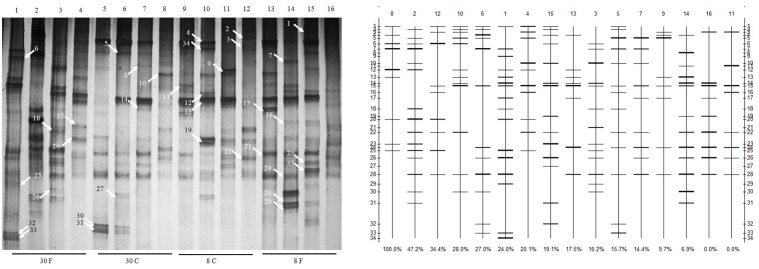
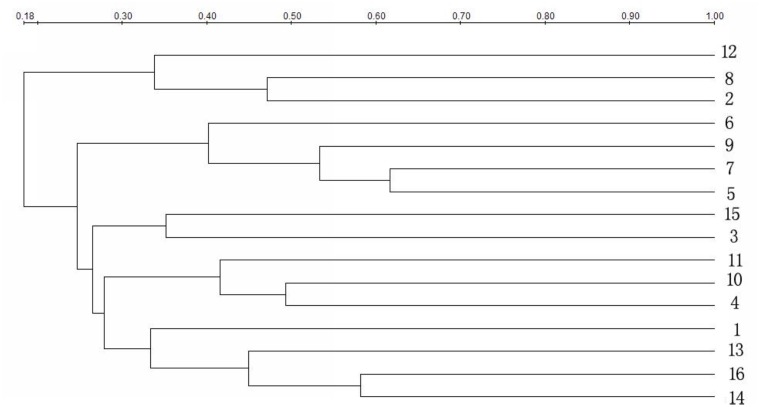
Free range feeding pattern puts the chicken in a mixture of growth materials and enteric bacteria excreted by nature, while it is typically unique condition materials and enteric bacteria in commercial caged hens production. Thus, the gastrointestinal microflora in two feeding patterns could be various. However, it remains poorly understood how feeding patterns affect development and composition of layer hens' intestinal microflora. In this study, the effect of feeding patterns on the bacteria community in layer hens' gut was investigated using free range and caged feeding form. Samples of whole small intestines and cecal digesta were collected from young hens (8-weeks) and mature laying hens (30-weeks). Based on analysis using polymerase chain reaction-denaturing gradient gel electrophoresis and sequencing of bacterial 16S rDNA gene amplicons, the microflora of all intestinal contents were affected by both feeding patterns and age of hens. Firmicutes, Bacteroidetes, Actinobacteria, Proteobacteria, and Fusobacteria were the main components. Additionally, uncultured environmental samples were found too. There were large differences between young hens and adult laying hens, the latter had more Firmicutes and Bacteroidetes, and bacterial community is more abundant in 30-weeks laying hens of all six phyla than 8-weeks young hens of only two phyla. In addition, the differences were also observed between free range and caged hens. Free range hens had richer Actinobacteria, Bacteroidetes, and Proteobacteria. Most of strains found were detected more abundant in small intestines than in cecum. Also the selected Lactic acid bacteria from hens gut were applied in feed and they had beneficial effects on growth performance and jejunal villus growth of young broilers. This study suggested that feeding patterns have an importance effect on the microflora composition of hens, which may impact the host nutritional status and intestinal health.
散养模式下,鸡处于自然排出的生长物质和肠道细菌的混合环境中,而在商业化笼养蛋鸡生产中,环境通常是特定的条件和肠道细菌。因此,两种饲养模式下的胃肠道微生物群可能不同。然而,关于饲养模式如何影响蛋鸡肠道微生物群的发育和组成,人们仍知之甚少。在本研究中,采用散养和笼养方式,研究了饲养模式对蛋鸡肠道细菌群落的影响。从幼鸡(8周龄)和成年产蛋鸡(30周龄)中采集整个小肠和盲肠内容物样本。基于聚合酶链反应-变性梯度凝胶电泳分析和细菌16S rDNA基因扩增子测序,发现所有肠道内容物的微生物群均受饲养模式和母鸡年龄的影响。厚壁菌门、拟杆菌门、放线菌门、变形菌门和梭杆菌门是主要组成部分。此外,还发现了未培养的环境样本。幼鸡和成年产蛋鸡之间存在很大差异,成年产蛋鸡的厚壁菌门和拟杆菌门更多,并且在所有六个门中,30周龄产蛋鸡的细菌群落比仅两个门的8周龄幼鸡更丰富。此外,散养和笼养母鸡之间也观察到差异。散养母鸡的放线菌门、拟杆菌门和变形菌门更丰富。大多数发现的菌株在小肠中的检测丰度高于盲肠。此外,从母鸡肠道中筛选出的乳酸菌应用于饲料中,对幼龄肉鸡的生长性能和空肠绒毛生长有有益影响。本研究表明,饲养模式对母鸡的微生物群组成有重要影响,这可能会影响宿主的营养状况和肠道健康。