Feng Yanni, Min Lingjiang, Zhang Weidong, Liu Jing, Hou Zhumei, Chu Meiqiang, Li Lan, Shen Wei, Zhao Yong, Zhang Hongfu
College of Animal Science and Technology, Qingdao Agricultural UniversityQingdao, China.
Core Laboratories of Qingdao Agricultural UniversityQingdao, China.
Front Microbiol. 2017 Jun 2;8:992. doi: 10.3389/fmicb.2017.00992. eCollection 2017.
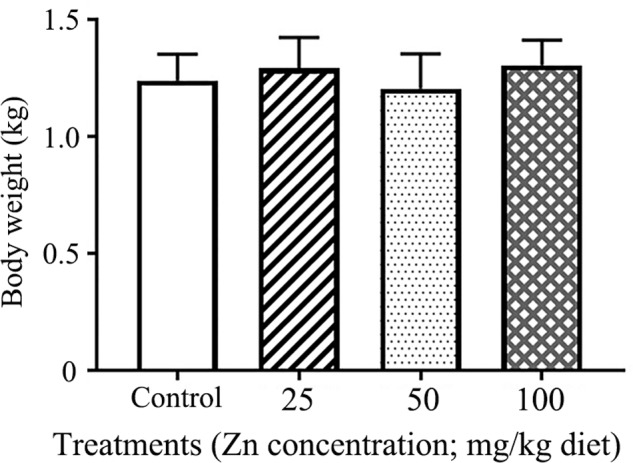
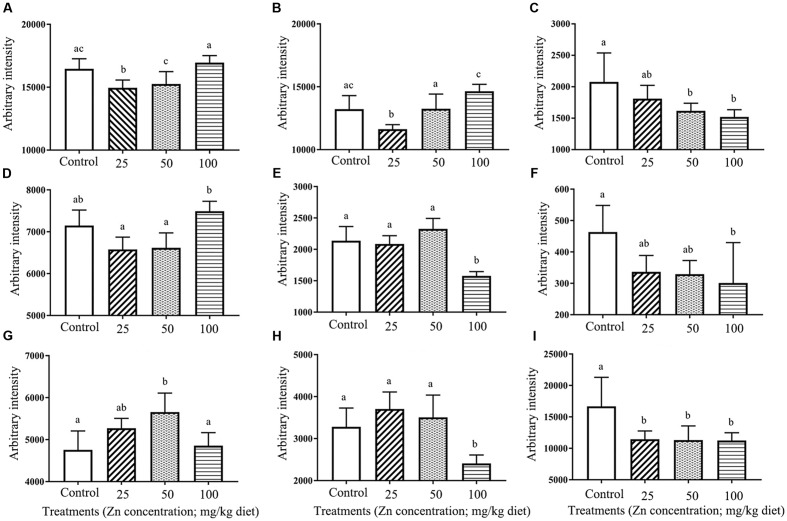
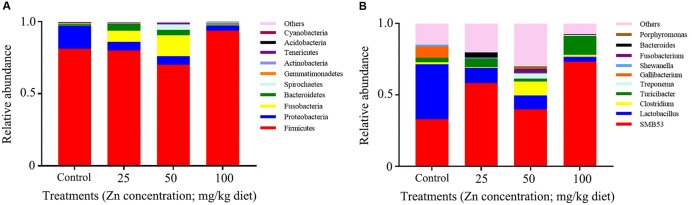
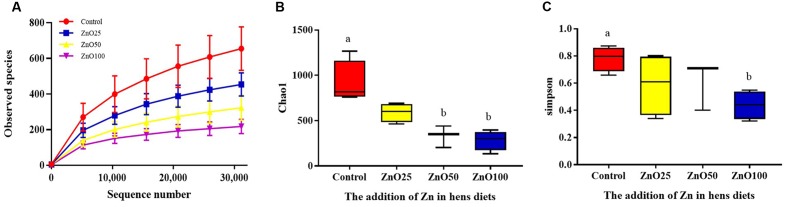
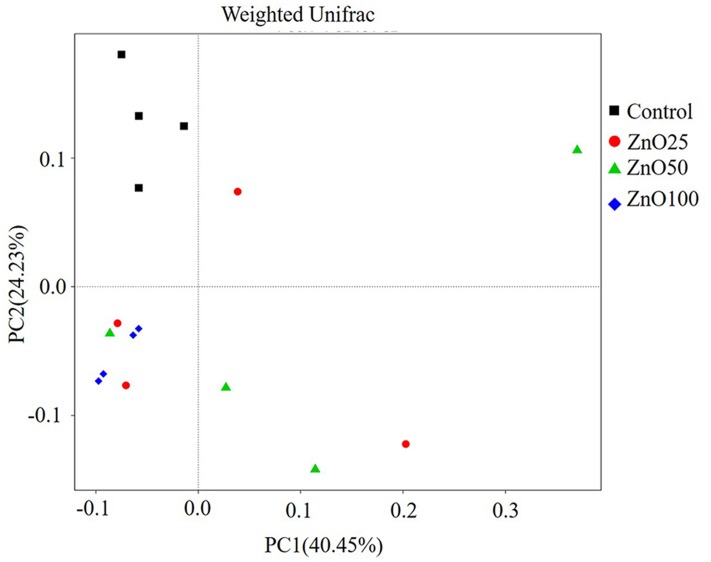
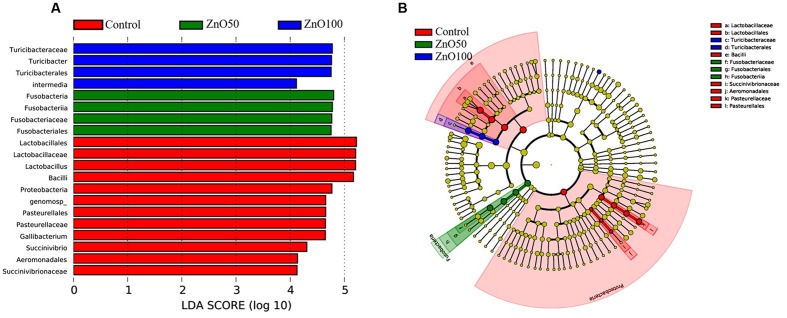
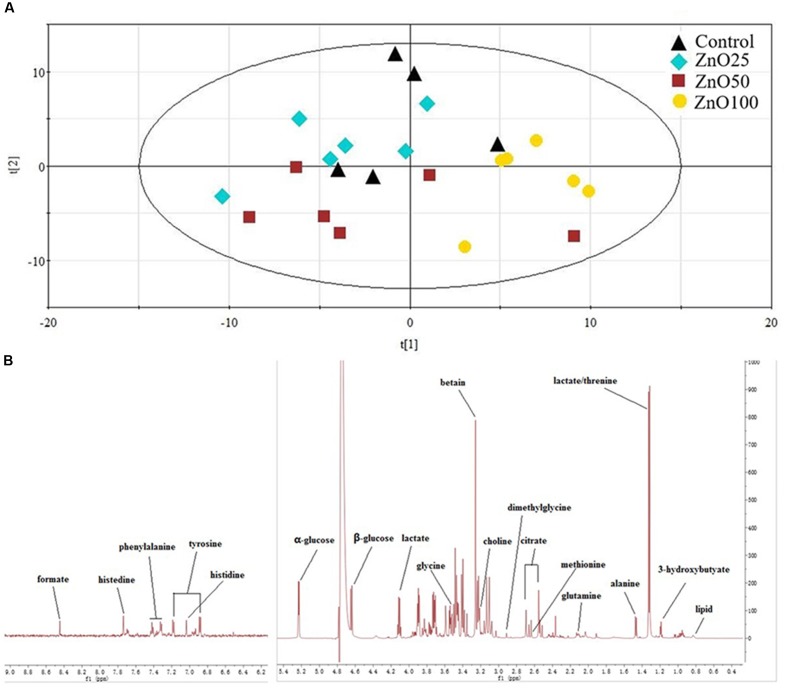
Zinc oxide nanoparticles (ZnO NPs) are used widely in consumer and industrial products, however, their influence on gut microbiota and metabolism and their mutual interactions are not fully understood. In this study, the effects of ZnO NPs on ileal bacterial communities, plasma metabolites, and correlations between them were investigated. Hens were fed with different concentrations of ZnO NPs [based on Zn; 0 mg/kg (control), 25 mg/kg, 50 mg/kg, and 100 mg/kg] for 9 weeks. Subsequently, ileal digesta and blood plasma were collected for analysis of microflora and metabolites, respectively. The V3-V4 region of the 16S rRNA gene of ileal digesta microbiota was sequenced using the Illumina HiSeq 2500 platform. The predominant bacterial community in the ileum belongs to the phylum Firmicutes. The richness of the bacterial community was negatively correlated with increasing amounts of ZnO NPs ( = -0.636, < 0.01); when ZnO NP levels were at 100 mg/kg, microbiota diversity was significantly decreased ( < 0.05). The community structure determined by LEfSe analysis indicated that Bacilli, Fusobacteria, and Proteobacteria were changed, and was reduced by ZnO NPs. Moreover, metabolism as analyzed by nuclear magnetic resonance (NMR) indicated that glucose, some amino acids, and other metabolites were changed by ZnO NPs. Choline, lactate, and methionine were positively correlated with bacterial richness. In summary, ZnO NPs could influence the levels of microflora in ileal digesta, particularly . Furthermore, the richness of the microbiota was related to changes in choline, lactate, and methionine metabolism.
氧化锌纳米颗粒(ZnO NPs)广泛应用于消费品和工业产品中,然而,它们对肠道微生物群和新陈代谢的影响以及它们之间的相互作用尚未完全了解。在本研究中,研究了ZnO NPs对回肠细菌群落、血浆代谢物及其之间相关性的影响。给母鸡喂食不同浓度的ZnO NPs[以锌计;0 mg/kg(对照)、25 mg/kg、50 mg/kg和100 mg/kg],持续9周。随后,分别收集回肠消化物和血浆用于微生物群和代谢物分析。使用Illumina HiSeq 2500平台对回肠消化物微生物群的16S rRNA基因的V3-V4区域进行测序。回肠中主要的细菌群落属于厚壁菌门。细菌群落的丰富度与ZnO NPs含量的增加呈负相关(r = -0.636,P < 0.01);当ZnO NPs水平为100 mg/kg时,微生物群多样性显著降低(P < 0.05)。通过LEfSe分析确定的群落结构表明,芽孢杆菌、梭杆菌和变形菌发生了变化,并且被ZnO NPs降低。此外,通过核磁共振(NMR)分析的代谢表明,葡萄糖、一些氨基酸和其他代谢物被ZnO NPs改变。胆碱、乳酸和蛋氨酸与细菌丰富度呈正相关。总之,ZnO NPs可能影响回肠消化物中微生物群的水平,尤其是。此外,微生物群的丰富度与胆碱、乳酸和蛋氨酸代谢的变化有关。