Comprehensive Heart Failure Centre Würzburg and Department of Internal Medicine I, University and University Hospital Würzburg, Am Schwarzenberg 15, 97078, Würzburg, Germany.
Novartis Pharma GmbH, Nuremberg, Germany.
Clin Res Cardiol. 2017 Nov;106(11):923-932. doi: 10.1007/s00392-017-1138-6. Epub 2017 Jul 26.
Adherence to treatment guidelines affects outcomes in patients with chronic heart failure (HF). We investigated patient pathways and treatment patterns for HF in Germany.
This retrospective study used anonymous healthcare claims data from the German Health Risk Institute on individuals with statutory health insurance. Patients with uninterrupted data from 1 January 2009 to 31 December 2013 or death (whichever occurred first), and ≥2 recorded HF-related diagnoses in 2011, were included. Patients with newly diagnosed HF were identified. Use of treatment patterns recommended by the European Society of Cardiology (2008) and German Nationale VersorgungsLeitlinien (2011) guidelines was evaluated.
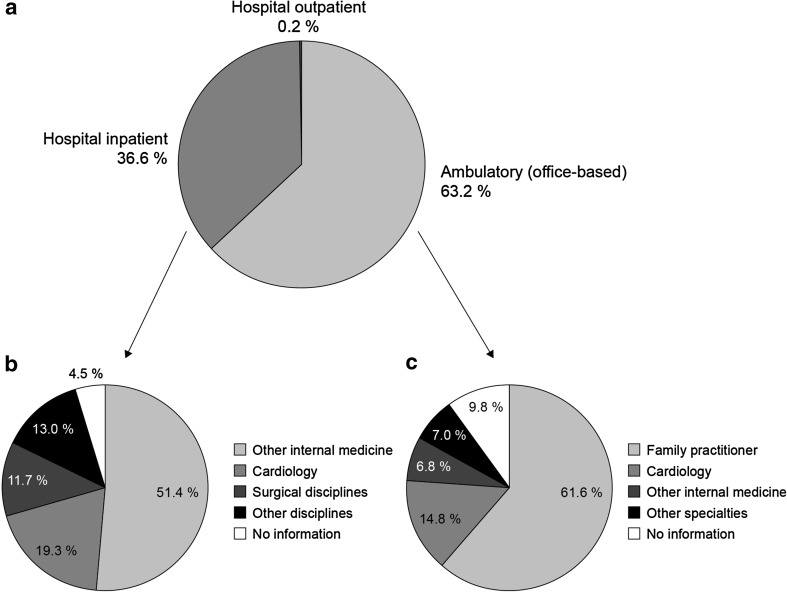
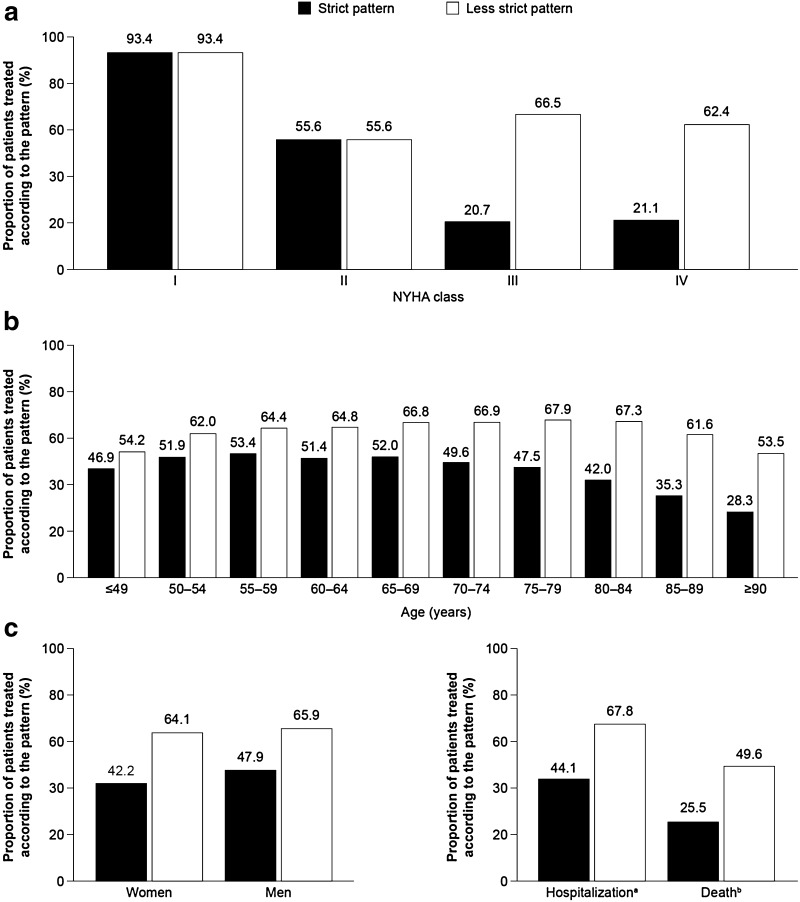
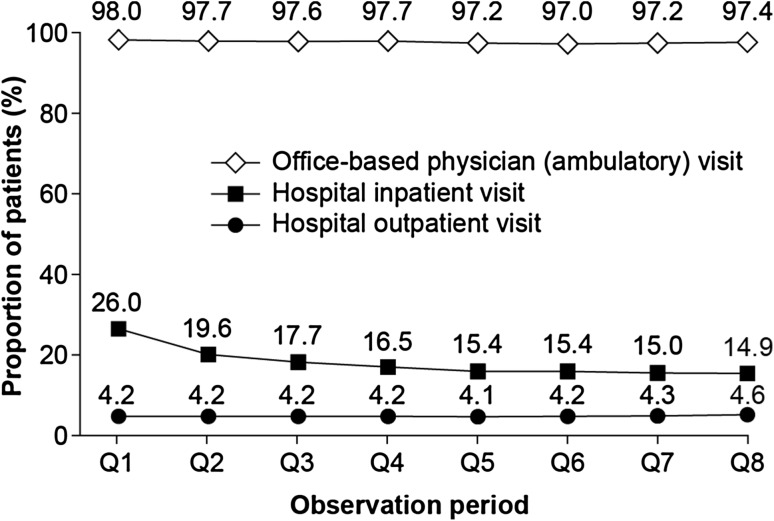
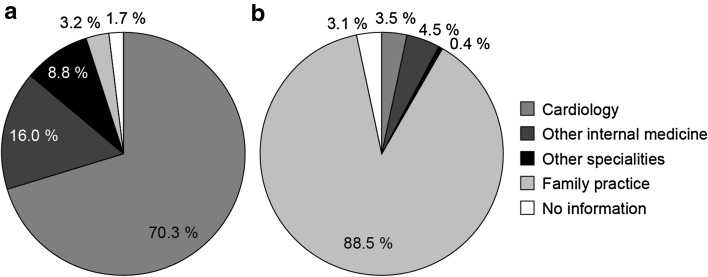
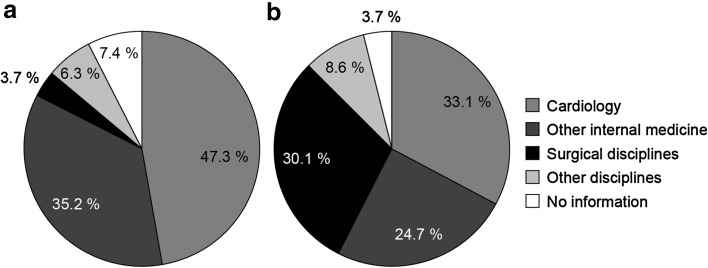
Of 123,925 patients with HF, 21.3% were newly diagnosed. Overall, 63.2% of new HF diagnoses were made in the ambulatory setting; 61.6% of these were made by family practitioners and 14.8% by cardiologists. In the ambulatory setting, family practitioners were primarily responsible for treatment; specialists in internal medicine (70.3% cardiologists) were mainly responsible for performing HF-related technical diagnostics. One-fifth (20.9%) of patients received a New York Heart Association (NYHA) classification; 45.1% of these received a guideline-based treatment pattern. Application of the recommended treatment pattern decreased with advancing disease severity (NYHA class IV: 21.1% application) and older age (≥90 years: 28.3% application).
Family practitioners play a key role in the diagnosis and initial treatment of HF in Germany. A substantial proportion of patients do not receive guideline-recommended pharmacotherapy. These findings should be reflected in the planning of national disease management programmes.
慢性心力衰竭(HF)患者的治疗指南依从性会影响其结局。我们研究了德国 HF 患者的治疗途径和模式。
这是一项回顾性研究,使用了德国健康风险研究所匿名的医疗保险索赔数据,纳入了 2009 年 1 月 1 日至 2013 年 12 月 31 日期间数据连续、且在 2011 年至少有 2 次 HF 相关诊断记录的患者。新诊断 HF 患者被识别出来。评估了欧洲心脏病学会(2008 年)和德国 Nationale VersorgungsLeitlinien(2011 年)指南推荐的治疗模式的使用情况。
在 123925 例 HF 患者中,21.3%为新诊断。总体而言,63.2%的新 HF 诊断是在门诊做出的;其中 61.6%是由家庭医生做出的,14.8%是由心脏病专家做出的。在门诊环境中,家庭医生主要负责治疗;内科专家(70.3%为心脏病专家)主要负责进行 HF 相关的技术诊断。五分之一(20.9%)的患者接受了纽约心脏协会(NYHA)心功能分级;其中 45.1%接受了基于指南的治疗模式。随着疾病严重程度的增加(NYHA 分级 IV:21.1%的患者应用)和年龄的增加(≥90 岁:28.3%的患者应用),推荐的治疗模式应用率降低。
家庭医生在德国 HF 的诊断和初始治疗中发挥着关键作用。相当一部分患者未接受指南推荐的药物治疗。这些发现应反映在国家疾病管理计划的规划中。