Qian Mengjia, Fang Xiaocong, Wang Xiangdong
Zhongshan Hospital Institute of Clinical Science, Shanghai Institute of Clinical Bioinformatics, Fudan University Medical School, Shanghai, China.
Clin Transl Med. 2017 Dec;6(1):24. doi: 10.1186/s40169-017-0154-5. Epub 2017 Jul 26.
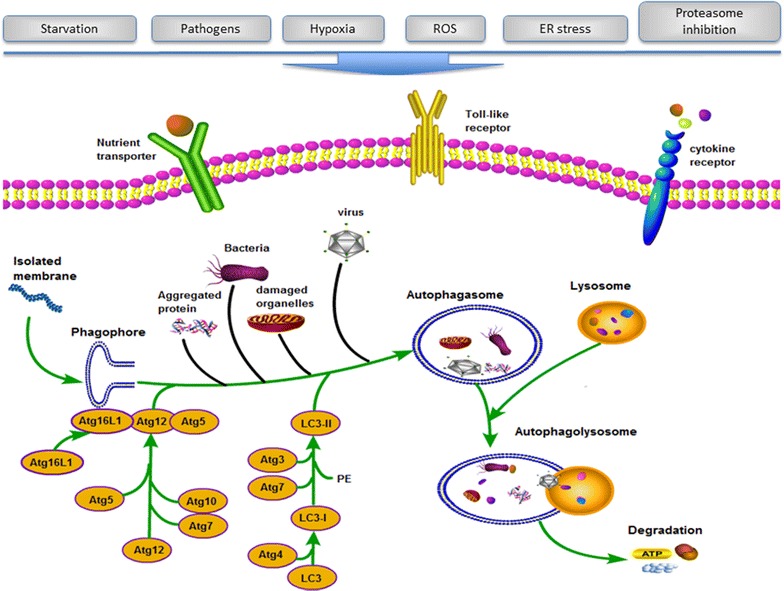
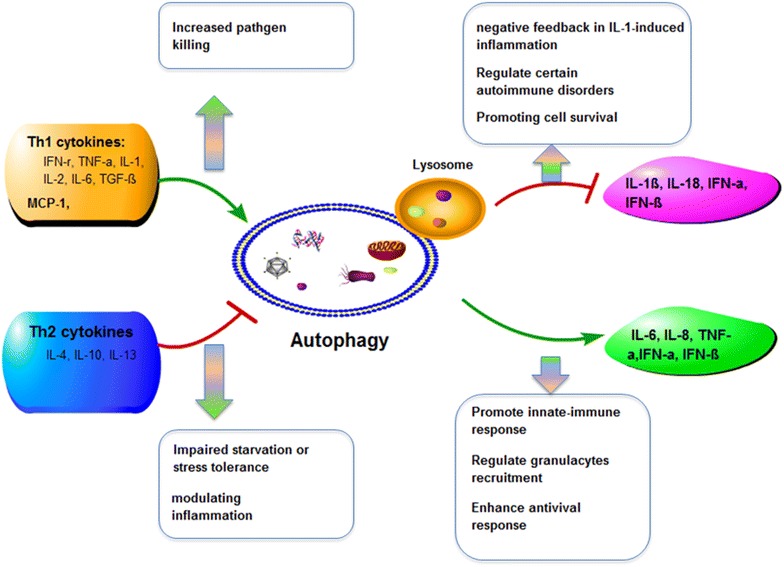
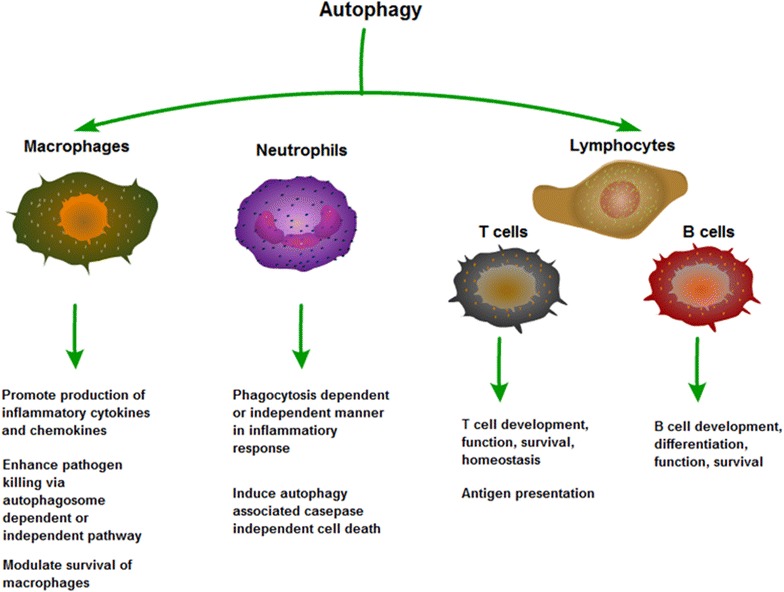
Autophagy is a homeostatic mechanism involved in the disposal of damaged organelles, denatured proteins as well as invaded pathogens through a lysosomal degradation pathway. Recently, increasing evidences have demonstrated its role in both innate and adaptive immunity, and thereby influence the pathogenesis of inflammatory diseases. The detection of autophagy machinery facilitated the measurement of autophagy during physiological and pathophysiological processes. Autophagy plays critical roles in inflammation through influencing the development, homeostasis and survival of inflammatory cells, including macrophages, neutrophils and lymphocytes; effecting the transcription, processing and secretion of a number of cytokines, as well as being regulated by cytokines. Recently, autophagy-dependent mechanisms have been studied in the pathogenesis of several inflammatory diseases, including infectious diseases, Crohn's disease, cystic fibrosis, pulmonary hypertension, chronic obstructive pulmonary diseases and so on. These studies suggested that modulation of autophagy might lead to therapeutic interventions for diseases associated with inflammation. Here we highlight recent advances in investigating the roles of autophagy in inflammation as well as inflammatory diseases.
自噬是一种稳态机制,通过溶酶体降解途径参与受损细胞器、变性蛋白质以及入侵病原体的清除。最近,越来越多的证据表明其在固有免疫和适应性免疫中均发挥作用,进而影响炎症性疾病的发病机制。自噬机制的检测有助于在生理和病理生理过程中对自噬进行测量。自噬通过影响包括巨噬细胞、中性粒细胞和淋巴细胞在内的炎症细胞的发育、稳态和存活;影响多种细胞因子的转录、加工和分泌,以及受细胞因子调节,在炎症中发挥关键作用。最近,自噬依赖性机制已在包括传染病、克罗恩病、囊性纤维化、肺动脉高压、慢性阻塞性肺疾病等多种炎症性疾病的发病机制中得到研究。这些研究表明,调节自噬可能为与炎症相关的疾病带来治疗干预措施。在此,我们重点介绍自噬在炎症以及炎症性疾病中作用的最新研究进展。