Institute of Biochemistry and Molecular Medicine and National Center of Competence in Research, NCCR TransCure, University of Bern, Bern, Switzerland.
Sci Rep. 2017 Jul 28;7(1):6194. doi: 10.1038/s41598-017-06446-y.
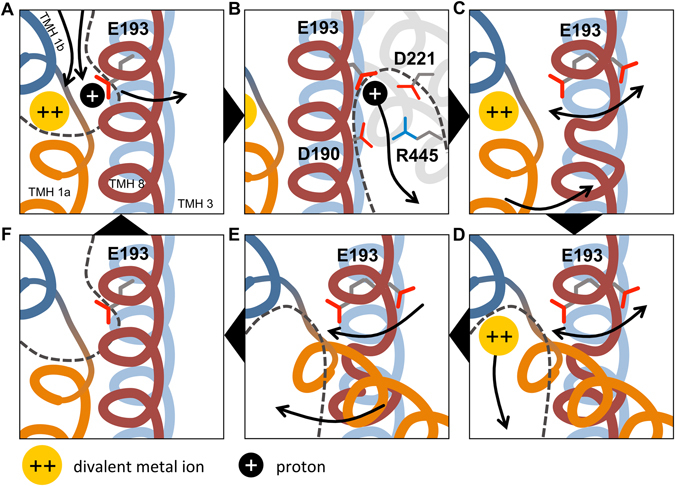
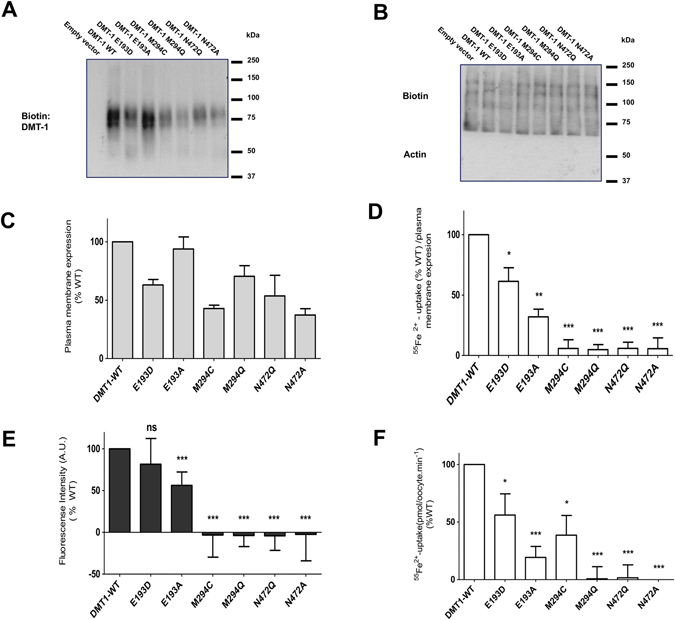
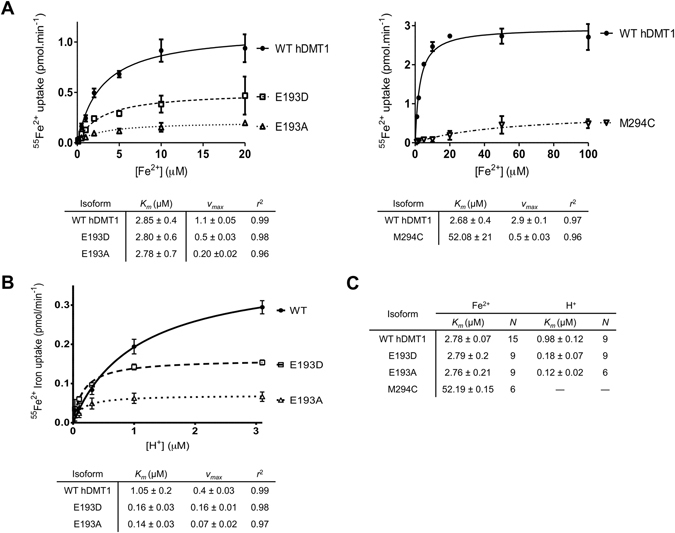
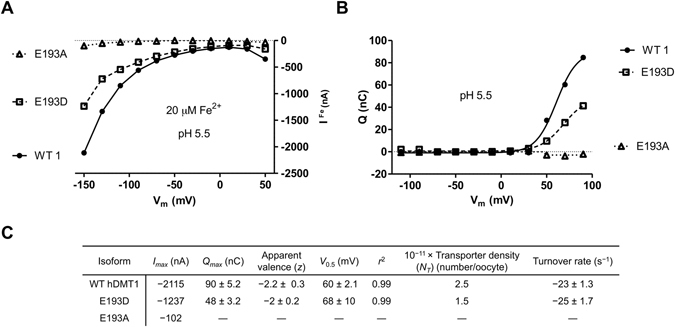
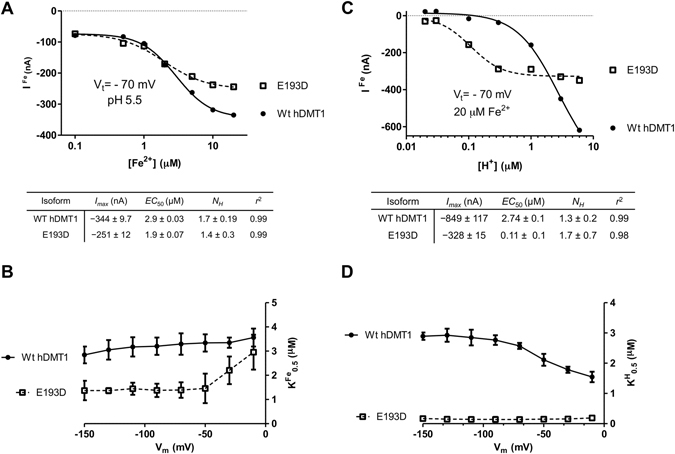
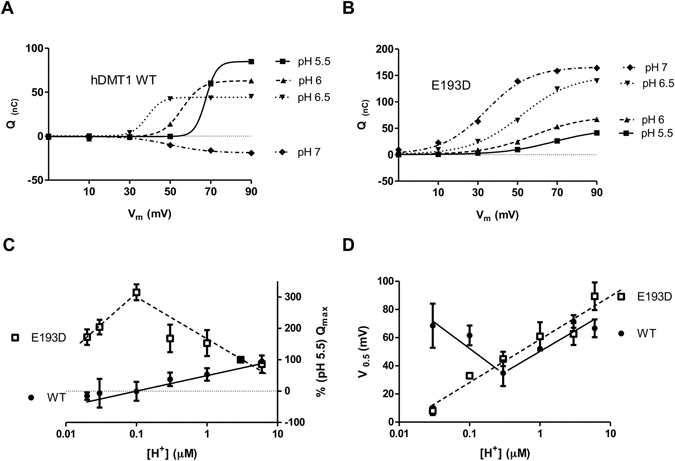
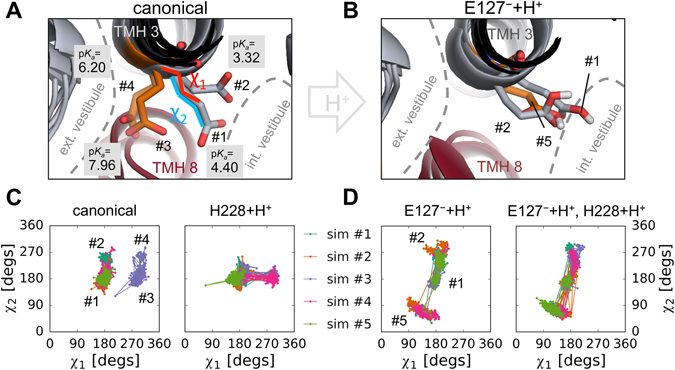
In humans, the H-coupled Fe transporter DMT1 (SLC11A2) is essential for proper maintenance of iron homeostasis. While X-ray diffraction has recently unveiled the structure of the bacterial homologue ScaDMT as a LeuT-fold transporter, the exact mechanism of H-cotransport has remained elusive. Here, we used a combination of molecular dynamics simulations, in silico pK calculations and site-directed mutagenesis, followed by rigorous functional analysis, to discover two previously uncharacterized functionally relevant residues in hDMT1 that contribute to H-coupling. E193 plays a central role in proton binding, thereby affecting transport properties and electrogenicity, while N472 likely coordinates the metal ion, securing an optimally "closed" state of the protein. Our molecular dynamics simulations provide insight into how H-translocation through E193 is allosterically linked to intracellular gating, establishing a novel transport mechanism distinct from that of other H-coupled transporters.
在人类中,H 耦合 Fe 转运蛋白 DMT1(SLC11A2)对于维持铁稳态的正常功能至关重要。虽然最近的 X 射线衍射揭示了细菌同源物 ScaDMT 的结构为 LeuT 折叠转运蛋白,但 H 共转运的确切机制仍难以捉摸。在这里,我们使用分子动力学模拟、计算 pK 值和定点突变、随后进行严格的功能分析,发现 hDMT1 中两个以前未表征的与功能相关的残基,它们有助于 H 偶联。E193 在质子结合中起核心作用,从而影响转运特性和电动性,而 N472 可能与金属离子配位,确保蛋白质处于最佳“关闭”状态。我们的分子动力学模拟提供了关于 H 通过 E193 易位如何与细胞内门控进行变构连接的见解,确立了一种与其他 H 偶联转运蛋白不同的新型转运机制。