Heilmann K, Toth R, Bossmann C, Klimo K, Plass C, Gerhauser C
Division of Epigenomics and Cancer Risk Factors, German Cancer Research Center (DKFZ), Heidelberg, Germany.
Oncogene. 2017 Nov 16;36(46):6446-6461. doi: 10.1038/onc.2017.246. Epub 2017 Jul 31.
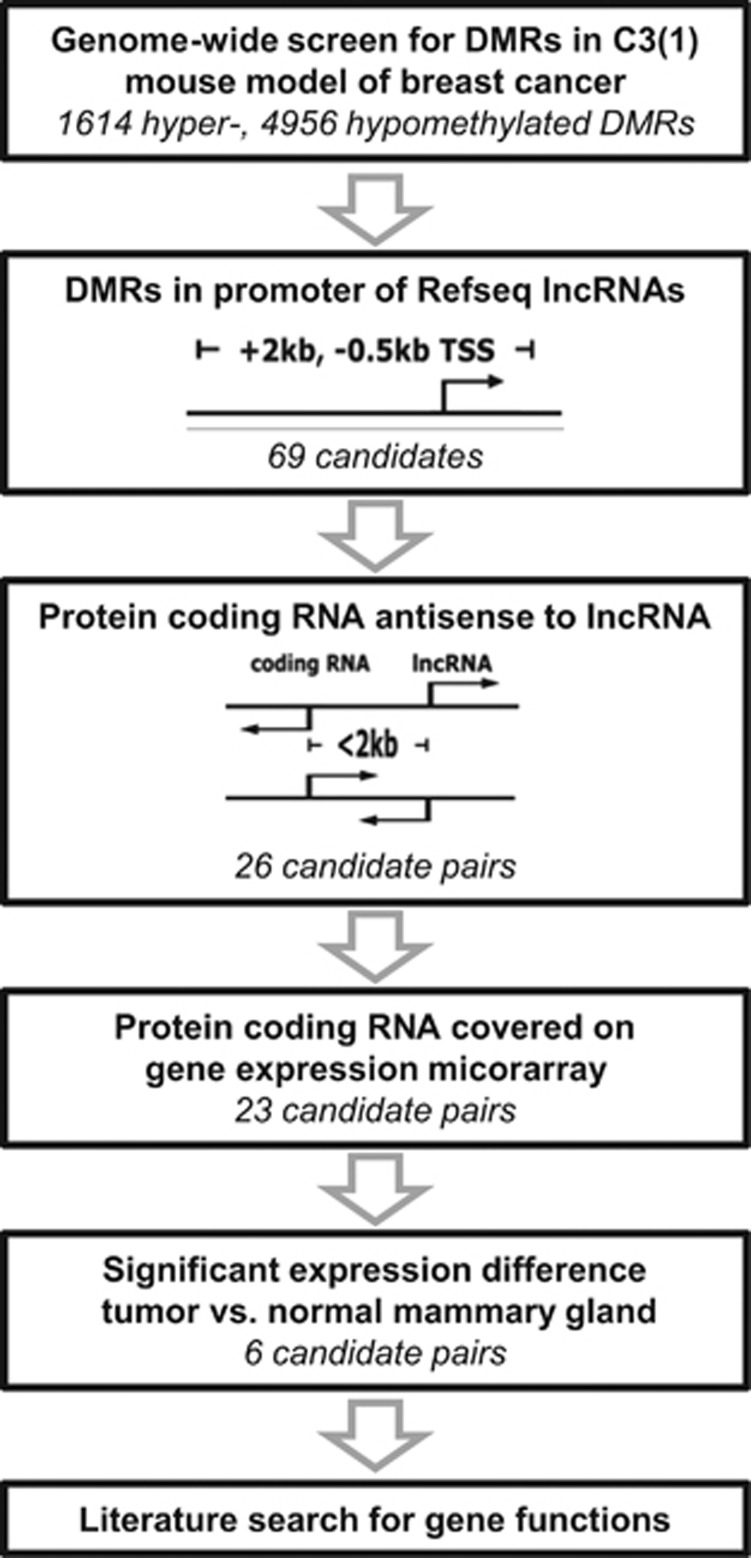
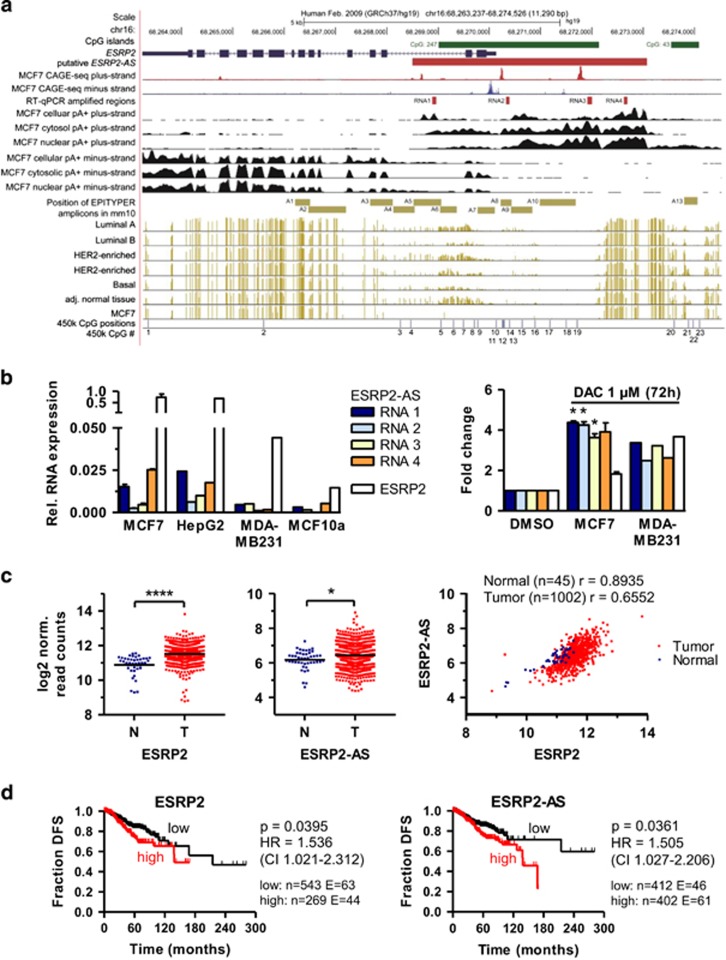
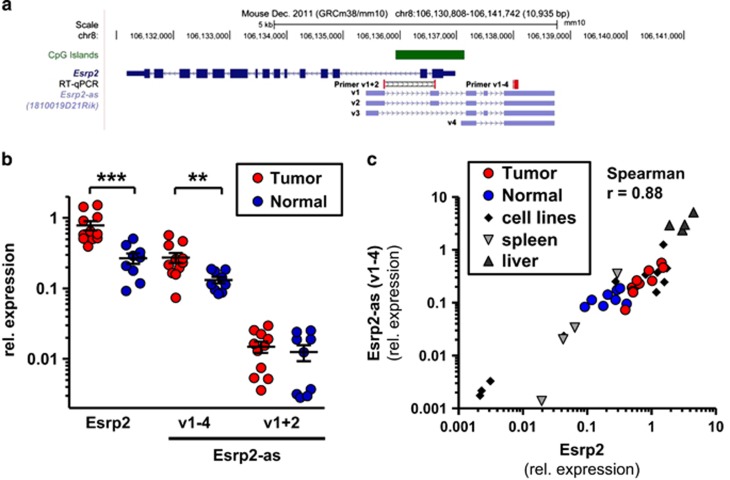
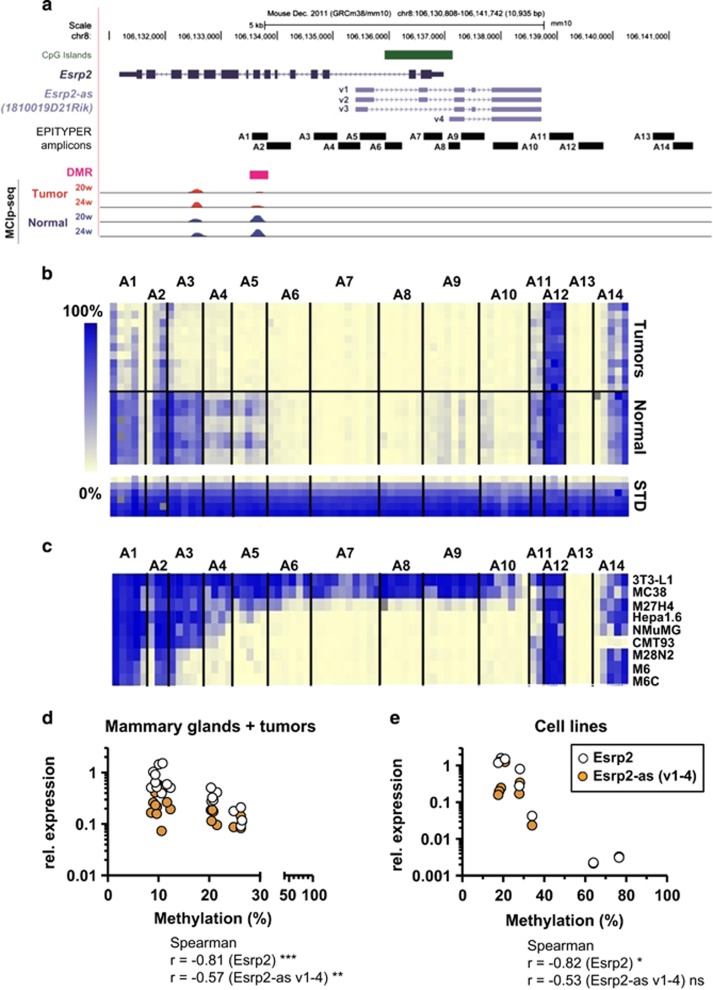
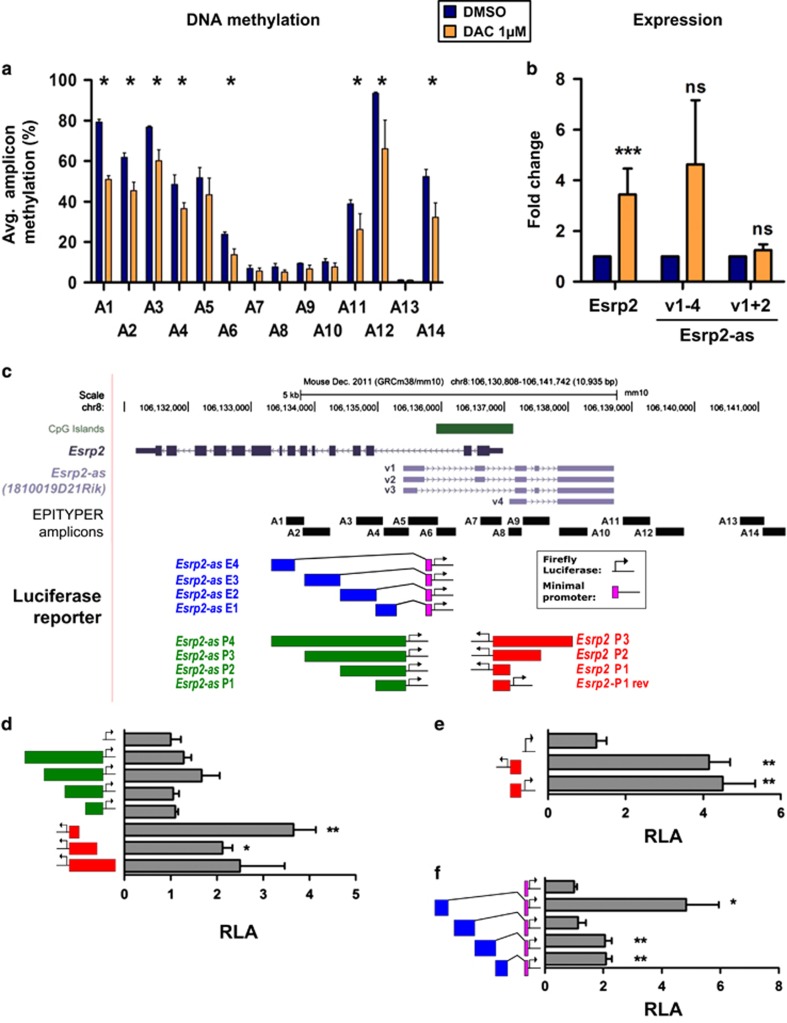
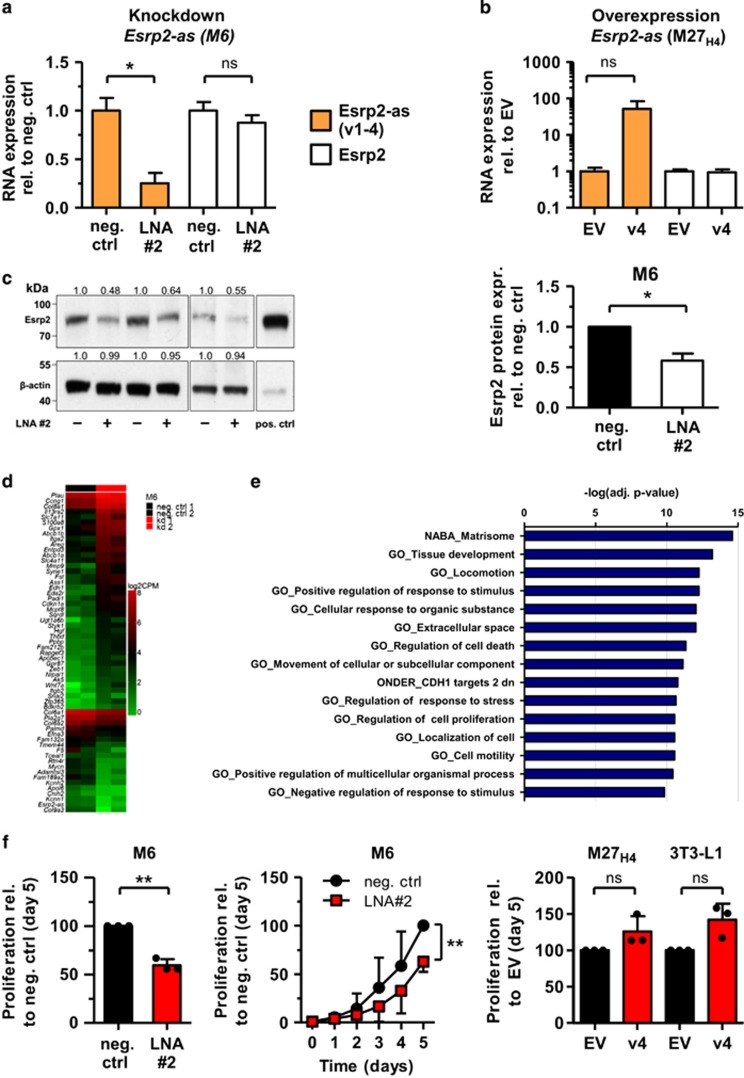
The majority of long noncoding RNAs (lncRNAs) is still poorly characterized with respect to function, interactions with protein-coding genes, and mechanisms that regulate their expression. As for protein-coding RNAs, epigenetic deregulation of lncRNA expression by alterations in DNA methylation might contribute to carcinogenesis. To provide genome-wide information on lncRNAs aberrantly methylated in breast cancer we profiled tumors of the C3(1) SV40TAg mouse model by MCIp-seq (Methylated CpG Immunoprecipitation followed by sequencing). This approach detected 69 lncRNAs differentially methylated between tumor tissue and normal mammary glands, with 26 located in antisense orientation of a protein-coding gene. One of the hypomethylated lncRNAs, 1810019D21Rik (now called Esrp2-antisense (as)) was identified in proximity to the epithelial splicing regulatory protein 2 (Esrp2) that is significantly elevated in C3(1) tumors. ESRPs were shown previously to have a dual role in carcinogenesis. Both gain and loss have been associated with poor prognosis in human cancers, but the mechanisms regulating expression are not known. In-depth analyses indicate that coordinate overexpression of Esrp2 and Esrp2-as inversely correlates with DNA methylation. Luciferase reporter gene assays support co-expression of Esrp2 and the major short Esrp2-as variant from a bidirectional promoter, and transcriptional regulation by methylation of a proximal enhancer. Ultimately, this enhancer-based regulatory mechanism provides a novel explanation for tissue-specific expression differences and upregulation of Esrp2 during carcinogenesis. Knockdown of Esrp2-as reduced Esrp2 protein levels without affecting mRNA expression and resulted in an altered transcriptional profile associated with extracellular matrix (ECM), cell motility and reduced proliferation, whereas overexpression enhanced proliferation. Our findings not only hold true for the murine tumor model, but led to the identification of an unannotated human homolog of Esrp2-as which is significantly upregulated in human breast cancer and associated with poor prognosis.
大多数长链非编码RNA(lncRNAs)在功能、与蛋白质编码基因的相互作用以及调控其表达的机制方面仍未得到充分表征。与蛋白质编码RNA一样,DNA甲基化改变导致lncRNA表达的表观遗传失调可能促成癌症发生。为了提供乳腺癌中异常甲基化lncRNAs的全基因组信息,我们通过MCIp-seq(甲基化CpG免疫沉淀测序)对C3(1) SV40TAg小鼠模型的肿瘤进行了分析。该方法检测到肿瘤组织和正常乳腺之间有69种lncRNAs存在差异甲基化,其中26种位于蛋白质编码基因的反义方向。一种低甲基化的lncRNA,1810019D21Rik(现称为Esrp2反义RNA(as))在靠近上皮剪接调节蛋白2(Esrp2)的位置被鉴定出来,Esrp2在C3(1)肿瘤中显著升高。此前研究表明ESRPs在癌症发生中具有双重作用。在人类癌症中,其表达的增加和减少均与不良预后相关,但调控其表达的机制尚不清楚。深入分析表明,Esrp2和Esrp2-as的协同过表达与DNA甲基化呈负相关。荧光素酶报告基因检测支持Esrp2和主要的短Esrp2-as变体从双向启动子共表达,以及近端增强子甲基化对转录的调控。最终,这种基于增强子的调控机制为致癌过程中Esrp2的组织特异性表达差异和上调提供了新的解释。敲低Esrp2-as可降低Esrp2蛋白水平,而不影响mRNA表达,并导致与细胞外基质(ECM)、细胞运动性相关的转录谱改变以及增殖减少,而过表达则增强增殖。我们的发现不仅适用于小鼠肿瘤模型,还导致鉴定出一种未注释的人类Esrp2-as同源物,其在人类乳腺癌中显著上调并与不良预后相关。