Nguyen Huu-Hung, Vo Doan-Trung, Thai Thi-Tuyet-Trinh, LE Thi-Thanh-Thao, LE Thanh-Dong, Hoang Nghia-Son
Institute of Tropical Biology, Vietnam Academy of Science and Technology (VAST), Ho Chi Minh, Vietnam.
Nguyen Tat Thanh University, Ho Chi Minh, Vietnam.
Iran J Parasitol. 2017 Jan-Mar;12(1):69-82.
Toxocariasis is a prevalent zoonosis disease caused by the closely related nematode species and which parasitise Canidae and Felidae respectively. In paratenic hosts, larvae of these worms cause multiple organ damage. However, how these paratenic hosts response to these worms and whether any common biomarker can be applied for diagnosis are still unclear.
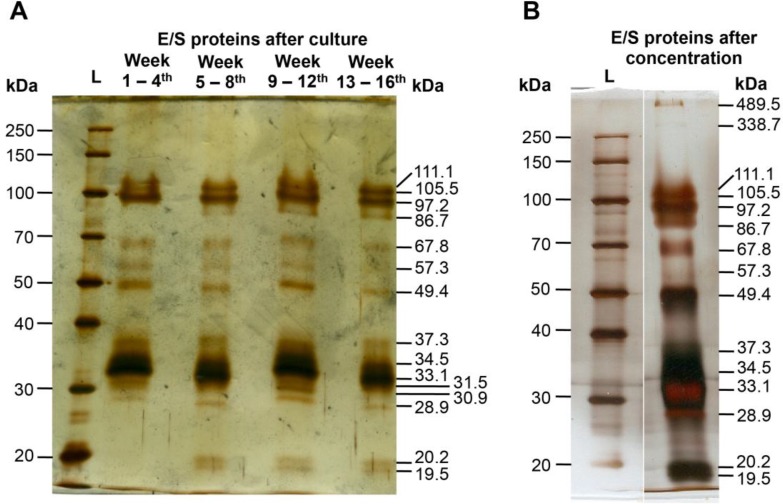
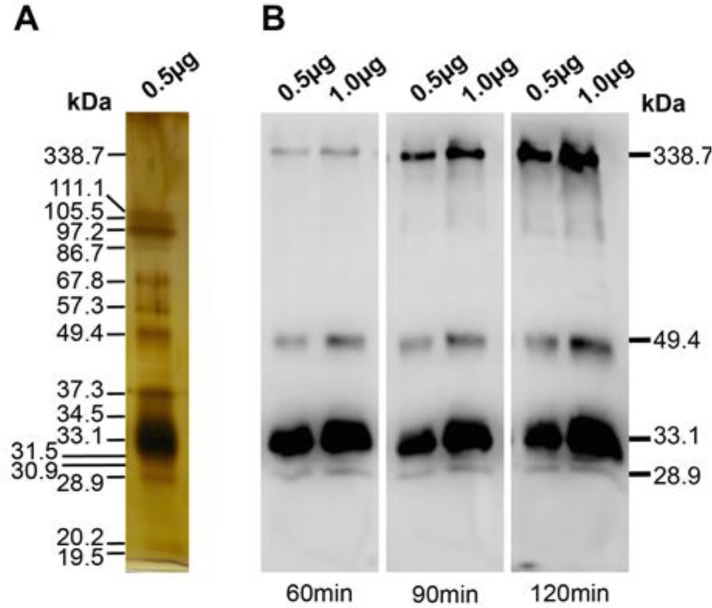
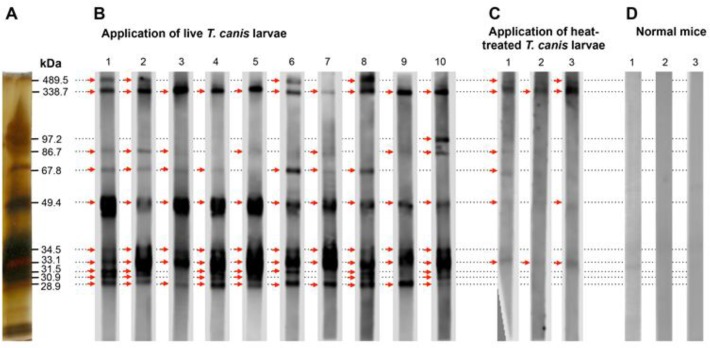
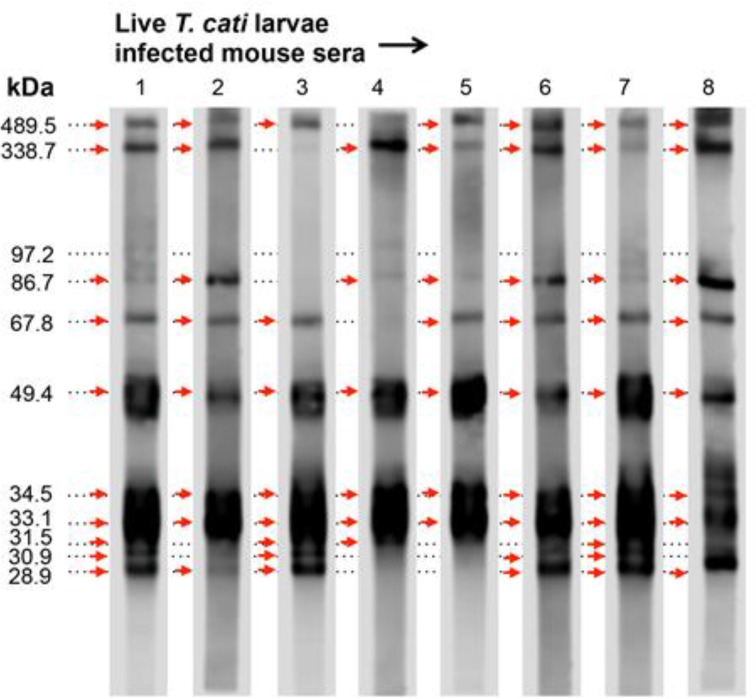
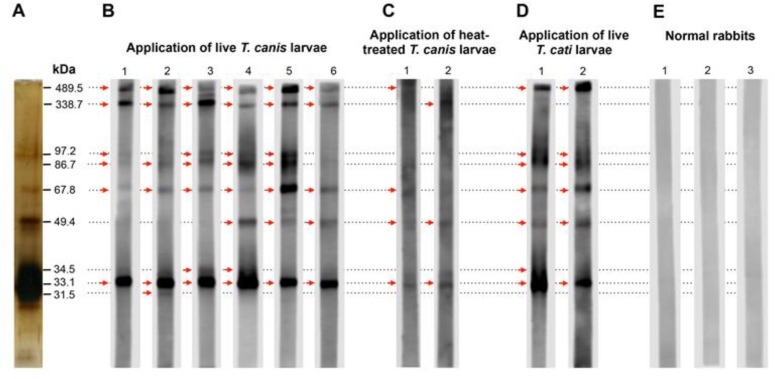
Excreted/secreted (E/S) antigens were prepared by culture of larvae in vitro. Using a western blot (WB) assay the humoral IgG responses, induced by spp. larvae to the worm's E/S antigens in different infected hosts including mice, rabbits and human, were examined.
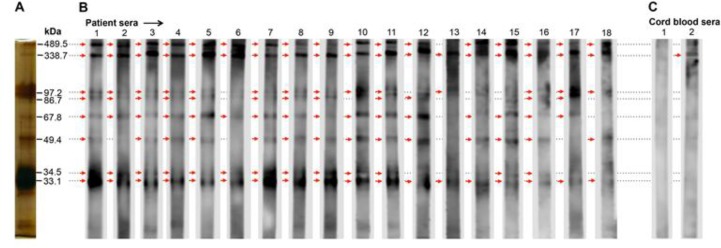
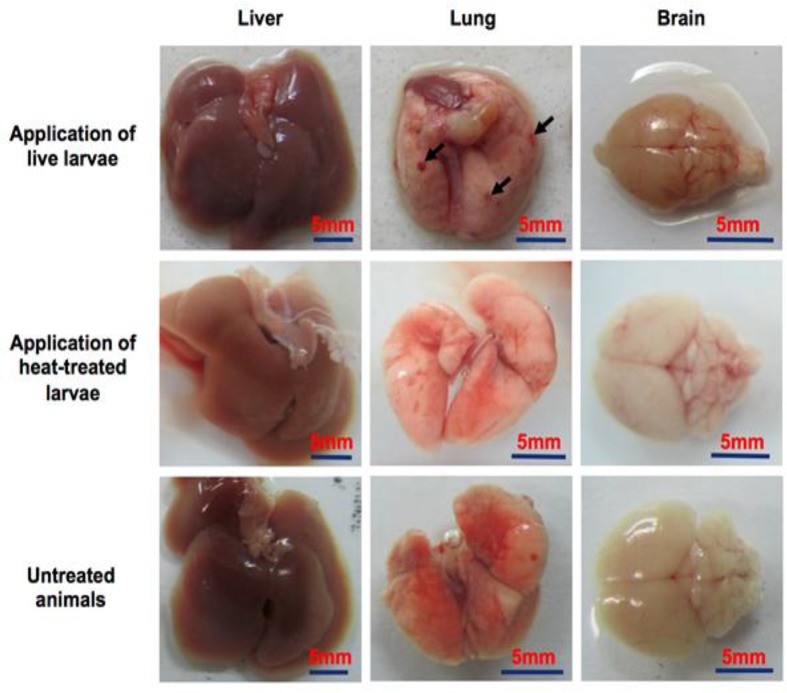
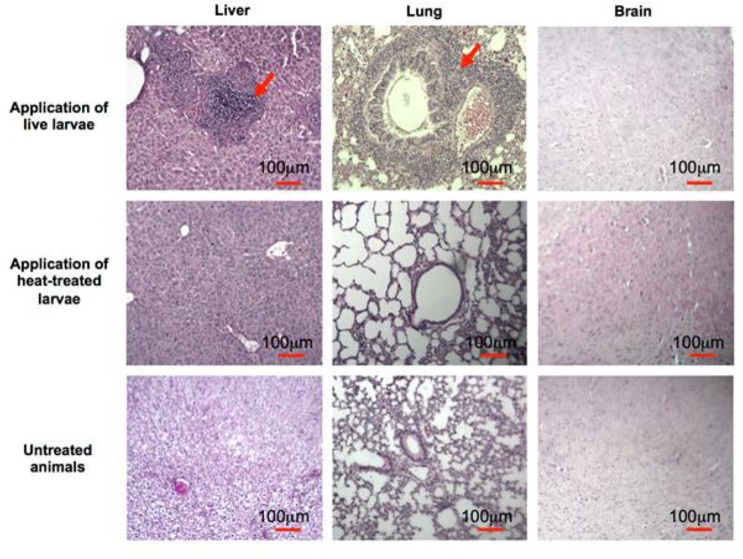
In a mouse model of toxocariasis, intraperitoneal injection of larvae induces inflammatory leukocyte accumulation in the liver and the lungs but not in the brain, although a remarkable number of larvae were detected in this organ. Mice and rabbits responded differently to spp. resulting in distinct heterogenous WB band patterns. Mice and rabbits both responded to a 33.1 kDa E/S constituent that turned out to be the most sensitive protein for serodiagnosis. Sera from human toxocariasis patients showed heterogenous WB band patterns similar to those observed in rabbits and all responded to the 33.1 kDa band.
33.1 kDa E/S protein can be considered as a critical common biomarker for toxocariasis immuno-diagnosis in both paratenic animals and human and its specificity requires further investigation.
弓首蛔虫病是一种常见的人畜共患病,由密切相关的线虫物种引起,分别寄生于犬科动物和猫科动物。在转续宿主中,这些蠕虫的幼虫会导致多器官损伤。然而,这些转续宿主如何对这些蠕虫作出反应,以及是否有任何常见的生物标志物可用于诊断,目前仍不清楚。
通过体外培养幼虫制备排泄/分泌(E/S)抗原。使用蛋白质印迹(WB)分析,检测了在包括小鼠、兔子和人类在内的不同感染宿主中,弓首蛔虫属幼虫对蠕虫E/S抗原诱导的体液IgG反应。
在弓首蛔虫病小鼠模型中,腹腔注射幼虫会诱导肝脏和肺部出现炎性白细胞聚集,但在大脑中不会,尽管在该器官中检测到了大量幼虫。小鼠和兔子对弓首蛔虫属的反应不同,导致明显不同的异质WB条带模式。小鼠和兔子都对一种33.1 kDa的E/S成分有反应,结果证明它是血清诊断中最敏感的蛋白质。人类弓首蛔虫病患者的血清显示出与兔子中观察到的相似的异质WB条带模式,并且都对33.1 kDa条带产生反应。
33.1 kDa E/S蛋白可被视为转续动物和人类弓首蛔虫病免疫诊断的关键共同生物标志物,其特异性需要进一步研究。