De Santis Michele A, Giuliani Marcella M, Giuzio Luigia, De Vita Pasquale, Lovegrove Alison, Shewry Peter R, Flagella Zina
Dipartimento di Scienze Agrarie, degli Alimenti e dell'Ambiente, Università degli Studi di Foggia, Via Napoli 25 - 71122, Foggia, Italy.
Consiglio per la Ricerca in Agricoltura e l'Analisi dell'Economia Agraria - Centro di Ricerca per la Cerealicoltura (CREA-CER), S.S. 673 km 25.200, 71122 Foggia, Italy.
Eur J Agron. 2017 Jul;87:19-29. doi: 10.1016/j.eja.2017.04.003.
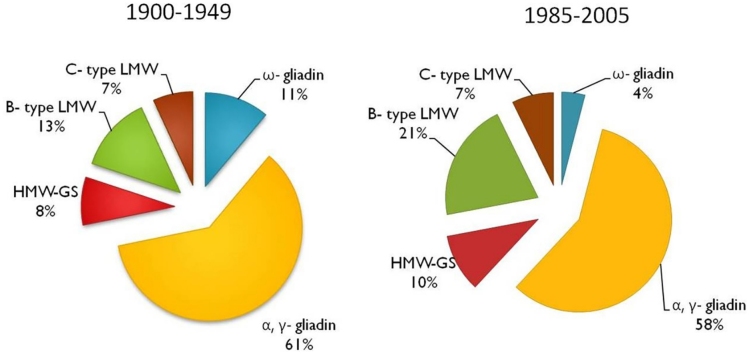
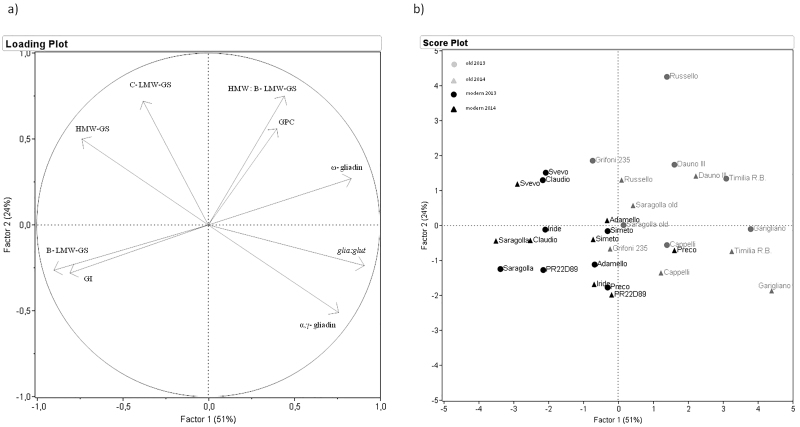
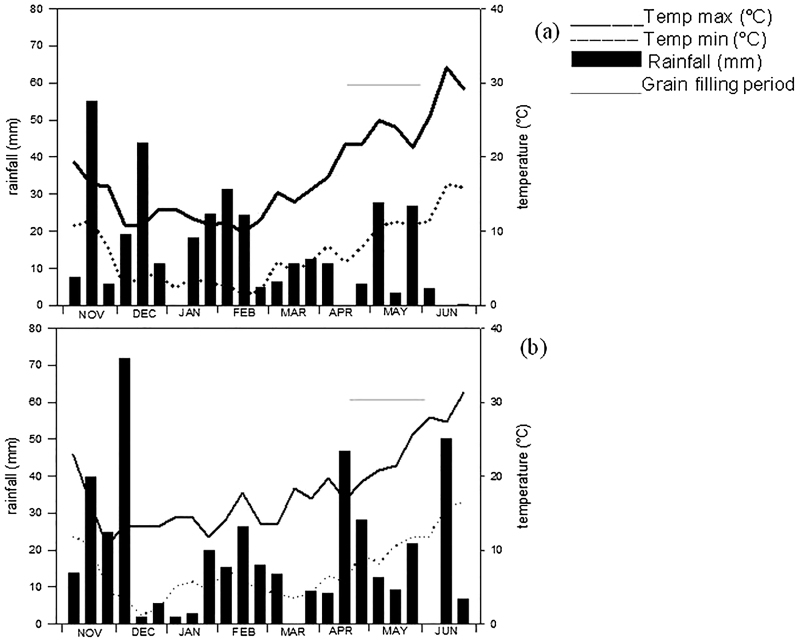
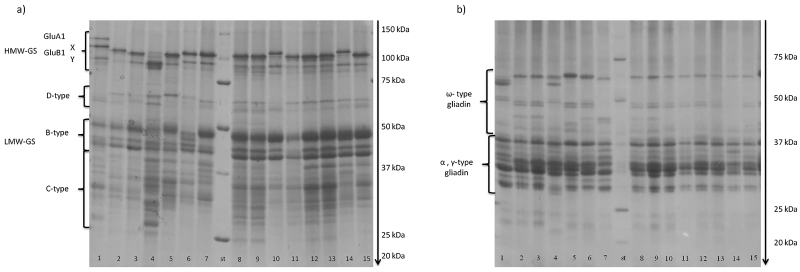
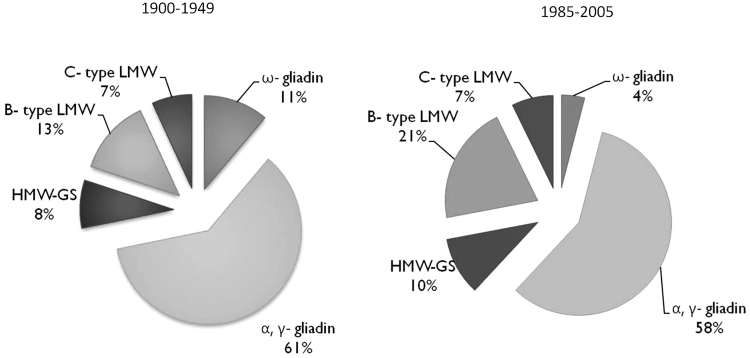
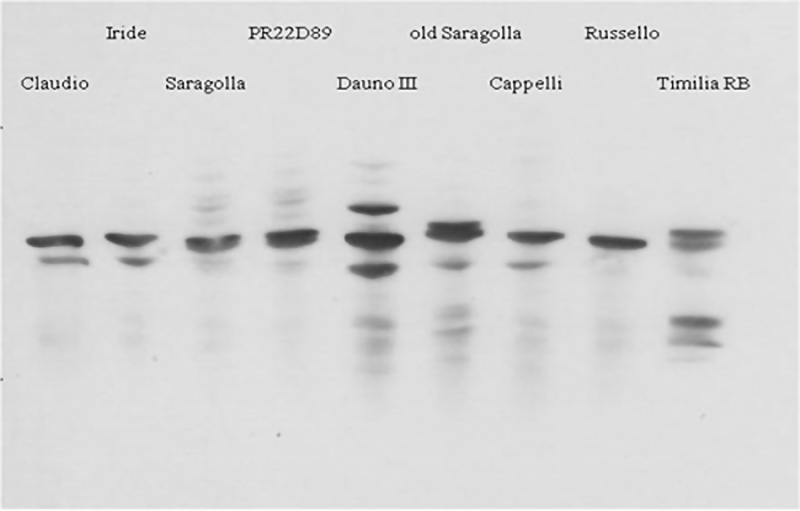
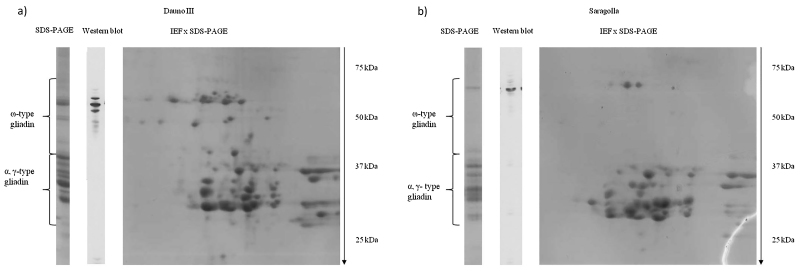
The impact of breeding on grain yields of wheat varieties released during the 20th century has been extensively studied, whereas less information is available on the changes in gluten quality associated with effects on the amount and composition of glutenins and gliadins. In order to explore the effects of breeding during the 20th century on gluten quality of durum wheat for processing and health we have compared a set of old and modern Italian genotypes grown under Mediterranean conditions. The better technological performance observed for the modern varieties was found to be due not only to the introgression of superior alleles of high (HMW-GS) and low molecular weight (LMW-GS) glutenin subunits encoded at and , but also to differential expression of specific storage proteins. In particular, the higher gluten index observed in modern genotypes was correlated with an increased glutenin/gliadin ratio and the expression of B-type LMW-GS which was, on average, two times higher in the modern than in the old group of durum wheat genotypes. By contrast, no significant differences were found between old and modern durum wheat genotypes in relation to the expression of α-type and γ-type gliadins which are major fractions that trigger coeliac disease (CD) in susceptible individuals. Furthermore, a drastic decrease was observed in the expression of ω-type gliadins in the modern genotypes, mainly ω-5 gliadin (also known as Tri a 19) which is a major allergen in wheat dependent exercise induced anaphylaxis (WDEIA). Immunological and 2DE SDS-PAGE analyses indicated that these differences could be related either to a general down-regulation or to differences in numbers of isoforms. Lower rainfall during grain filling period was related to overall higher expression of HMW-GS and ω-gliadins. In conclusion, breeding activity carried out in Italy during the 20th century appears to have improved durum wheat gluten quality, both in relation to technological performance and allergenic potential.
20世纪培育的小麦品种对谷物产量的影响已得到广泛研究,而关于与麦谷蛋白和醇溶蛋白的数量及组成变化相关的面筋质量变化的信息则较少。为了探究20世纪的育种对硬粒小麦用于加工和健康方面的面筋质量的影响,我们比较了在地中海条件下种植的一组古老和现代意大利基因型。现代品种表现出更好的工艺性能,这不仅归因于位于和编码的高分子量(HMW-GS)和低分子量(LMW-GS)麦谷蛋白亚基的优良等位基因的渗入,还归因于特定贮藏蛋白的差异表达。特别是,现代基因型中观察到的较高面筋指数与麦谷蛋白/醇溶蛋白比率的增加以及B型LMW-GS的表达相关,B型LMW-GS在现代硬粒小麦基因型组中的平均表达量比古老组高出两倍。相比之下,在引发易感个体乳糜泻(CD)的主要组分α型和γ型醇溶蛋白的表达方面,古老和现代硬粒小麦基因型之间未发现显著差异。此外,在现代基因型中观察到ω型醇溶蛋白的表达急剧下降,主要是ω-5醇溶蛋白(也称为Tri a 19),它是小麦依赖运动诱发过敏反应(WDEIA)中的主要过敏原。免疫和二维十二烷基硫酸钠聚丙烯酰胺凝胶电泳分析表明,这些差异可能与整体下调或同工型数量差异有关。灌浆期降雨量较低与HMW-GS和ω-醇溶蛋白的整体较高表达有关。总之,20世纪在意大利开展的育种活动似乎在工艺性能和致敏潜力方面都改善了硬粒小麦的面筋质量。