Zhang Xiang-Yu, Fang Gang, Zhou Jie
Department of Mechanical Engineering, Tsinghua University, Beijing 10004, China.
State Key Laboratory of Tribology, Beijing 100084, China.
Materials (Basel). 2017 Jan 10;10(1):50. doi: 10.3390/ma10010050.
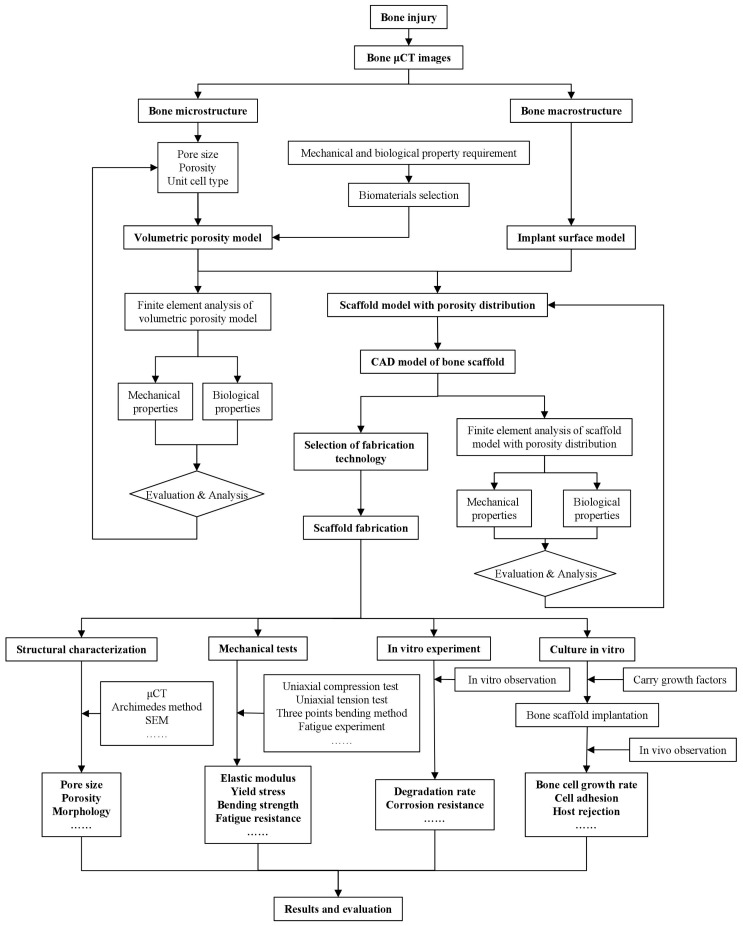
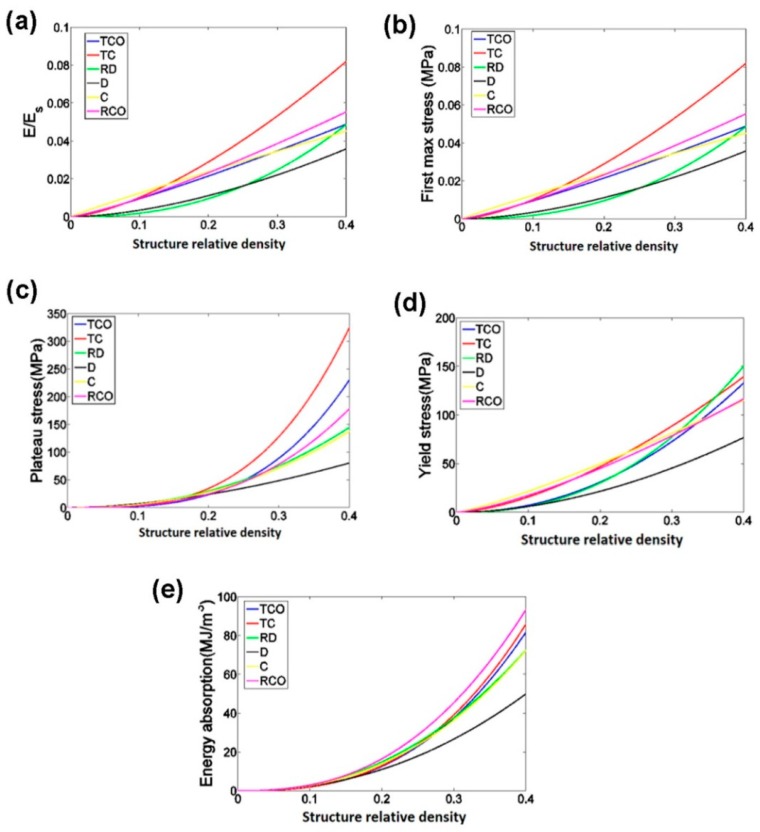
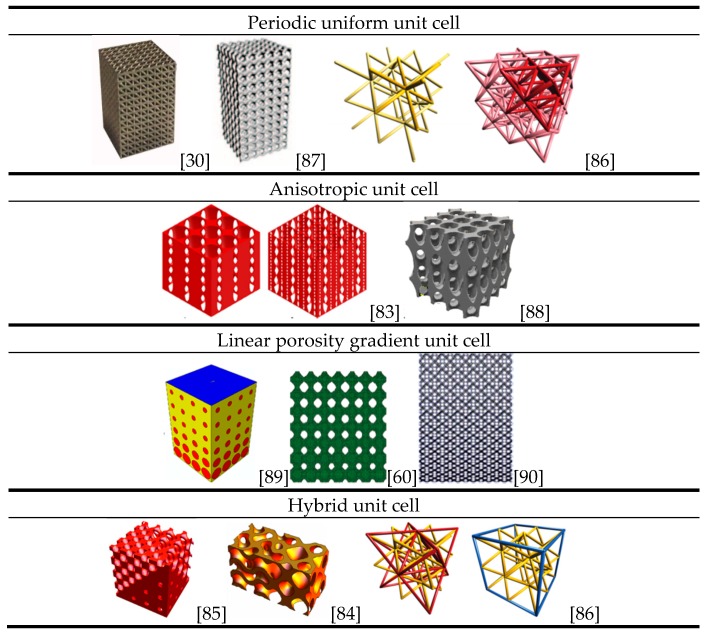
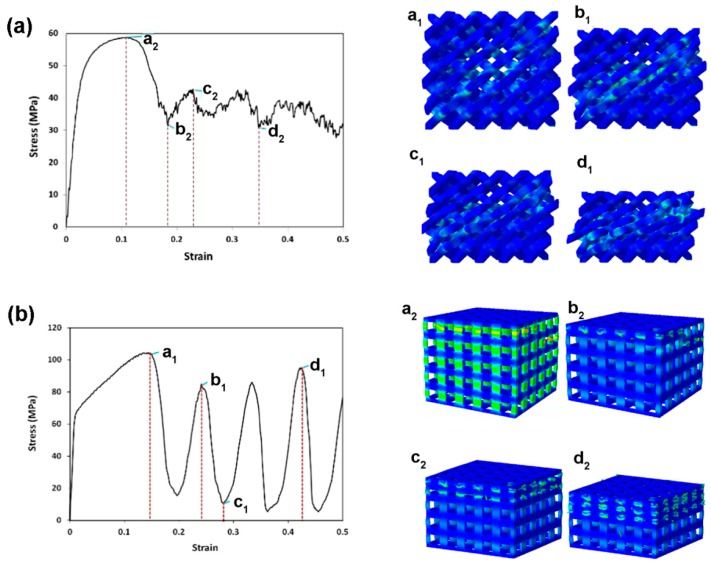
Additive manufacturing (AM), nowadays commonly known as 3D printing, is a revolutionary materials processing technology, particularly suitable for the production of low-volume parts with high shape complexities and often with multiple functions. As such, it holds great promise for the fabrication of patient-specific implants. In recent years, remarkable progress has been made in implementing AM in the bio-fabrication field. This paper presents an overview on the state-of-the-art AM technology for bone tissue engineering (BTE) scaffolds, with a particular focus on the AM scaffolds made of metallic biomaterials. It starts with a brief description of architecture design strategies to meet the biological and mechanical property requirements of scaffolds. Then, it summarizes the working principles, advantages and limitations of each of AM methods suitable for creating porous structures and manufacturing scaffolds from powdered materials. It elaborates on the finite-element (FE) analysis applied to predict the mechanical behavior of AM scaffolds, as well as the effect of the architectural design of porous structure on its mechanical properties. The review ends up with the authors' view on the current challenges and further research directions.
增材制造(AM),如今通常被称为3D打印,是一种革命性的材料加工技术,特别适用于生产具有高形状复杂性且通常具有多种功能的小批量零件。因此,它在定制患者植入物的制造方面具有巨大潜力。近年来,在生物制造领域应用增材制造取得了显著进展。本文概述了用于骨组织工程(BTE)支架的先进增材制造技术,特别关注由金属生物材料制成的增材制造支架。首先简要描述了满足支架生物学和力学性能要求的结构设计策略。然后,总结了适用于创建多孔结构和由粉末材料制造支架的每种增材制造方法的工作原理、优点和局限性。详细阐述了用于预测增材制造支架力学行为的有限元(FE)分析,以及多孔结构的结构设计对其力学性能的影响。综述最后给出了作者对当前挑战和进一步研究方向的看法。