Lemloh Marie-Louise, Altintoprak Klara, Wege Christina, Weiss Ingrid M, Rothenstein Dirk
Institute of Biomaterials and Biomolecular Systems (IBBS), Biobased Materials, University of Stuttgart, Pfaffenwaldring 57, 70569 Stuttgart, Germany.
Institute of Biomaterials and Biomolecular Systems (IBBS), Molecular Biology and Plant Virology, University of Stuttgart, Pfaffenwaldring 57, 70569 Stuttgart, Germany.
Materials (Basel). 2017 Jan 28;10(2):119. doi: 10.3390/ma10020119.
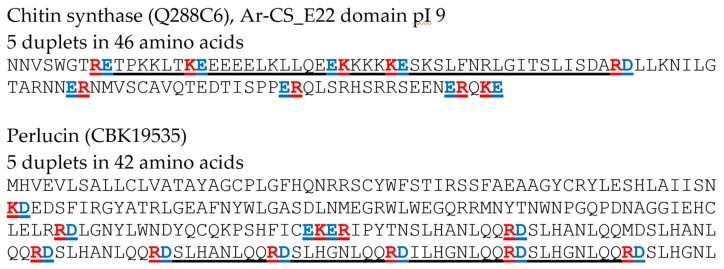
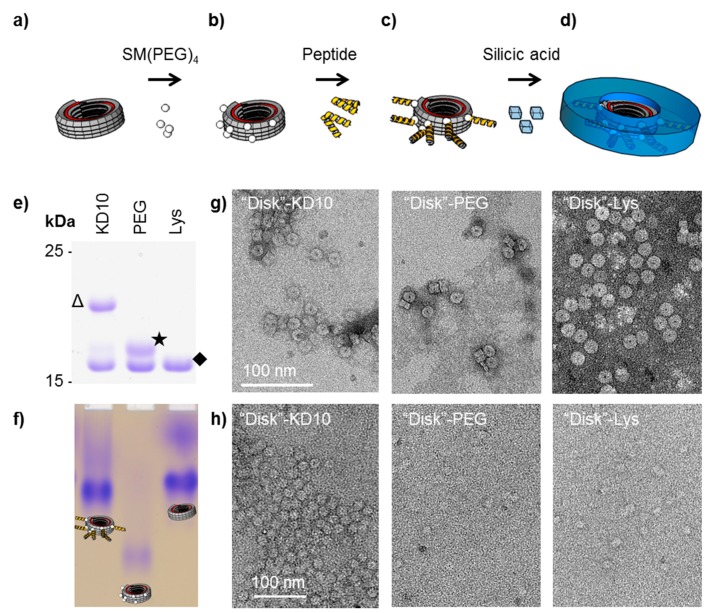
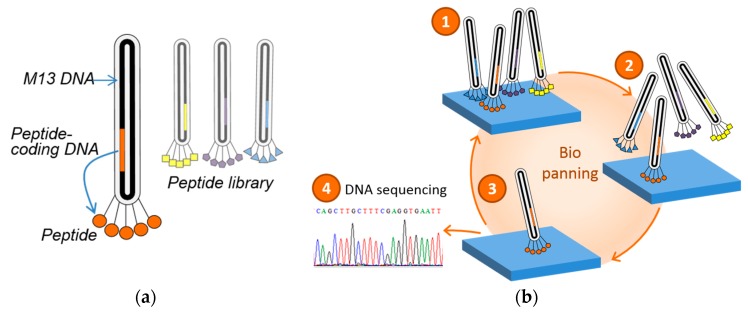
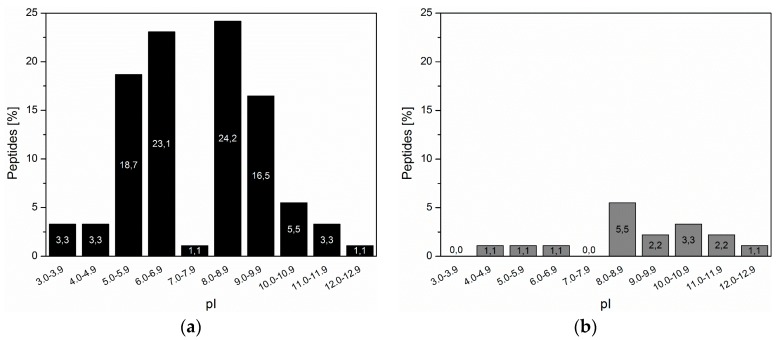
Proteins regulate diverse biological processes by the specific interaction with, e.g., nucleic acids, proteins and inorganic molecules. The generation of inorganic hybrid materials, such as shell formation in mollusks, is a protein-controlled mineralization process. Moreover, inorganic-binding peptides are attractive for the bioinspired mineralization of non-natural inorganic functional materials for technical applications. However, it is still challenging to identify mineral-binding peptide motifs from biological systems as well as for technical systems. Here, three complementary approaches were combined to analyze protein motifs consisting of alternating positively and negatively charged amino acids: (i) the screening of natural biomineralization proteins; (ii) the selection of inorganic-binding peptides derived from phage display; and (iii) the mineralization of tobacco mosaic virus (TMV)-based templates. A respective peptide motif displayed on the TMV surface had a major impact on the SiO₂ mineralization. In addition, similar motifs were found in zinc oxide- and zirconia-binding peptides indicating a general binding feature. The comparative analysis presented here raises new questions regarding whether or not there is a common design principle based on acidic and basic amino acids for peptides interacting with minerals.
蛋白质通过与核酸、蛋白质和无机分子等的特异性相互作用来调节多种生物过程。无机杂化材料的生成,如软体动物贝壳的形成,是一个由蛋白质控制的矿化过程。此外,无机结合肽对于用于技术应用的非天然无机功能材料的仿生矿化具有吸引力。然而,从生物系统以及技术系统中识别矿物结合肽基序仍然具有挑战性。在这里,三种互补方法被结合起来分析由带正电和负电的氨基酸交替组成的蛋白质基序:(i)天然生物矿化蛋白质的筛选;(ii)源自噬菌体展示的无机结合肽的选择;以及(iii)基于烟草花叶病毒(TMV)模板的矿化。在TMV表面展示的相应肽基序对SiO₂矿化有重大影响。此外,在氧化锌和氧化锆结合肽中发现了类似的基序,表明存在一般的结合特征。这里提出的比较分析提出了关于与矿物相互作用的肽是否存在基于酸性和碱性氨基酸的共同设计原则的新问题。