Lee Hung-Pang, Lin Da-Jun, Yeh Ming-Long
Department of Biomedical Engineering, National Cheng Kung University, Tainan 701, Taiwan.
Department of Materials Science and Engineering, National Cheng Kung University, Tainan 701, Taiwan.
Materials (Basel). 2017 Jun 25;10(7):696. doi: 10.3390/ma10070696.
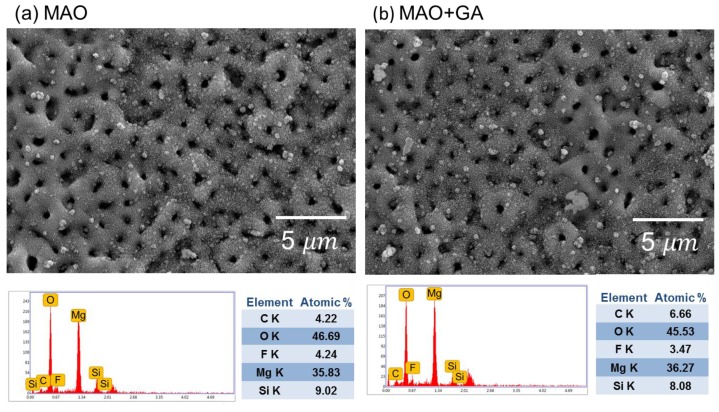
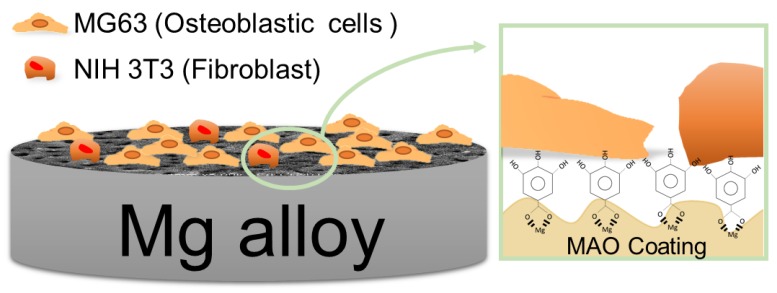
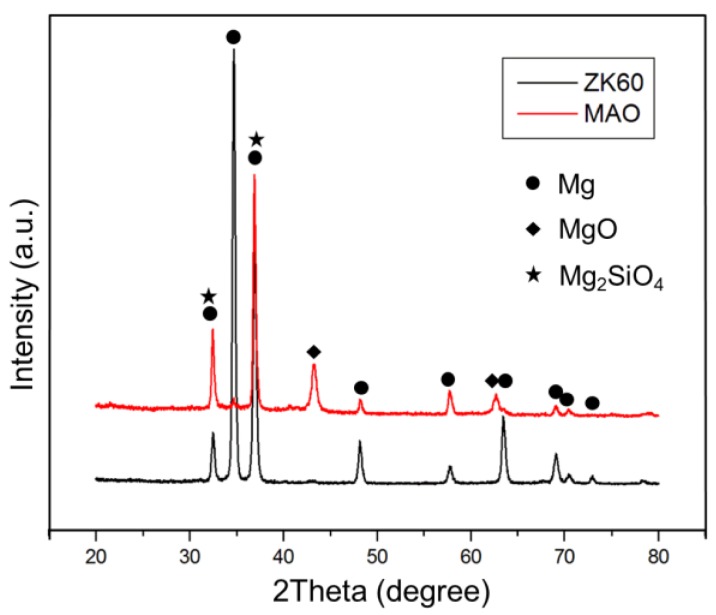
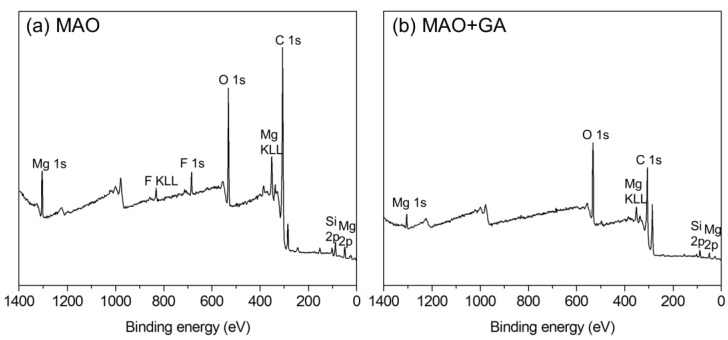
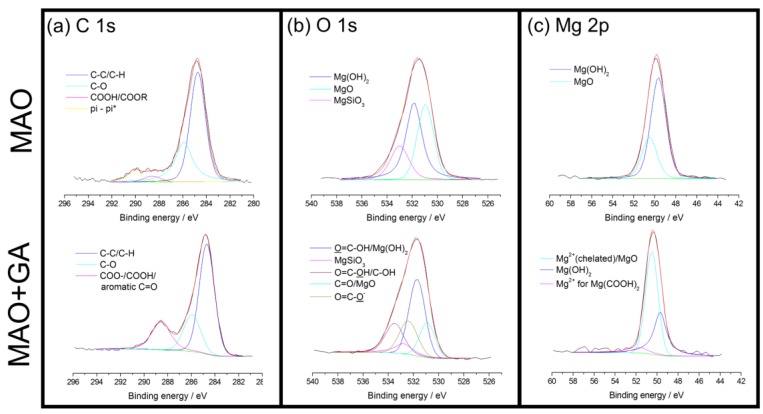
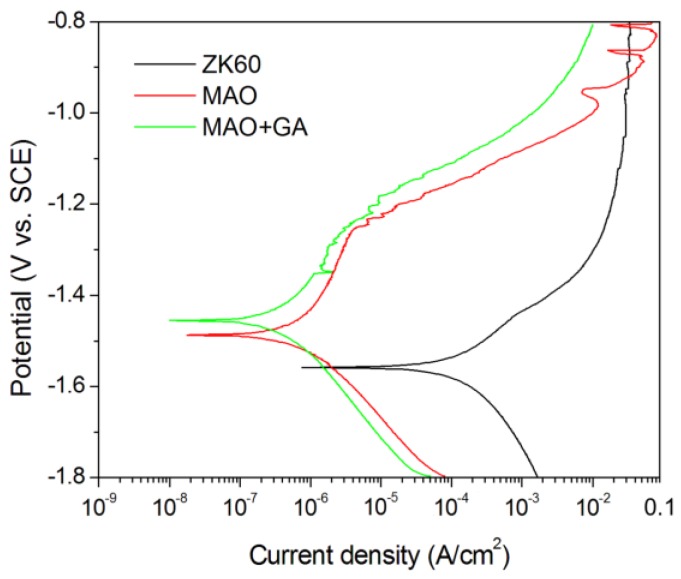
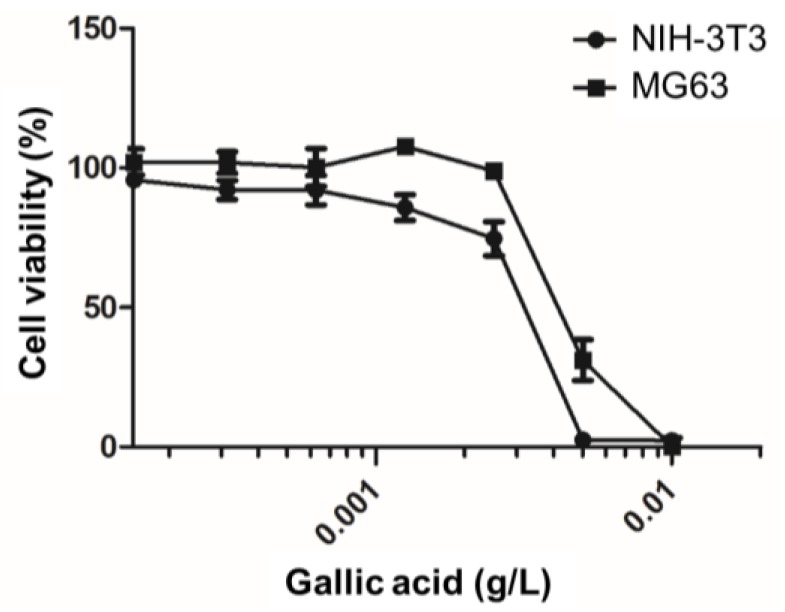
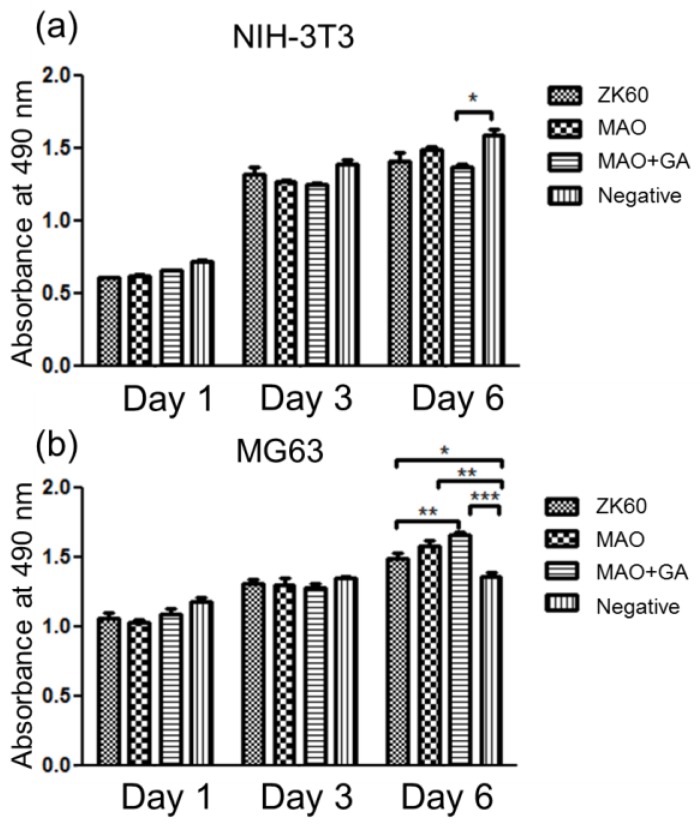
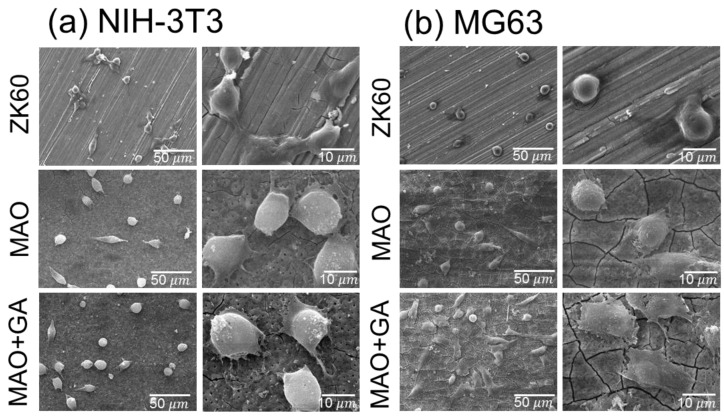
Magnesium alloys have great potential for developing orthopedic implants due to their biodegradability and mechanical properties, but the rapid corrosion rate of the currently-available alloys limits their clinical applications. To increase the corrosion resistance of the substrate, a protective ceramic coating is constructed by a micro-arc oxidation (MAO) process on ZK60 magnesium alloy. The porous ceramic coating is mainly composed of magnesium oxide and magnesium silicate, and the results from cell cultures show it can stimulate osteoblastic cell growth and proliferation. Moreover, gallic acid, a phenolic compound, was successfully introduced onto the MAO coating by grafting on hydrated oxide and chelating with magnesium ions. The gallic acid and rough surface of MAO altered the cell attachment behavior, making it difficult for fibroblasts to adhere to the MAO coating. The viability tests showed that gallic acid could suppress fibroblast growth and stimulate osteoblastic cell proliferation. Overall, the porous MAO coating combined with gallic acid offered a novel strategy for increasing osteocompatibility.
由于镁合金具有生物可降解性和机械性能,在开发骨科植入物方面具有巨大潜力,但目前可用合金的快速腐蚀速率限制了它们的临床应用。为了提高基体的耐腐蚀性,通过微弧氧化(MAO)工艺在ZK60镁合金上构建了一层保护性陶瓷涂层。该多孔陶瓷涂层主要由氧化镁和硅酸镁组成,细胞培养结果表明它能刺激成骨细胞的生长和增殖。此外,通过接枝到水合氧化物上并与镁离子螯合,成功地将一种酚类化合物没食子酸引入到MAO涂层上。没食子酸和MAO的粗糙表面改变了细胞附着行为,使成纤维细胞难以附着在MAO涂层上。活力测试表明,没食子酸可以抑制成纤维细胞生长并刺激成骨细胞增殖。总体而言,多孔MAO涂层与没食子酸相结合为提高骨相容性提供了一种新策略。