Mao Jing, Shi Xin, Wu Ya-Bo, Gong Shi-Qiang
Department of Stomatology, Tongji Hospital, Tongji Medical College, Huazhong University of Science and Technology, Wuhan 430030, China.
Materials (Basel). 2016 Aug 17;9(8):700. doi: 10.3390/ma9080700.
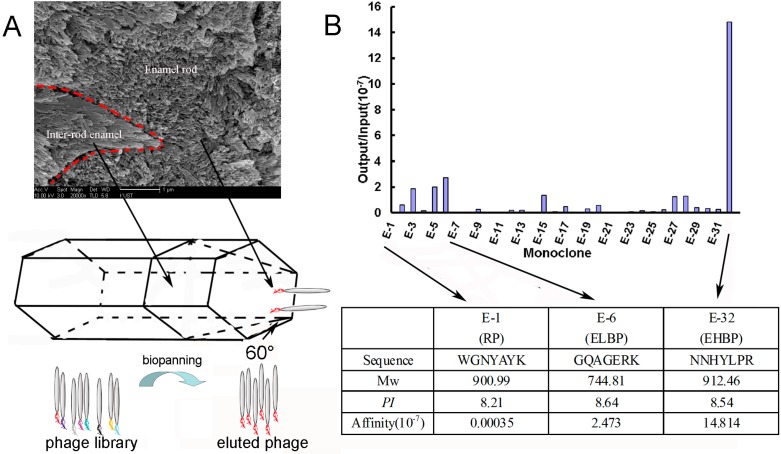
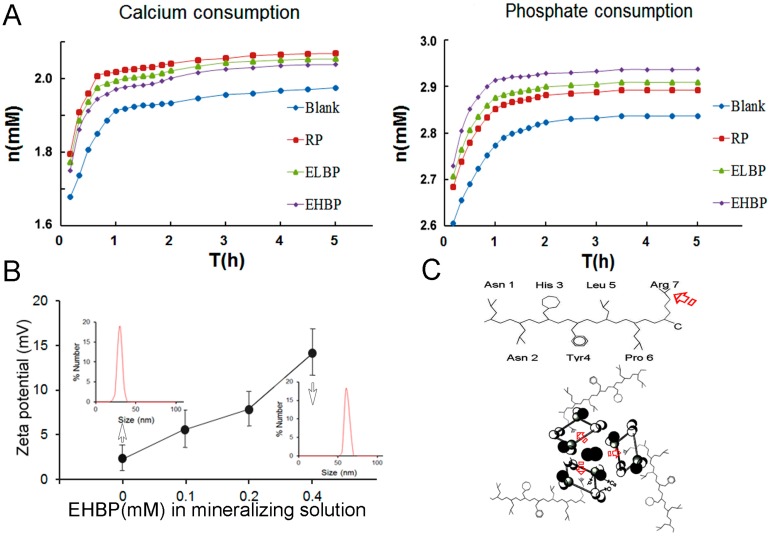
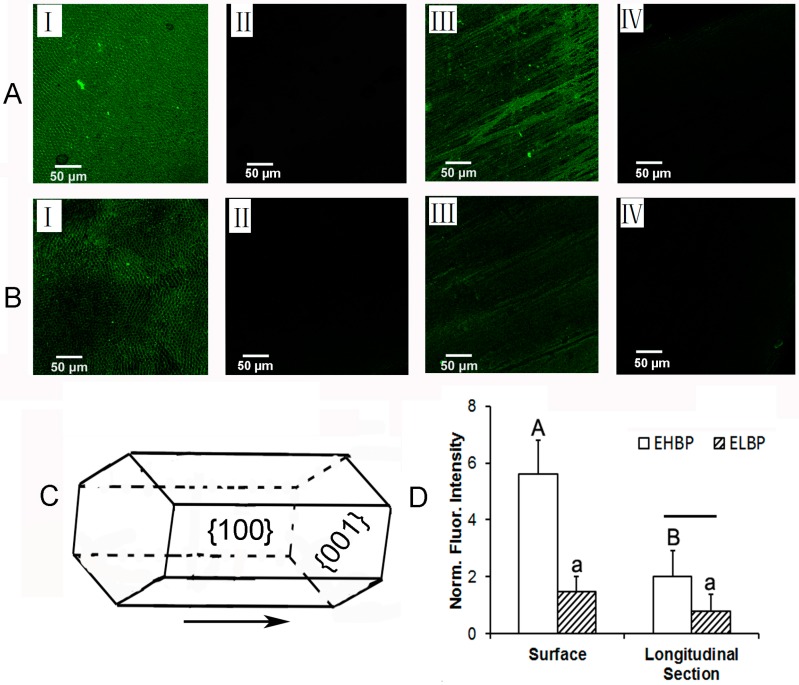
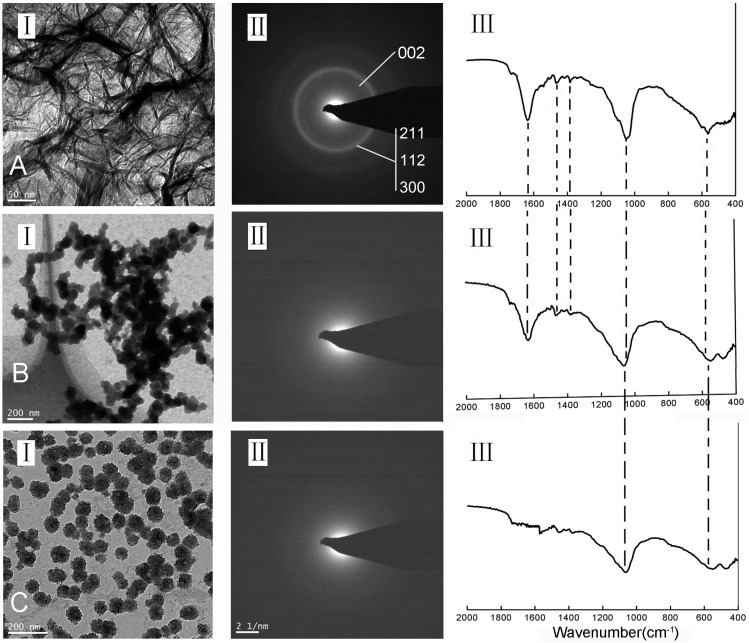
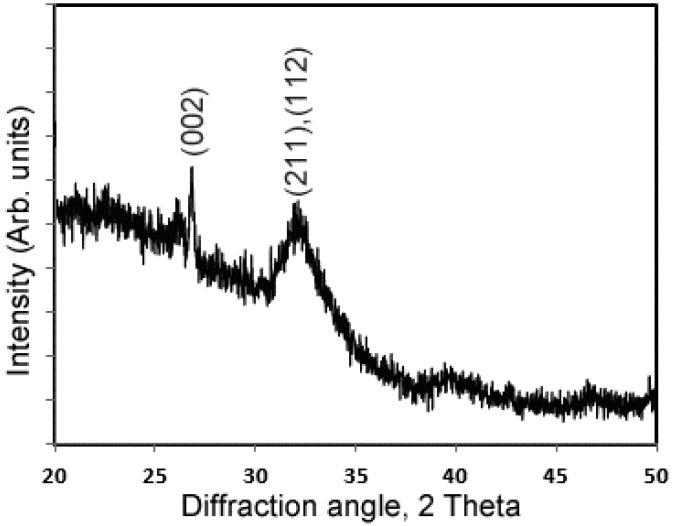
With recent developments of molecular biomimetics that combine genetic engineering and nanotechnology, peptides can be genetically engineered to bind specifically to inorganic components and execute the task of collagen matrix proteins. In this study, using biogenous tooth enamel as binding substrate, we identified a new heptapeptide (enamel high-affinity binding peptide, EHBP) from linear 7-mer peptide phage display library. Through the output/input affinity test, it was found that EHBP has the highest affinity to enamel with an output/input ratio of 14.814 × 10, while a random peptide (RP) displayed much lower output/input ratio of 0.00035 × 10. This binding affinity was also verified by confocal laser scanning microscopy (CLSM) analysis. It was found that EHBP absorbing onto the enamel surface exhibits highest normalized fluorescence intensity (5.6 ± 1.2), comparing to the intensity of EHBP to enamel longitudinal section (1.5 ± 0.9) ( < 0.05) as well as to the intensity of a low-affinity binding peptide (ELBP) to enamel (1.5 ± 0.5) ( < 0.05). Transmission electron microscopy (TEM), Attenuated total Reflection-Fourier transform infrared spectroscopy (ATR-FTIR), and X-ray Diffraction (XRD) studies further confirmed that crystallized hydroxyapatite were precipitated in the mineralization solution containing EHBP. To better understand the nucleation effect of EHBP, EHBP was further investigated on its interaction with calcium phosphate clusters through in vitro mineralization model. The calcium and phosphate ion consumption as well as zeta potential survey revealed that EHBP might previously adsorb to phosphate (PO₄) groups and then initiate the precipitation of calcium and phosphate groups. This study not only proved the electrostatic interaction of phosphate group and the genetically engineering solid-binding peptide, but also provided a novel nucleation motif for potential applications in guided hard tissue biomineralization and regeneration.
随着结合基因工程和纳米技术的分子仿生学的最新发展,可以通过基因工程使肽特异性结合无机成分,并执行胶原基质蛋白的任务。在本研究中,我们以生物源牙釉质作为结合底物,从线性七肽噬菌体展示文库中鉴定出一种新的七肽(牙釉质高亲和力结合肽,EHBP)。通过输出/输入亲和力测试,发现EHBP对牙釉质具有最高亲和力,输出/输入比为14.814×10,而随机肽(RP)的输出/输入比则低得多,为0.00035×10。这种结合亲和力也通过共聚焦激光扫描显微镜(CLSM)分析得到验证。结果发现,与EHBP对牙釉质纵剖面的荧光强度(1.5±0.9)(<0.05)以及低亲和力结合肽(ELBP)对牙釉质的荧光强度(1.5±0.5)(<0.05)相比,吸附在牙釉质表面的EHBP表现出最高的归一化荧光强度(5.6±1.2)。透射电子显微镜(TEM)、衰减全反射傅里叶变换红外光谱(ATR-FTIR)和X射线衍射(XRD)研究进一步证实,在含有EHBP的矿化溶液中沉淀出了结晶羟基磷灰石。为了更好地理解EHBP的成核作用,通过体外矿化模型进一步研究了EHBP与磷酸钙簇的相互作用。钙和磷酸根离子消耗以及zeta电位测量表明,EHBP可能先吸附到磷酸根(PO₄)基团上,然后引发钙和磷酸根基团的沉淀。本研究不仅证明了磷酸基团与基因工程固体结合肽之间的静电相互作用,还为引导硬组织生物矿化和再生的潜在应用提供了一种新的成核基序。