Rivera-Vega Loren J, Galbraith David A, Grozinger Christina M, Felton Gary W
Department of Entomology, Pennsylvania State University, University Park, PA, United States of America.
PLoS One. 2017 Aug 8;12(8):e0182636. doi: 10.1371/journal.pone.0182636. eCollection 2017.
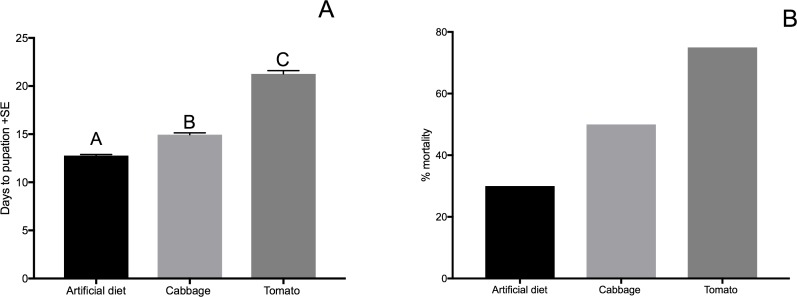
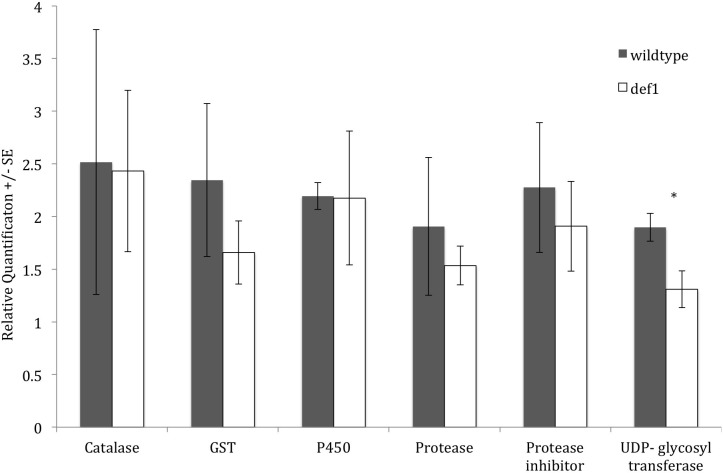
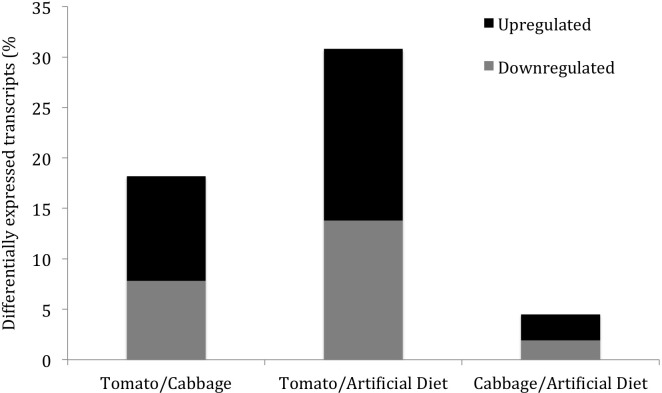
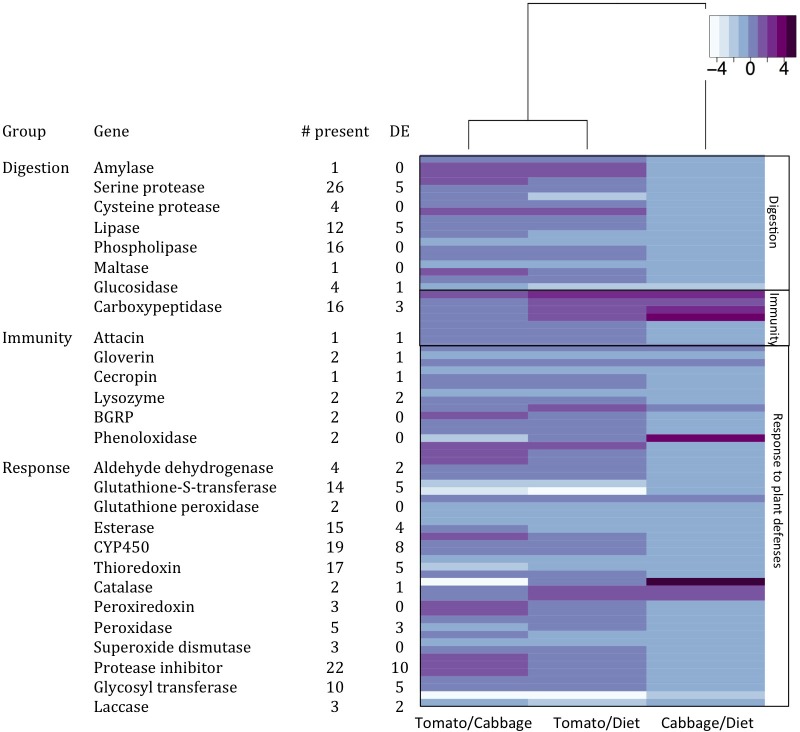
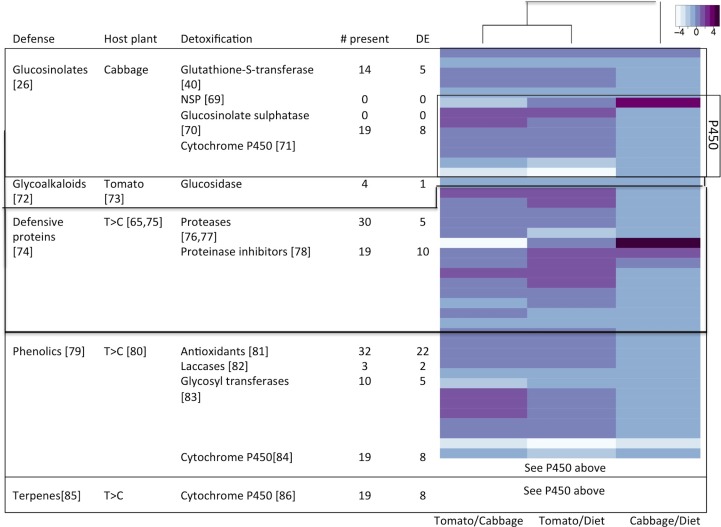
Generalist herbivores feed on a wide array of plants and need to adapt to varying host qualities and defenses. One of the first insect derived secretions to come in contact with the plant is the saliva. Insect saliva is potentially involved in both the pre-digestion of the host plant as well as induction/suppression of plant defenses, yet how the salivary glands respond to changes in host plant at the transcriptional level is largely unknown. The objective of this study was to determine how the labial salivary gland transcriptome varies according to the host plant on which the insect is feeding. In order to determine this, cabbage looper (Trichoplusia ni) larvae were reared on cabbage, tomato, and pinto bean artificial diet. Labial glands were dissected from fifth instar larvae and used to extract RNA for RNASeq analysis. Assembly of the resulting sequencing reads resulted in a transcriptome library for T. ni salivary glands consisting of 14,037 expressed genes. Feeding on different host plant diets resulted in substantial remodeling of the gland transcriptomes, with 4,501 transcripts significantly differentially expressed across the three treatment groups. Gene expression profiles were most similar between cabbage and artificial diet, which corresponded to the two diets on which larvae perform best. Expression of several transcripts involved in detoxification processes were differentially expressed, and transcripts involved in the spliceosome pathway were significantly downregulated in tomato-reared larvae. Overall, this study demonstrates that the transcriptomes of the salivary glands of the cabbage looper are strongly responsive to diet. It also provides a foundation for future functional studies that can help us understand the role of saliva of chewing insects in plant-herbivore interactions.
多食性食草动物以多种植物为食,需要适应不同的宿主质量和防御机制。昆虫与植物接触时最早分泌的物质之一是唾液。昆虫唾液可能参与宿主植物的预消化以及植物防御的诱导/抑制,然而唾液腺在转录水平上如何响应宿主植物的变化在很大程度上尚不清楚。本研究的目的是确定昆虫取食的宿主植物如何影响唇唾液腺转录组。为了确定这一点,将甘蓝夜蛾(Trichoplusia ni)幼虫饲养在卷心菜、番茄和菜豆人工饲料上。从五龄幼虫中解剖出唇腺,用于提取RNA进行RNA测序分析。对所得测序读数进行组装,得到了一个由14037个表达基因组成的甘蓝夜蛾唾液腺转录组文库。取食不同的宿主植物饲料导致腺转录组发生显著重塑,三个处理组中有4501个转录本显著差异表达。卷心菜和人工饲料之间的基因表达谱最为相似,这与幼虫生长最佳的两种饲料相对应。几种参与解毒过程的转录本表达存在差异,参与剪接体途径的转录本在以番茄饲养的幼虫中显著下调。总体而言,本研究表明甘蓝夜蛾唾液腺转录组对饮食有强烈反应。它还为未来的功能研究提供了基础,有助于我们了解咀嚼式昆虫唾液在植物-食草动物相互作用中的作用。