Herrera-Ibatá Diana María, Martínez-López Beatriz, Quijada Darla, Burton Kenneth, Mur Lina
Department of Diagnostic Medicine/Pathobiology, College of Veterinary Medicine, Kansas State University, Manhattan, KS, United States of America.
Center for Animal Disease Modelling and Surveillance (CADMS), University of California Davis, Davis, CA, United States of America.
PLoS One. 2017 Aug 10;12(8):e0182850. doi: 10.1371/journal.pone.0182850. eCollection 2017.
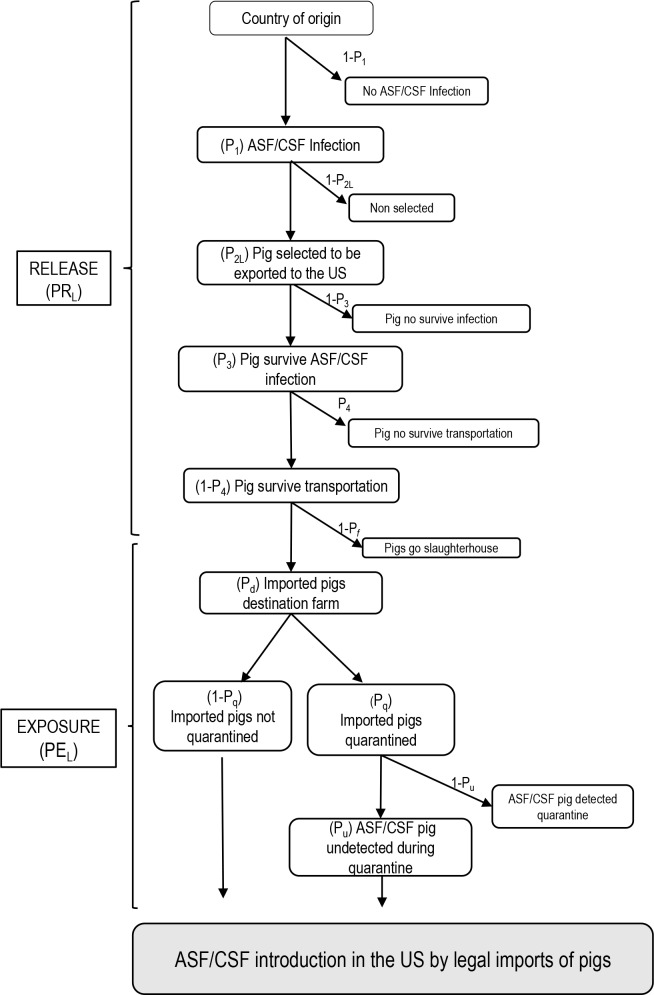
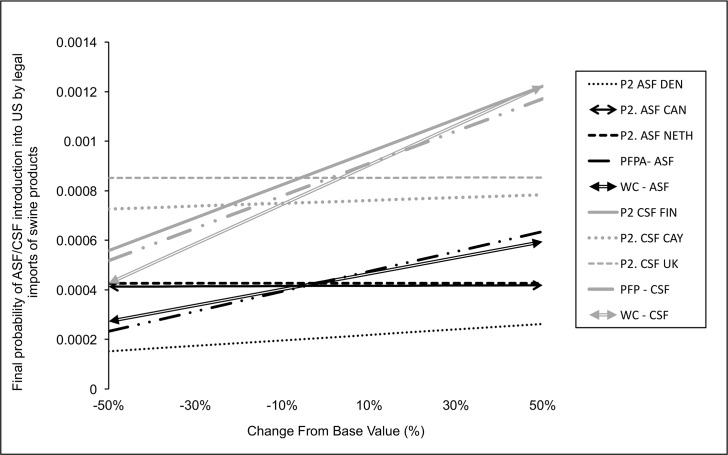
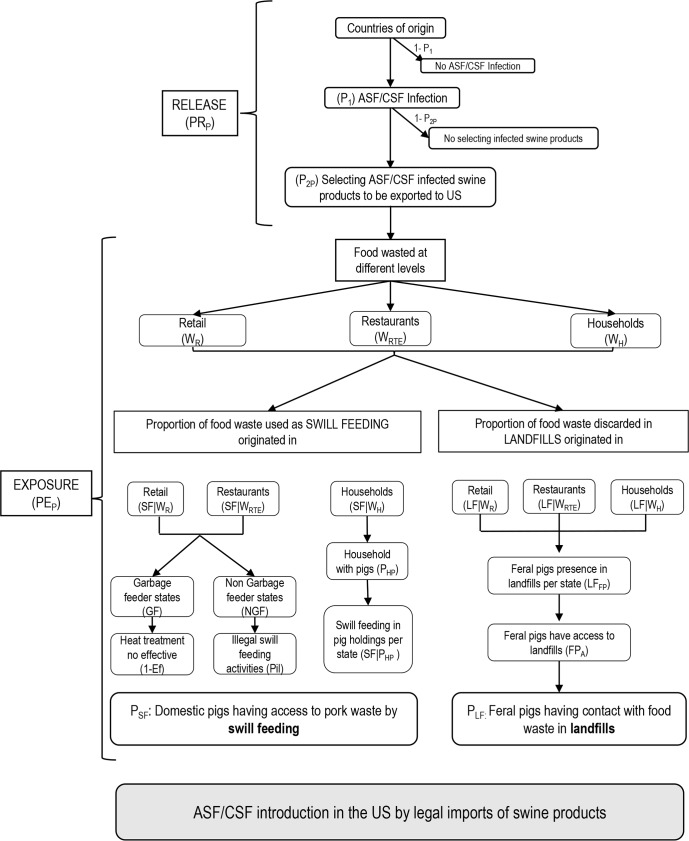
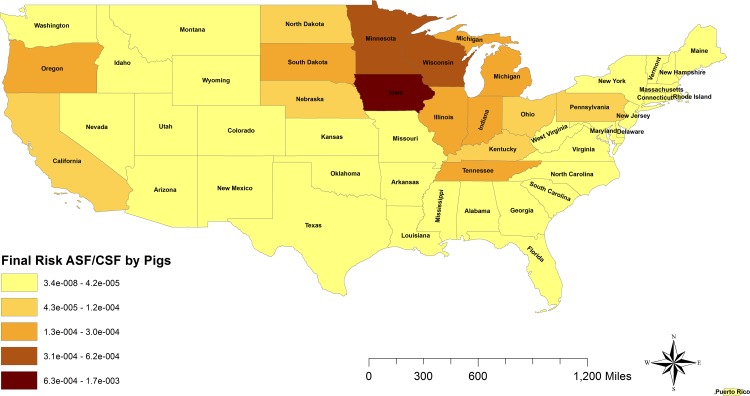
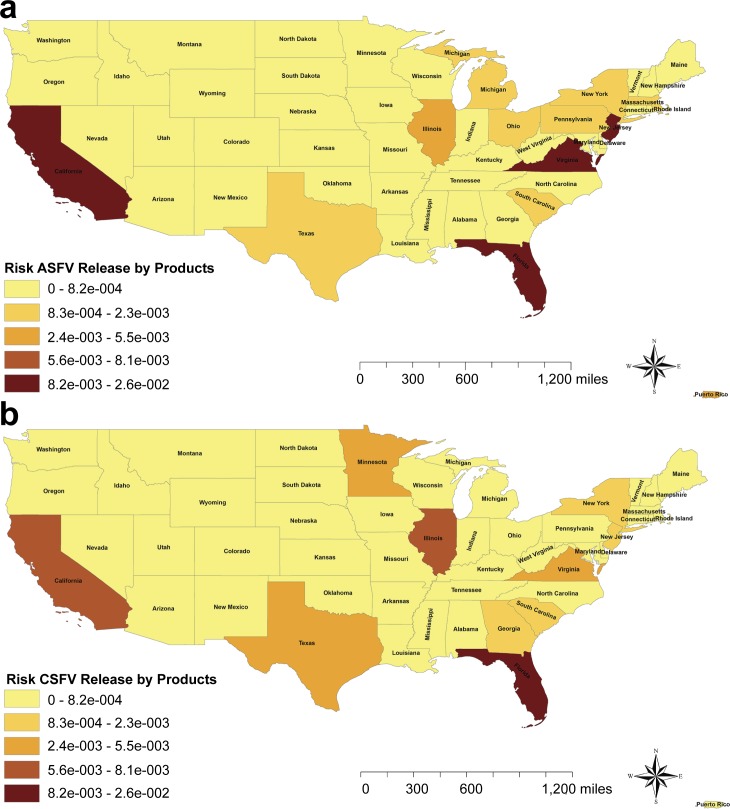
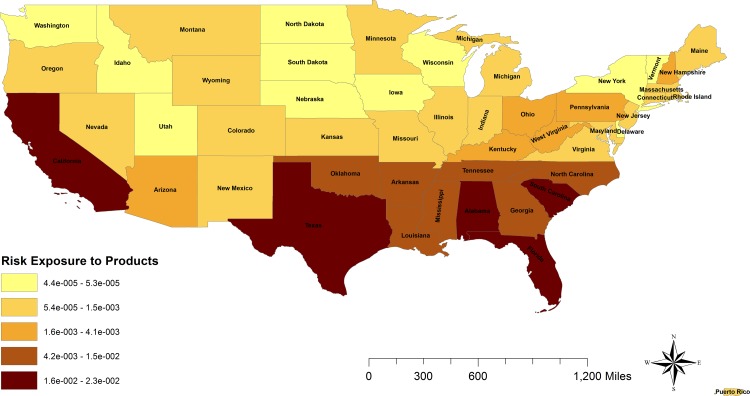
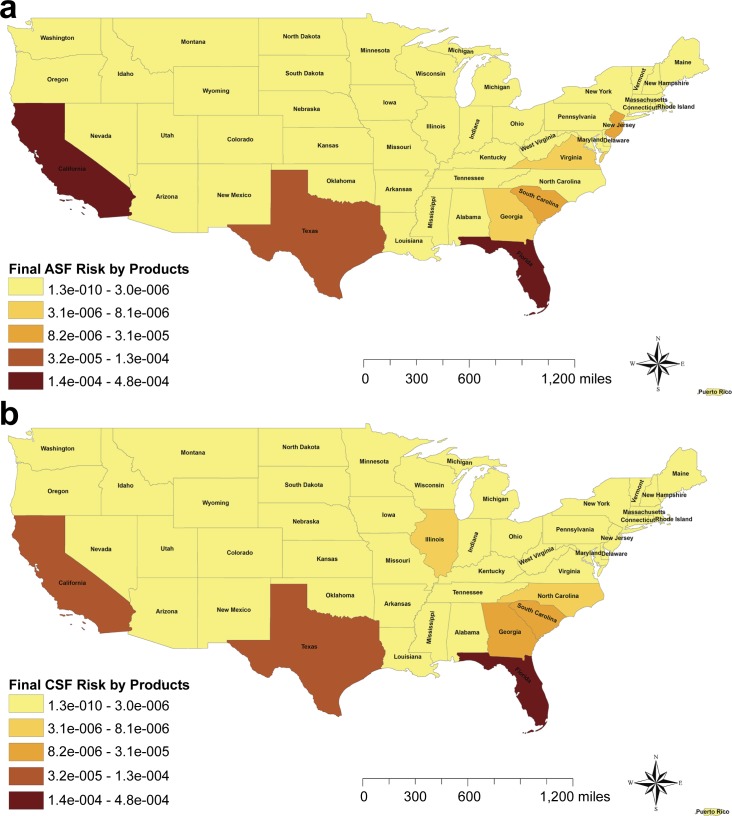
The US livestock safety strongly depends on its capacity to prevent the introduction of Transboundary Animal Diseases (TADs). Therefore, accurate and updated information on the location and origin of those potential TADs risks is essential, so preventive measures as market restrictions can be put on place. The objective of the present study was to evaluate the current risk of African swine fever (ASF) and Classical swine fever (CSF) introduction into the US through the legal importations of live pigs and swine products using a quantitative approach that could be later applied to other risks. Four quantitative stochastic risk assessment models were developed to estimate the monthly probabilities of ASF and CSF release into the US, and the exposure of susceptible populations (domestic and feral swine) to these introductions at state level. The results suggest a low annual probability of either ASF or CSF introduction into the US, by any of the analyzed pathways (5.510-3). Being the probability of introduction through legal imports of live pigs (1.810-3 for ASF, and 2.510-3 for CSF) higher than the risk of legally imported swine products (8.9010-4 for ASF, and 1.56*10-3 for CSF). This could be caused due to the low probability of exposure associated with this type of commodity (products). The risk of feral pigs accessing to swine products discarded in landfills was slightly higher than the potential exposure of domestic pigs through swill feeding. The identification of the months at highest risk, the origin of the higher risk imports, and the location of the US states most vulnerable to those introductions (Iowa, Minnesota and Wisconsin for live swine and California, Florida and Texas for swine products), is valuable information that would help to design prevention, risk-mitigation and early-detection strategies that would help to minimize the catastrophic consequences of potential ASF/CSF introductions into the US.
美国牲畜安全在很大程度上取决于其预防跨界动物疾病(TADs)传入的能力。因此,掌握这些潜在TADs风险的位置和来源的准确且最新的信息至关重要,这样才能实施诸如市场限制等预防措施。本研究的目的是使用一种后续可应用于其他风险的定量方法,评估通过合法进口生猪和猪产品将非洲猪瘟(ASF)和经典猪瘟(CSF)传入美国的当前风险。开发了四个定量随机风险评估模型,以估计ASF和CSF每月传入美国的概率,以及易感种群(家猪和野猪)在州一级接触这些传入疾病的情况。结果表明,通过任何分析途径将ASF或CSF传入美国的年概率较低(5.5×10⁻³)。通过合法进口生猪传入的概率(ASF为1.8×10⁻³,CSF为2.5×10⁻³)高于合法进口猪产品的风险(ASF为8.90×10⁻⁴,CSF为1.56×10⁻³)。这可能是由于这类商品(产品)相关的接触概率较低所致。野猪接触垃圾填埋场丢弃的猪产品的风险略高于家猪通过泔水喂养的潜在接触风险。确定风险最高的月份、高风险进口产品的来源以及美国最易受这些传入影响的州的位置(生猪方面为爱荷华州、明尼苏达州和威斯康星州,猪产品方面为加利福尼亚州、佛罗里达州和得克萨斯州),这些有价值的信息将有助于设计预防、风险缓解和早期检测策略,从而有助于将潜在的ASF/CSF传入美国可能造成的灾难性后果降至最低。