Bijak Michal, Saluk-Bijak Joanna
Department of General Biochemistry, Faculty of Biology and Environmental Protection, University of Lodz, Pomorska 141/143, 90-236, Lodz, Poland.
BMC Complement Altern Med. 2017 Aug 10;17(1):396. doi: 10.1186/s12906-017-1897-7.
Arachidonic acid metabolism by cyclooxygenase (COX) is a major pathway for blood platelets' activation, which is associated with pro-thrombotic platelet activity and the production of pro-inflammatory mediators. Inhibition of COX activity is one of the major means of anti-platelet pharmacotherapy preventing arterial thrombosis and reducing the incidence of cardiovascular events. Recent studies have presented that a silymarin (standardized extract of Milk thistle (Silybum marianum)) can inhibit the COX pathway. Accordingly, the aim of our study was to determine the effects of three major flavonolignans (silybin, silychristin and silydianin) on COX pathway activity in blood platelets.
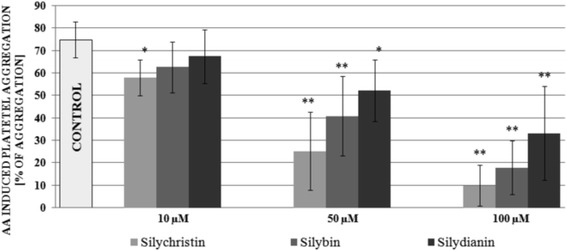
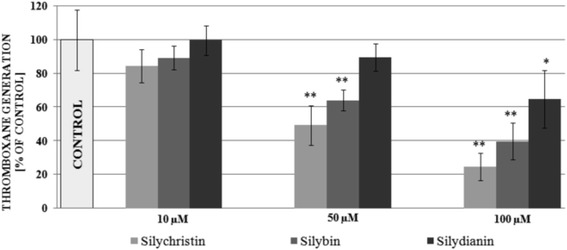
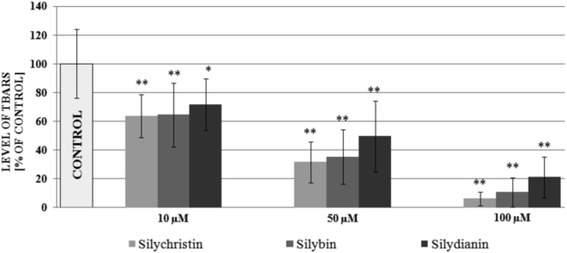
We determined the effect of flavonolignans on arachidonic acid induced blood platelet aggregation, COX pathway metabolites formation, as well as COX activity in platelets. Additionally, we analysed the potential mechanism of this interaction using the bioinformatic ligand docking method.
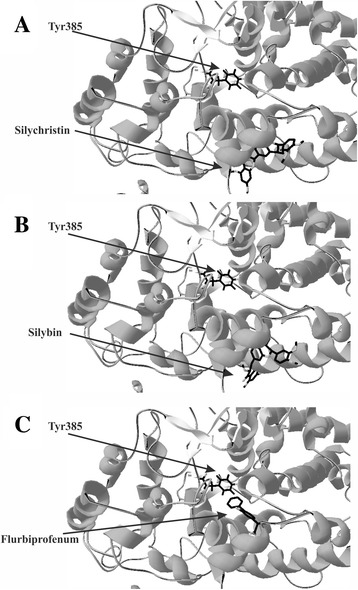
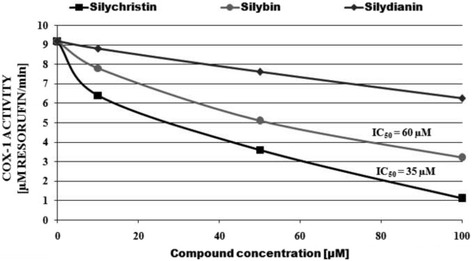
We observed that tested compounds decrease the platelet aggregation level, both thromboxane A and malondialdehyde formation, as well as inhibit the COX activity. The strongest effect was observed for silychristin and silybin. In our in silico study we showed that silychristin and silybin have conformations which interact with the active COX site as competitive inhibitors, blocking the possibility of substrate binding.
The results obtained from this study clearly present the potential of flavonolignans as novel antiplatelet and anti-inflammatory agents.
环氧化酶(COX)介导的花生四烯酸代谢是血小板激活的主要途径,这与促血栓形成的血小板活性及促炎介质的产生有关。抑制COX活性是抗血小板药物治疗预防动脉血栓形成和降低心血管事件发生率的主要手段之一。最近的研究表明,水飞蓟素(水飞蓟(Silybum marianum)的标准化提取物)可抑制COX途径。因此,我们研究的目的是确定三种主要黄酮木脂素(水飞蓟宾、水飞蓟素和水飞蓟宁)对血小板中COX途径活性的影响。
我们测定了黄酮木脂素对花生四烯酸诱导的血小板聚集、COX途径代谢产物形成以及血小板中COX活性的影响。此外,我们使用生物信息学配体对接方法分析了这种相互作用的潜在机制。
我们观察到,受试化合物降低了血小板聚集水平、血栓素A和丙二醛的形成,并抑制了COX活性。水飞蓟素和水飞蓟宾的作用最强。在我们的计算机模拟研究中,我们表明水飞蓟素和水飞蓟宾具有与COX活性位点相互作用的构象,作为竞争性抑制剂,阻断了底物结合的可能性。
本研究获得的结果清楚地表明了黄酮木脂素作为新型抗血小板和抗炎药物的潜力。