Sinha Vaibhhav, Goyal Akshit, Svenningsen Sine L, Semsey Szabolcs, Krishna Sandeep
Simons Centre for the Study of Living Machines, National Centre for Biological Sciences-TIFRBangalore, India.
Manipal UniversityManipal, India.
Front Microbiol. 2017 Jul 26;8:1386. doi: 10.3389/fmicb.2017.01386. eCollection 2017.
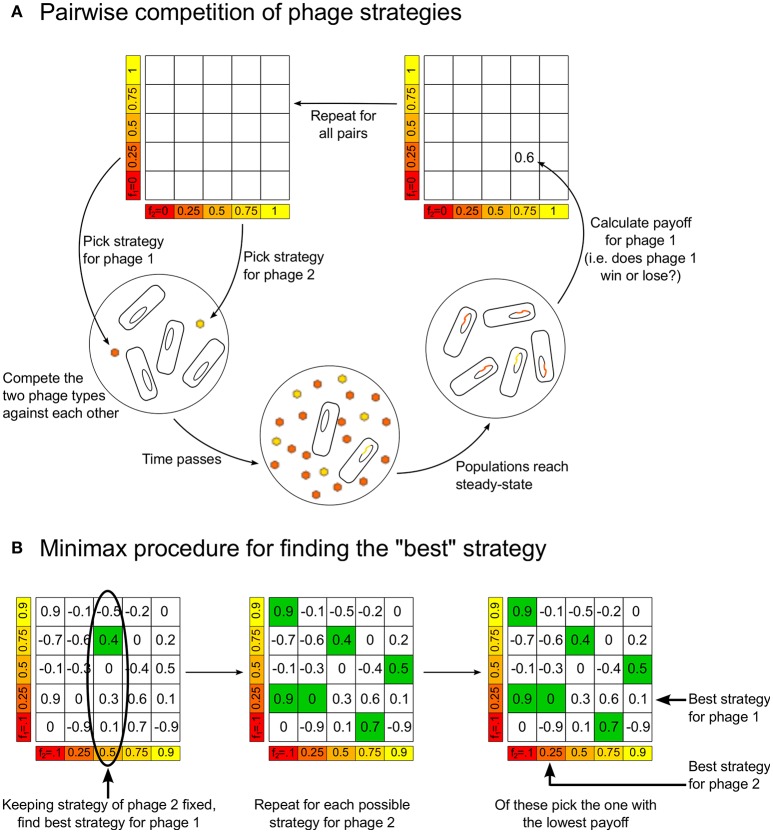
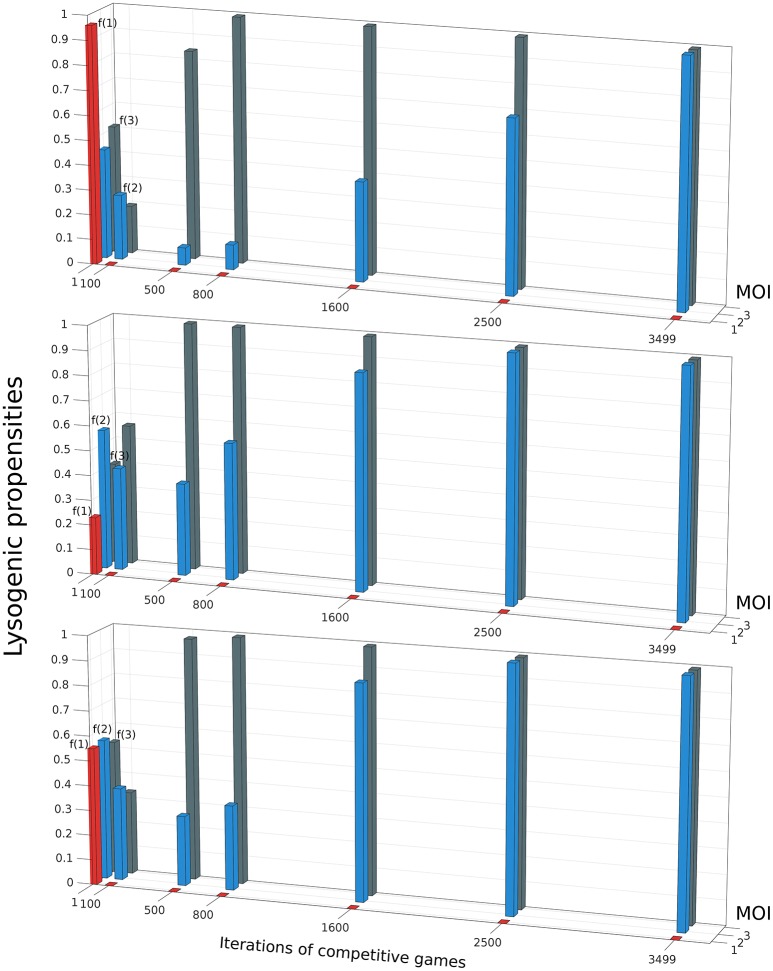
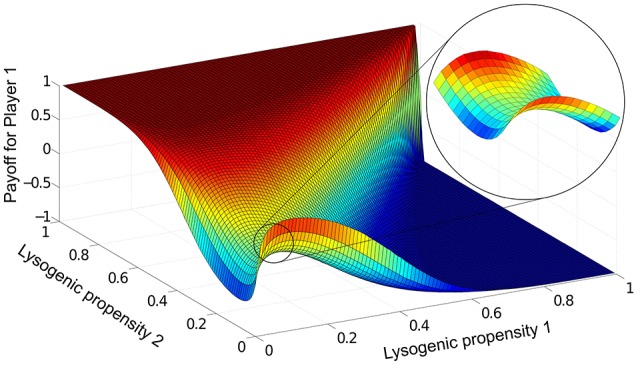
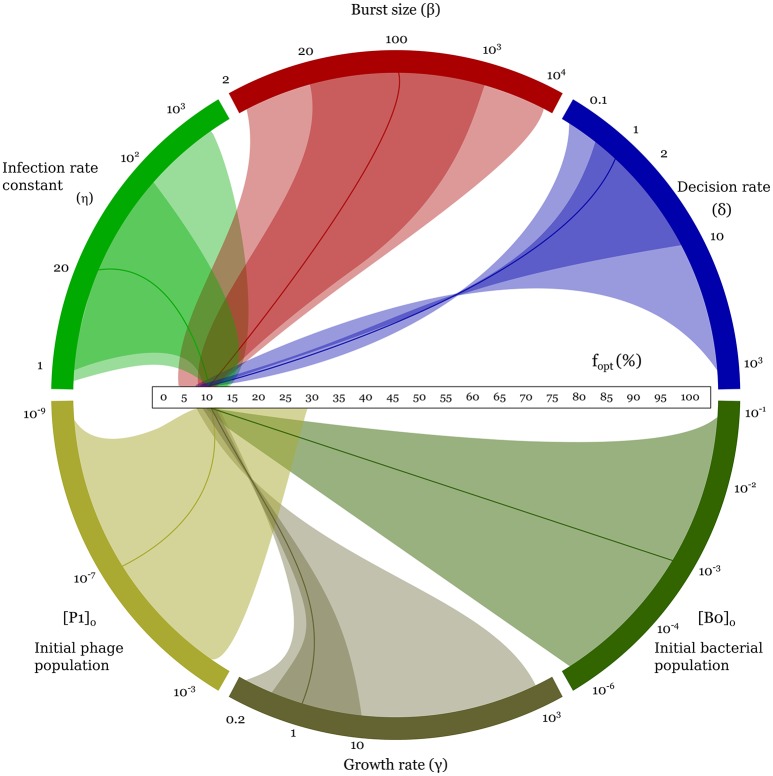
Bacteriophages are the most abundant organisms on the planet and both lytic and temperate phages play key roles as shapers of ecosystems and drivers of bacterial evolution. Temperate phages can choose between (i) lysis: exploiting their bacterial hosts by producing multiple phage particles and releasing them by lysing the host cell, and (ii) lysogeny: establishing a potentially mutually beneficial relationship with the host by integrating their chromosome into the host cell's genome. Temperate phages exhibit lysogeny propensities in the curiously narrow range of 5-15%. For some temperate phages, the propensity is further regulated by the multiplicity of infection, such that single infections go predominantly lytic while multiple infections go predominantly lysogenic. We ask whether these observations can be explained by selection pressures in environments where multiple phage variants compete for the same host. Our models of pairwise competition, between phage variants that differ only in their propensity to lysogenize, predict the optimal lysogeny propensity to fall within the experimentally observed range. This prediction is robust to large variation in parameters such as the phage infection rate, burst size, decision rate, as well as bacterial growth rate, and initial phage to bacteria ratio. When we compete phage variants whose lysogeny strategies are allowed to depend upon multiplicity of infection, we find that the optimal strategy is one which switches from full lysis for single infections to full lysogeny for multiple infections. Previous attempts to explain lysogeny propensity have argued for bet-hedging that optimizes the response to fluctuating environmental conditions. Our results suggest that there is an additional selection pressure for lysogeny propensity within phage populations infecting a bacterial host, independent of environmental conditions.
噬菌体是地球上数量最多的生物体,裂解性噬菌体和温和性噬菌体作为生态系统的塑造者和细菌进化的驱动者都发挥着关键作用。温和性噬菌体可以在以下两种方式中做出选择:(i)裂解:通过产生多个噬菌体颗粒来利用其细菌宿主,并通过裂解宿主细胞将它们释放出来;(ii)溶原化:通过将其染色体整合到宿主细胞的基因组中,与宿主建立一种潜在的互利关系。温和性噬菌体表现出溶原化倾向的比例出奇地狭窄,在5%至15%之间。对于一些温和性噬菌体来说,这种倾向还会受到感染复数的进一步调节,使得单次感染主要导致裂解,而多次感染主要导致溶原化。我们探讨这些观察结果是否可以用多种噬菌体变体竞争同一宿主的环境中的选择压力来解释。我们构建的仅在溶原化倾向上存在差异的噬菌体变体之间的成对竞争模型预测,最佳溶原化倾向落在实验观察到的范围内。这一预测对于诸如噬菌体感染率、爆发大小、决策率以及细菌生长速率和初始噬菌体与细菌比例等参数的大幅变化具有稳健性。当我们竞争溶原化策略允许依赖于感染复数的噬菌体变体时,我们发现最佳策略是一种从单次感染的完全裂解转变为多次感染的完全溶原化的策略。先前解释溶原化倾向的尝试主张采用适应性策略,以优化对波动环境条件的反应。我们的结果表明,在感染细菌宿主的噬菌体群体中,存在一种独立于环境条件的对溶原化倾向的额外选择压力。