Brown Richard A, Hecht Jacki, Bloom Erika L, Minami Haruka, Kahler Christopher W, Abrantes Ana M, Dubreuil Mary E, Gordon Alan, Price Lawrence H, Ondersma Steven J
Butler Hospital, Providence, Rhode Island.
Department of Psychiatry and Human Behavior, Alpert Medical School of Brown University, Providence, Rhode Island.
Am J Addict. 2017 Sep;26(6):587-594. doi: 10.1111/ajad.12559. Epub 2017 Aug 11.
The majority of individuals in substance use disorder (SUD) treatment also smoke cigarettes; yet, the availability of smoking cessation services in SUD treatment remains limited. In this study, we developed and piloted a brief intervention for smokers in SUD treatment intended to motivate engagement in tobacco quitline treatment (TIME-TQ).
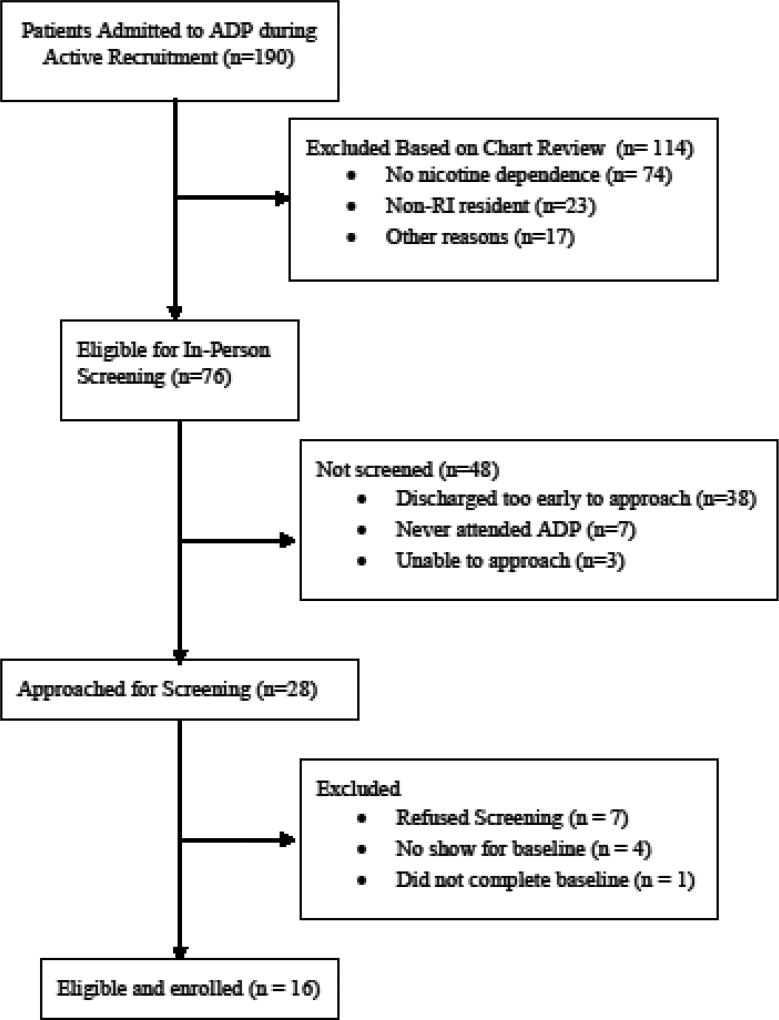
First, we interviewed 19 smokers in SUD treatment to inform the development of TIME-TQ (Phase 1). Second, we delivered a prototype TIME-TQ to 16 smokers in the same SUD treatment program and followed them for 3 months post-discharge (Phase 2).
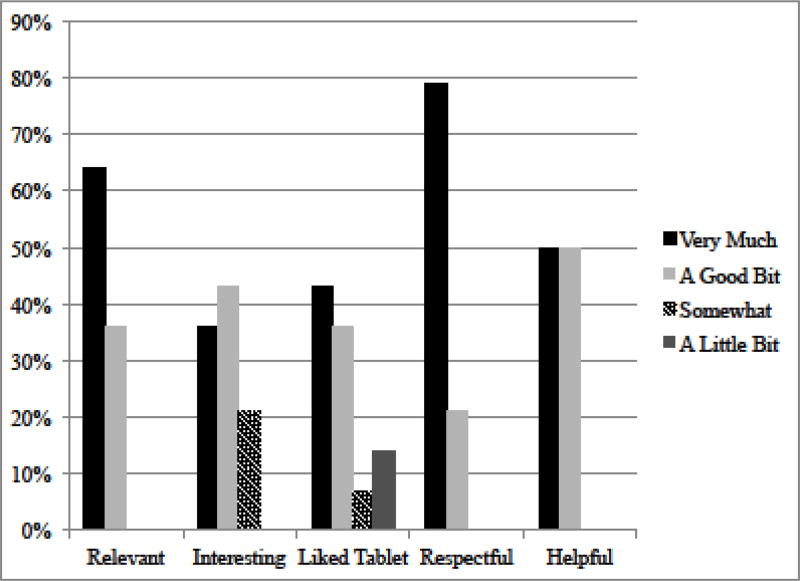
Feedback from Phase 1 participants was used to refine response choices and video segments included in the prototype TIME-TQ. Phase 2 participants rated TIME-TQ high on relevance, interest, respectfulness, and helpfulness. Additionally, they reported significant increases in readiness to quit and perceived importance of quitting after receiving TIME-TQ. A total of 8 of the 16 accepted a quitline referral, and 8 of 13 reached for follow-up (four referral acceptors, four decliners) reported efforts to quit or reduce smoking during the follow-up period. However, only three received quitline counseling and none achieved a sustained period of abstinence.
Our results suggest that TIME-TQ activated these patients to quit smoking, but our referral method (standard fax referral) was unsuccessful in helping participants fully engage in quitline treatment or achieving a period of abstinence.
We are now conducting an RCT to evaluate TIME-TQ with a revised referral procedure intended to increase treatment engagement and, ultimately, abstinence rates. (Am J Addict 2017;26:587-594).
物质使用障碍(SUD)治疗中的大多数患者也吸烟;然而,SUD治疗中戒烟服务的可获得性仍然有限。在本研究中,我们开发并试点了一种针对SUD治疗中吸烟者的简短干预措施,旨在促使他们参与戒烟热线治疗(TIME-TQ)。
首先,我们采访了19名接受SUD治疗的吸烟者,以指导TIME-TQ的开发(第1阶段)。其次,我们将TIME-TQ原型提供给同一SUD治疗项目中的16名吸烟者,并在他们出院后随访3个月(第2阶段)。
第1阶段参与者的反馈被用于完善TIME-TQ原型中的回应选项和视频片段。第2阶段的参与者对TIME-TQ在相关性、趣味性、尊重性和帮助性方面给予了高度评价。此外,他们报告称在接受TIME-TQ后,戒烟意愿和对戒烟重要性的认知显著增加。16名参与者中有8人接受了戒烟热线转诊,13名接受随访的参与者(4名转诊接受者,4名拒绝者)中有8人报告在随访期间努力戒烟或减少吸烟。然而,只有3人接受了戒烟热线咨询,且无人实现持续戒烟。
我们的结果表明,TIME-TQ促使这些患者尝试戒烟,但我们的转诊方法(标准传真转诊)未能成功帮助参与者充分参与戒烟热线治疗或实现戒烟。
我们目前正在进行一项随机对照试验,以评估采用修订后的转诊程序的TIME-TQ,旨在提高治疗参与度,并最终提高戒烟率。(《美国成瘾杂志》2017年;26:587 - 594)