Department of Molecular Oncology, Graduate School of Medicine, Chiba University, Chiba, Japan.
Department of Cellular and Molecular Medicine, Graduate School of Medicine, Chiba University, Chiba, Japan.
Sci Rep. 2017 Aug 11;7(1):7924. doi: 10.1038/s41598-017-08370-7.
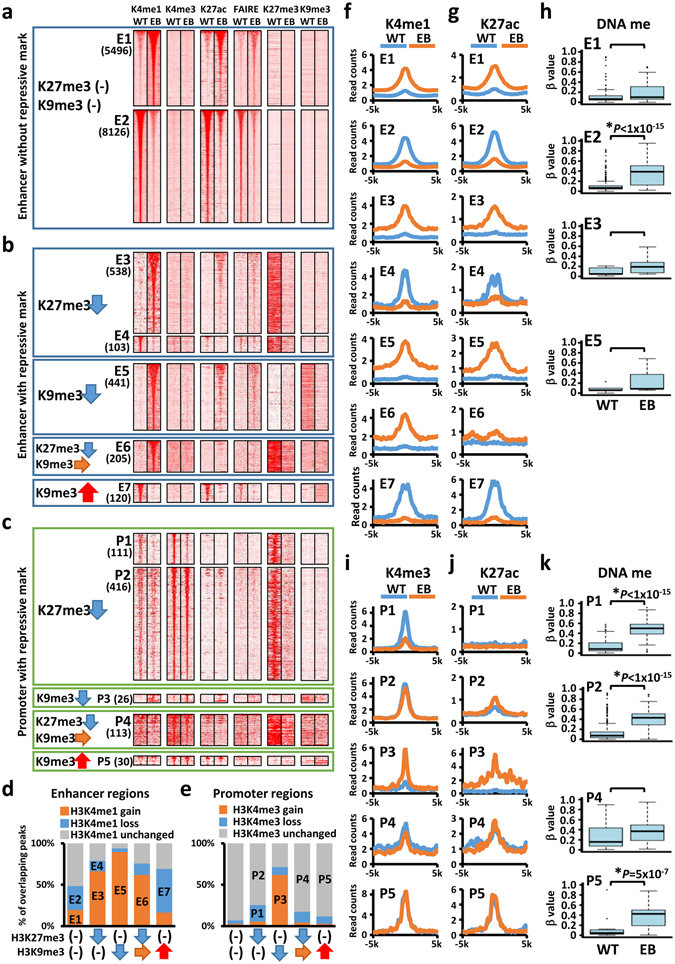
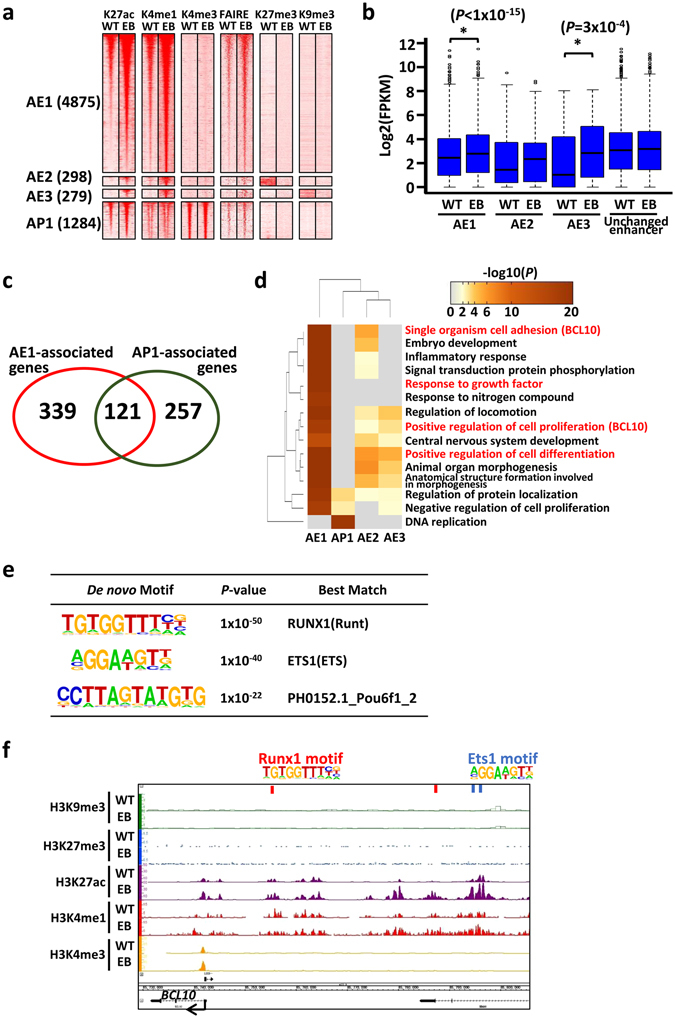
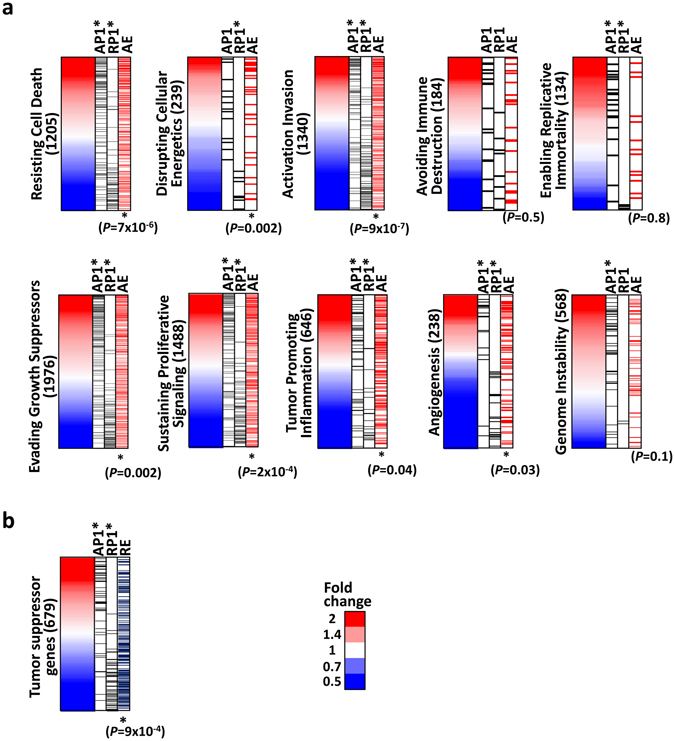
Epstein-Barr virus (EBV) infection is associated with tumours such as Burkitt lymphoma, nasopharyngeal carcinoma, and gastric cancer. We previously showed that EBV(+) gastric cancer presents an extremely high-methylation epigenotype and this aberrant DNA methylation causes silencing of multiple tumour suppressor genes. However, the mechanisms that drive EBV infection-mediated tumorigenesis, including other epigenomic alteration, remain unclear. We analysed epigenetic alterations induced by EBV infection especially at enhancer regions, to elucidate their contribution to tumorigenesis. We performed ChIP sequencing on H3K4me3, H3K4me1, H3K27ac, H3K27me3, and H3K9me3 in gastric epithelial cells infected or not with EBV. We showed that repressive marks were redistributed after EBV infection, resulting in aberrant enhancer activation and repression. Enhancer dysfunction led to the activation of pathways related to cancer hallmarks (e.g., resisting cell death, disrupting cellular energetics, inducing invasion, evading growth suppressors, sustaining proliferative signalling, angiogenesis, and tumour-promoting inflammation) and inactivation of tumour suppressive pathways. Deregulation of cancer-related genes in EBV-infected gastric epithelial cells was also observed in clinical EBV(+) gastric cancer specimens. Our analysis showed that epigenetic alteration associated with EBV-infection may contribute to tumorigenesis through enhancer activation and repression.
EBV 感染与肿瘤有关,如 Burkitt 淋巴瘤、鼻咽癌和胃癌。我们之前的研究表明,EBV(+)胃癌呈现出极高的甲基化表型,这种异常的 DNA 甲基化导致多个肿瘤抑制基因沉默。然而,导致 EBV 感染介导的肿瘤发生的机制,包括其他表观基因组改变,仍不清楚。我们分析了 EBV 感染诱导的表观遗传改变,特别是在增强子区域,以阐明它们对肿瘤发生的贡献。我们对感染或未感染 EBV 的胃上皮细胞中的 H3K4me3、H3K4me1、H3K27ac、H3K27me3 和 H3K9me3 进行了 ChIP 测序。我们发现,EBV 感染后抑制性标记重新分布,导致异常的增强子激活和抑制。增强子功能障碍导致与癌症标志相关的途径激活(例如,抵抗细胞死亡、破坏细胞能量学、诱导侵袭、逃避生长抑制剂、维持增殖信号、血管生成和促进肿瘤炎症)和肿瘤抑制途径失活。在临床 EBV(+)胃癌标本中也观察到 EBV 感染的胃上皮细胞中与癌症相关的基因失调。我们的分析表明,与 EBV 感染相关的表观遗传改变可能通过增强子激活和抑制来促进肿瘤发生。