Jin Yi, Eser Umut, Struhl Kevin, Churchman L Stirling
Department of Biological Chemistry and Molecular Pharmacology, Harvard Medical School, Boston, MA 02115, USA.
Department of Genetics, Harvard Medical School, Boston, MA 02115, USA.
Cell. 2017 Aug 24;170(5):889-898.e10. doi: 10.1016/j.cell.2017.07.006. Epub 2017 Aug 10.
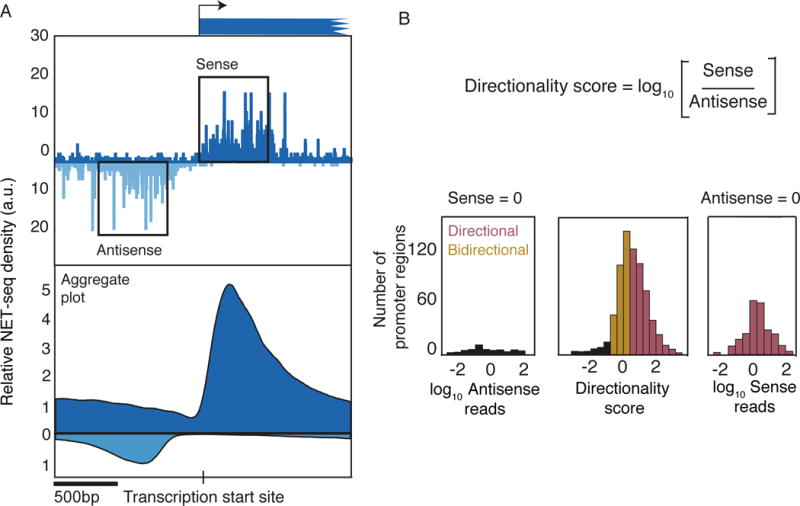
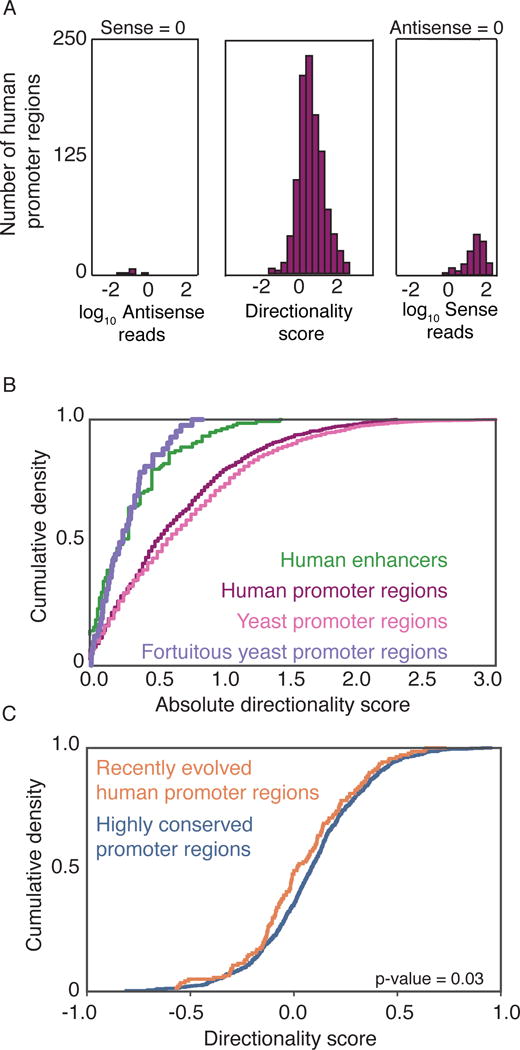
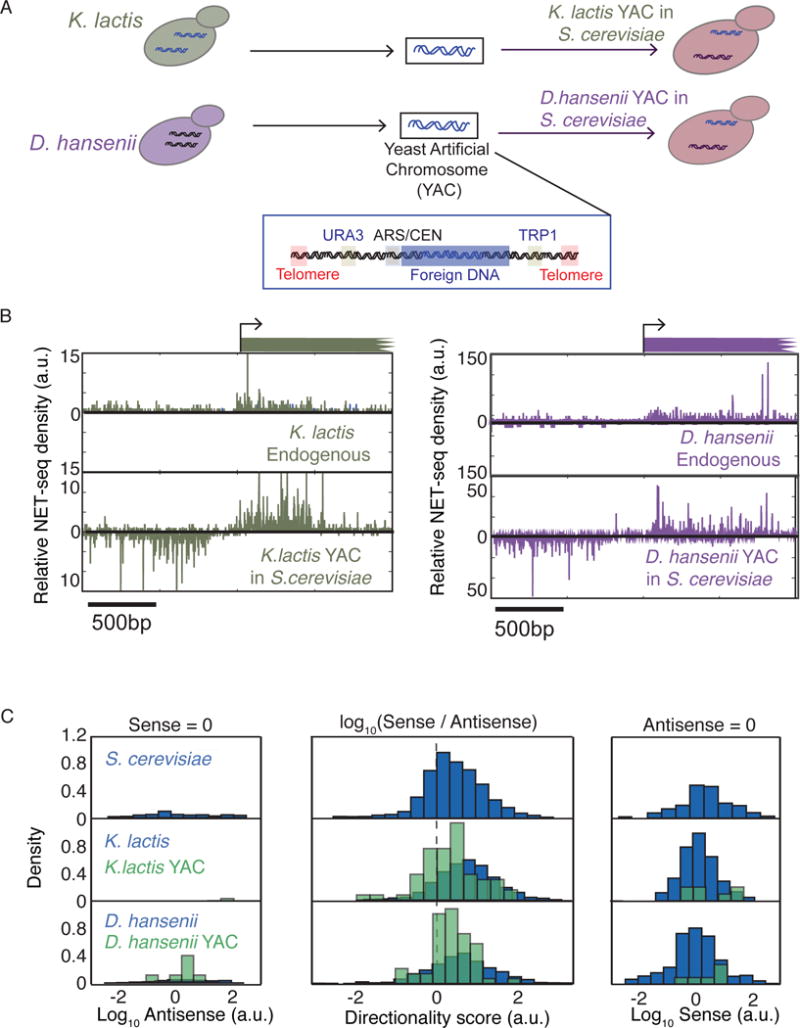
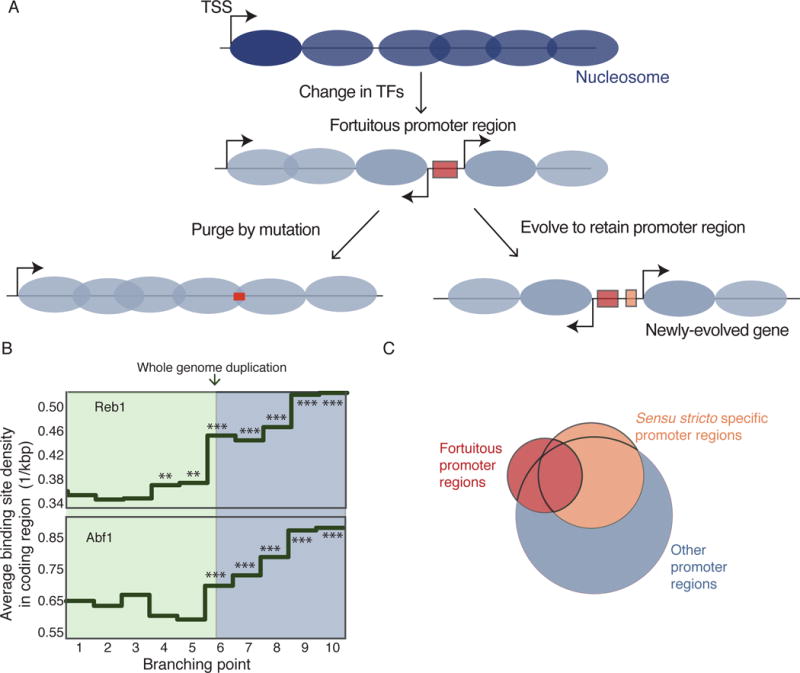
Eukaryotic promoter regions are frequently divergently transcribed in vivo, but it is unknown whether the resultant antisense RNAs are a mechanistic by-product of RNA polymerase II (Pol II) transcription or biologically meaningful. Here, we use a functional evolutionary approach that involves nascent transcript mapping in S. cerevisiae strains containing foreign yeast DNA. Promoter regions in foreign environments lose the directionality they have in their native species. Strikingly, fortuitous promoter regions arising in foreign DNA produce equal transcription in both directions, indicating that divergent transcription is a mechanistic feature that does not imply a function for these transcripts. Fortuitous promoter regions arising during evolution promote bidirectional transcription and over time are purged through mutation or retained to enable new functionality. Similarly, human transcription is more bidirectional at newly evolved enhancers and promoter regions. Thus, promoter regions are intrinsically bidirectional and are shaped by evolution to bias transcription toward coding versus non-coding RNAs.
真核生物启动子区域在体内经常发生双向转录,但尚不清楚产生的反义RNA是RNA聚合酶II(Pol II)转录的机制性副产物还是具有生物学意义。在这里,我们使用一种功能进化方法,该方法涉及在含有外源酵母DNA的酿酒酵母菌株中进行新生转录本定位。外源环境中的启动子区域失去了它们在原物种中的方向性。令人惊讶的是,外源DNA中出现的偶然启动子区域在两个方向上产生相等的转录,这表明双向转录是一种机制特征,并不意味着这些转录本具有功能。进化过程中出现的偶然启动子区域促进双向转录,随着时间的推移通过突变被清除或保留以实现新的功能。同样,人类转录在新进化的增强子和启动子区域更具双向性。因此,启动子区域本质上是双向的,并通过进化塑造,使转录偏向编码RNA与非编码RNA。